Feeling that I don’t belong has been a problem all my life. This was especially true when I first came to Al-Anon. My attending seemed wrong because there was no alcohol in my household as a child — it was my grandparents who drank.
At that first meeting, I learned that alcoholism is a family disease. It affects not only the person who drinks, but those who care about him or her. Indeed, the effects of this disease are often passed from one generation to another. When I heard a description of some of those effects, I recognized a profile of myself. For the first time in my life I was with people who knew what I was going through.
Today I see clearly that I have in fact been affected by the family disease of alcoholism. Al-Anon offers me a way to do my part in breaking this family pattern. I can get off the merry-go-round by choosing recovery.
Today’s Reminder
In Al-Anon I find people who understand as few others can. If I have been affected by the drinking of another, I need not doubt that I belong.
“No matter what the difficulty, no matter how unique we may feel, somewhere nearby are men and women with similar stories who have found help, comfort, and hope through recovery in Al-Anon.” – In All Our Affairs
END OF QUOTE—————————————
I relate to that feeling of not belonging. In my family, I would have members express how close they felt to me, that we had a special relationship. And yet I knew that they did not truly know who I was and that it was the family icon I lived within that they felt close to. My service to those I loved was to make sure that icon lived even at my own expense. I faded.
I joined the military and had expectations of finding a special comradeship that was the legend of war stories. No. It was hit and miss and a continuation of suffering in silence. Entombing myself within myself at times seemed to be a super power. I could become impervious and invulnerable while I did whatever it was that I felt needed to be done for the sake of the group.
And no matter how many people surrounded me, I remained alone.
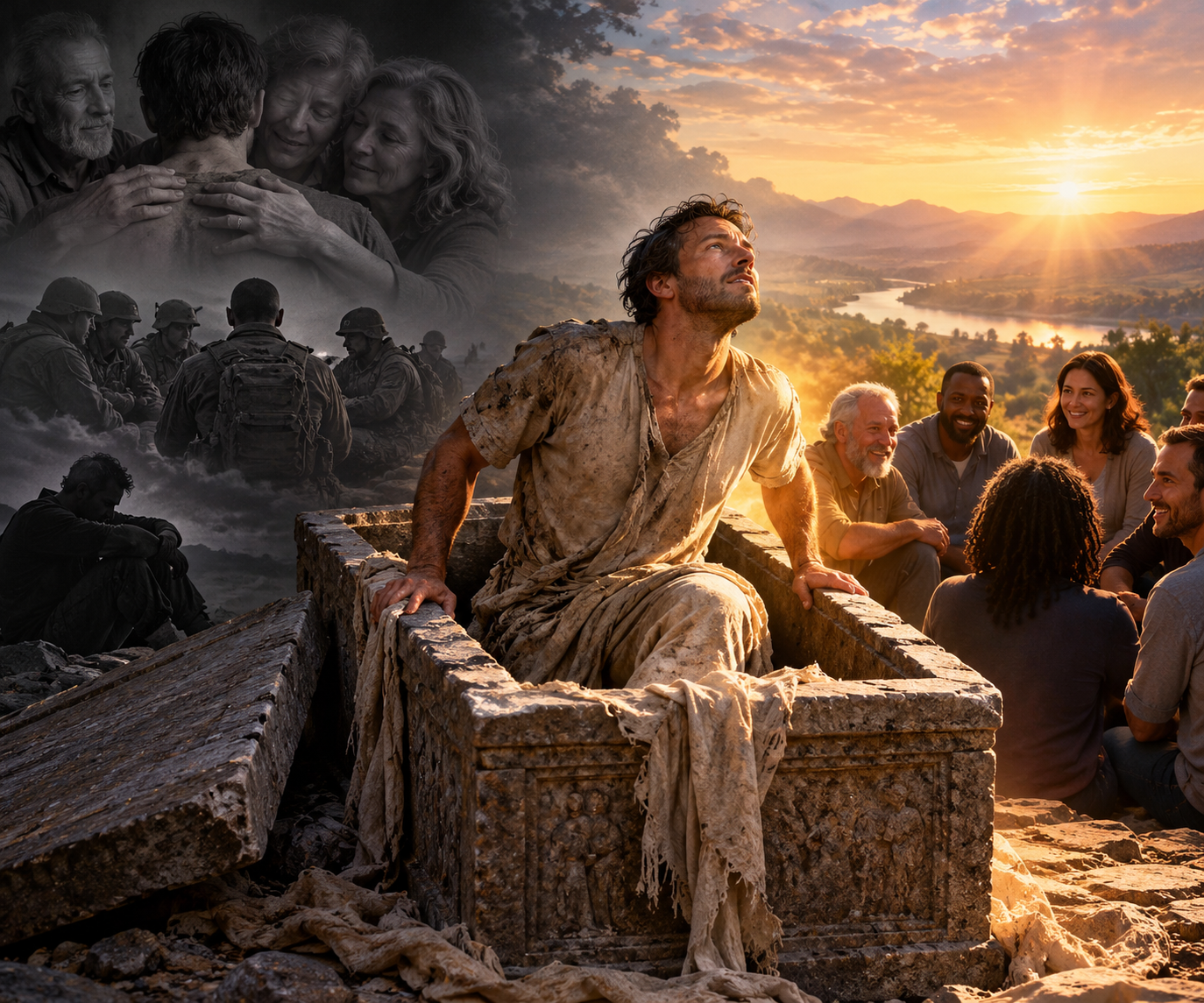
In the 12 Step program a big part of my work at recovery was recovering myself. My story suddenly became important. I entered a world where I could experience genuine expression. And I was embraced for becoming real. This is my second life and I am grateful for it.
When I came to Al-Anon, I knew that a close relative drank too much, and I knew I wasn’t happy, but I didn’t think I needed much help. I went to a meeting every week unless there was something else to do and I didn’t get a Sponsor. I grew, but slowly.
A crisis brought my leisurely approach to recovery to an end. When I lost someone very special to me, the pain was almost more than I could stand. I was lucky; I had learned enough to pick up the phone and call someone in Al-Anon. That person helped me to make it through the crisis, but that was only the beginning. I saw how badly I needed the strength and skills that Al-Anon had to offer. I began going to quite a few meetings each week, doing service work, calling Al-Anon friends. My recovery really took off! Today, practicing the program gets top priority in my life, because I know where I would have wound up without that crisis.
Today’s Reminder
Sometimes the greatest growth comes through pain, but it’s not the pain that helps me grow, it’s my response to it. Will I suffer through the experience and continue as before or let the pain inspire changes that help me grow? The choice is mine.
“I had learned in Al-Anon to look for opportunities for growth in every situation. This attitude allowed me to gain many spiritual riches from the pain I was experiencing.” ~ In All Our Affairs
END OF QUOTE—————————————
“You look so much like him.” My mother would often comment about the similarity in my appearance to that of her Father. She would talk about his intelligence and persuasiveness. I could tell that her heart still ached for him. She just about lost her mind when he died from alcohol related complications. She was 17 years old at the time. She came from a time and a culture where family matters were not discussed with outsiders and seeking counseling was still stigmatized.
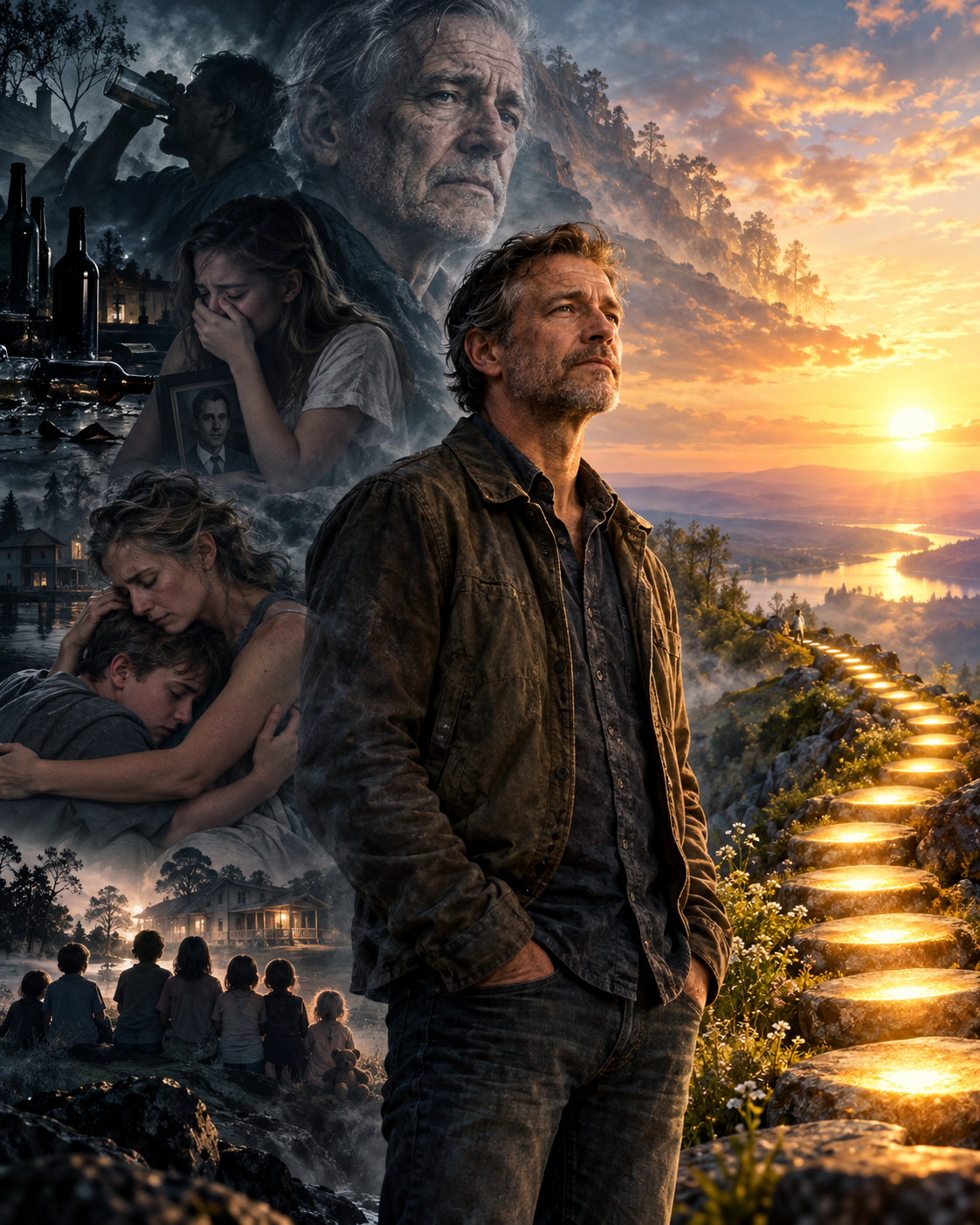
She had six children and would use us for her therapy. “You are my spiritual advisor.” A heavy embrace to wrap around a teenage son. Alcoholism found me like a whispered destiny. And it touched my own children. I am a double winner. I qualify for AA and Al-Anon. Once I found sobriety, I turned to Al-Anon to confront and break out of the co-dependent armor I lived in. And I sought to break the rippling waves of pain in my family that came from that banshee of damning family mantras.
I am grateful for the multiple manifestations of the 12 Steps.
I am forever looking at friends and strangers and making little improvements: “She’d look much more attractive if only…” or, “He would be a lot easier to deal with if only…”
Step Ten is my daily reminder to let go of such thoughts. It reminds me to continue to take my own inventory and to promptly admit when I am wrong.
Every day I can look to myself and decide what improvement I can make. How can I grow today? What can I do by day’s end to improve myself? Is there something I can learn? Is there some challenge I can meet? Is there some old, tired fear I can walk through and be rid of? Is there some new happiness I can experience? Step Ten reminds me to be honest with myself, acknowledging my progress, admitting my mistakes, and recognizing opportunities to grow today.
Today’s Reminder
When I keep track of my inventory on a daily basis, I no longer have to fear that I will fall into that vague, hazy state in which denial so easily takes root. When I turn this inventory over to my Higher Power, I know that I am moving toward freedom.
“A man should never be ashamed to own he has been in the wrong, which is but saying, in other words, that he is wiser today than he was yesterday.” – Alexander Pope
END OF QUOTE—————————————
NOTE: Alexander Pope (1688–1744) was one of the most important English poets and satirists of the early 18th century. One thing that makes Pope particularly interesting is that he was physically disabled and socially marginalized. As a child he contracted what is generally believed to have been Pott’s disease, a form of spinal tuberculosis, which severely affected his growth and caused lifelong pain and physical deformity. Some of his sayings: “To err is human; to forgive, divine.” “Fools rush in where angels fear to tread.” “A little learning is a dangerous thing.”
END OF NOTE—————————————
These are the seven questions I ask myself each night: Was I resentful? Was I selfish? Was I dishonest? Was I afraid? Do I owe an apology? Have I kept something to myself which should be discussed with another person at once? Was I kind and loving toward all? Anyone with time in the rooms knows that I extracted those self inventory prompts from the Big Book on pages 86 to 87.
I am more dutiful about this regimen than I was in the beginning of my recovery. The repetition of it is both boring and reassuring.
Then comes the troublesome question, “What could I have done better.” Most of the time I simply don’t know. But I try.
“Were we thinking of ourselves most of the time? Or were we thinking of what we could do for others, of what we could pack into the stream of life?”
And then comes the poetry of the Stream of Life. These are good prompts. Some people benefit more from them than others. I wish there was more of the Spirit of Recovery whispering in my ear when I am asked what I could have done better. So, a lot of my living is educated guesswork. It is the best that I can do. I let the questions echo in the night, and I listen. When I wake in the morning and go to a meeting, I am still listening.
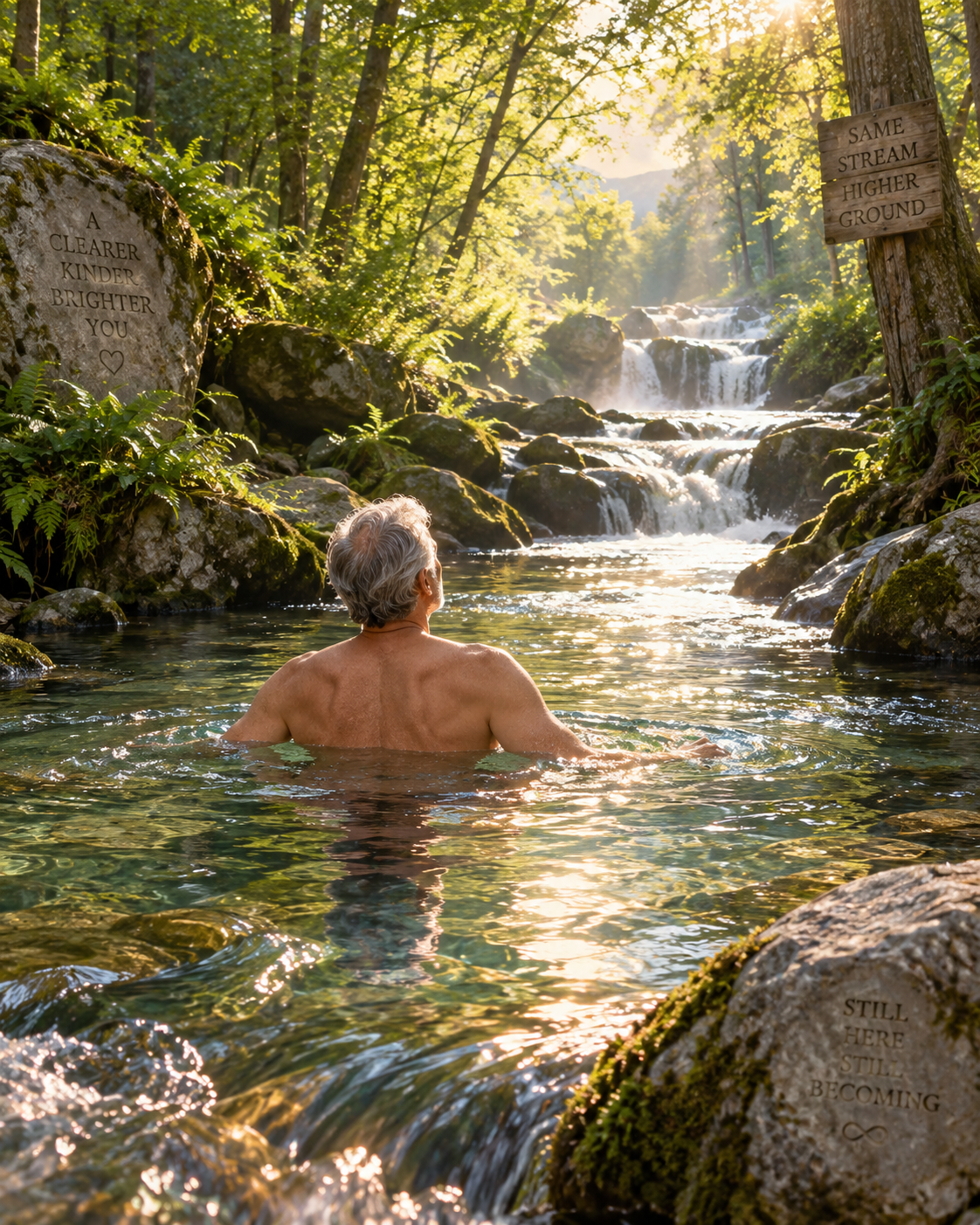
I often feel like I am skinny dipping in the stream of life. Exposed but willing to be present. To try.
There is one drug you can buy at the grocery store; one drug that is served at your child’s Little League game in the parking lot after the win; one drug that is handed to you on an airplane at 30,000 Ft by someone in a uniform; one drug that gets its own aisle, its own festivals, its own culture, its own identity; one drug that if you choose not to consume it requires you to explain yourself. Nobody asks you why you don’t smoke. Nobody asks you why you don’t do Cocaine.
Nobody raises an eyebrow if you pass on the opiates. But turn down a drink and suddenly you owe the room an explanation.
Are you pregnant?
Are you on medication?
Are you in recovery?
Because apparently not wanting to consume a known carcinogen at a Tuesday night dinner party is a thing that needs justifying.
I’m Seth.
I’m an ER physician and former Special Ops guy and I have spent my career inside one of the heaviest drinking cultures on Earth and where those who consume go when life catches up to them, the military and emergency medicine. I have seen what this substance does at every level from the culture that celebrates it to the consequences that follow people home.
And today I want to take you on a journey. Not to lecture you, not to tell you what to do, but to tell you the truth about the world’s most encouraged drug, where it came from, what it actually does and why we have collectively decided to look the other way.
Because I think most people deserve to make this choice with full information and most people don’t have it.
So, to understand why alcohol is where it is today, we have to go back Like way back because this didn’t happen by accident. Humans have been fermenting and consuming alcohol for at least 9,000 years, possibly longer. Archaeological Evidence of fermented beverages has been found in ancient China, Mesopotamia, Egypt and Greece.
It predates written language in some cultures. And in those Early civilizations, alcohol actually
served a practical purpose. Water was often contaminated. Fermented beverages were actually safer to drink than the water. Beer was given to Egyptian Pyramid workers as part of their daily ration, not as a reward, but as a necessity.
Roman legions marched on a daily wine allowance. Medieval Europeans drank ale from childhood because the water could actually kill you. So, alcohol’s earliest foothold in human civilization wasn’t about getting drunk. It was about survival.
But, something shifted over the years. As clean water became accessible and the practical necessity faded, the cultural attachment remained. And it deepened. Alcohol became woven into religion, ritual, celebration, and social bonding.
Wine at the Last Supper, mead at the Vikings’ feasts, whiskey at the Irish wakes, champagne at weddings, and beer at ball games. Every milestone, every gathering, every grief, alcohol was there.
And then came the modern era, and with it an entire industry. In the early 20th century, the United States tried something remarkable. We’ll call it prohibition. A constitutional ban on the production and sale of alcohol. And what prohibition revealed, more than anything else, was just how deeply embedded alcohol had become in the fabric of society.
People didn’t stop drinking. They went Underground. Speakeasies, bootleggers, organized crime. Al Capone built An entire empire on it. The government lost a lot of tax revenue, corruption spread, and after 13 years, the ban was lifted. Not because alcohol had been proven safe, because it had been proven unstoppable.
And the industry that emerged from the end of prohibition had learned something invaluable. People will fight for their right to drink. Passionately, politically, and very personally.
So, they leaned in. what followed over the next century was one of the most sophisticated marketing operations in human history. And if it Sounds familiar, it should. Because it came directly from the same playbook that the tobacco industry had already written.
Fund research that creates doubt about the health risks.
Lobby governments to keep regulations minimal and warning labels very vague.
Embed the product Into sports and music and film and culture so that it becomes synonymous with fun and success and social belonging. Make abstaining feel like the aberrant choice.
The Alcohol industry spent approximately $8 billion a year on advertising in the United States alone. They sponsor The Super Bowl. They put their logos on Formula 1 cars. They name stadiums. They Fund music festivals. They place their product in every television show, every movie, every social media feed. They sell you not just a drink but an identity, a lifestyle, a version of yourself that is relaxed and social and successful.
Desirable, right?
And it worked.
More than half of American adults drink regularly. Globally, around 2.4 Billion people Consume alcohol regularly. The industry Is worth over $1.6 Trillion worldwide. $1.6 Trillion built on a substance that the World Health Organization classifies as a group one carcinogen. The same category as tobacco. The same category as asbestos. But you can buy it at a grocery store on the way home from work. In a gift basket. At a baby shower. Because somewhere along the way we stopped seeing it as a drug.
And that is exactly what the industry needed us to do.
So, let’s talk about what happens inside your body the moment alcohol enters it. Cuz this is a health channel after all.
Because your body doesn’t see a social lubricant. It doesn’t see a reward for a hard week. It doesn’t see a celebratory toast. It sees poison. And it responds accordingly. The moment ethanol, the alcohol that’s in what you think of as modern drinks, enters your bloodstream, your liver, which has about a thousand other jobs it was trying to do, basically drops everything.
Every other Metabolic process gets put on hold. Fat Stops burning. Muscle repair slows. Cellular cleanup pauses. Your liver has One priority now and one priority only. Get this toxin out of your body as fast as possible. This is not a design flaw. This is your body working exactly as it should.
Triage.
Deal with the most dangerous thing first. The problem is how long it takes. Depending on how much you drink, your body can be in alcohol processing mode for anywhere from 12 to 36 hours. Not just while you feel drunk. Not just while you’re hungover. For up to a day and a half after your last drink, your metabolism still playing catch-up, still prioritizing ethanol clearance over everything else. Which means if you had drinks on Friday night, your body may not be back to normal fat burning until Sunday morning.
Think about that. That means for someone trying to lose weight who drinks regularly on weekends, they’re potentially spending the majority of their week in a metabolically compromised state. Not because of the calories in the drinks, because of the biological cascade that follows drinking.
And the calories are very real, too, by the way. Alcohol contains seven calories per gram. That’s more than carbohydrates, that’s more than protein, almost as much as fat. And unlike fat, protein, carbohydrates, alcohol has zero nutritional value. No vitamins, no minerals, no building blocks for anything useful, just calories that your body has to process and discard.
Then there are the hormones. And this is where this gets particularly damaging for anyone who cares about body composition and energy and long-term health. Growth hormone, which your body produces primarily during deep sleep to repair tissue and build muscle and burn fat, drops by about 75% when it’s in your system. 75%. For a hormone that is doing some of the most important recovery work that your body does, that’s pretty catastrophic.
Next up, testosterone, which governs muscle mass and energy and libido and mood and cognitive sharpness and fat burning, drops measurably after even moderate consumption. Research shows that just two to three drinks daily over months and years decrease testosterone production by 6 to 12%. Binge drinking can suppress testosterone for up to 24 hours after a single episode. And cortisol, your stress hormone, goes up significantly, which means while your anabolic hormones are crashing, your catabolic hormones are rising. Your body is simultaneously less able to build muscle and more primed to break it down. If you were deliberately trying to design a hormonal environment that would make you fat, and weak, and tired, alcohol would be a pretty efficient way to do it.
Now, let’s talk about sleep. Because this one affect everyone who drinks, even people who only have one or two. Alcohol makes you fall asleep faster.
Great, conversation over.
Feels like a benefit.
But the thing is, it isn’t. What alcohol Actually does is suppress REM sleep, the deep restorative stage where your brain consolidates memories, regulates emotion, and where your growth hormone is primarily released. You might sleep 8 hours after drinking and wake up feeling like you slept four. I’m sure you’ve experienced it. Because physiologically, In terms of what your brain and body actually got to do during that time, that’s pretty much what you did is sleep about 4 hours. This is why chronic drinkers so often report persistent fatigue, brain fog, emotional dysregulation, and poor recovery from exercise.
It’s not the alcohol from last night, it’s the cumulative sleep debt from months or years of suppressed REM sleep that never fully resolved. And then, there’s the cancer conversation.
This is one that the industry has worked the hardest to keep out of the public awareness, and most people still don’t know about this. In 2025, the US Surgeon General issued an advisory. It was the first of its kind, explicitly linking alcohol consumption to cancer risk, and calling for updated warning labels on alcoholic beverages. The research was not ambiguous. Alcohol Is causally linked to at least seven types of cancer: mouth, throat, esophagus, liver, colon, rectum, and breast cancer. The risk begins with any level of consumption. There is no established safe threshold. The more you drink, the higher the risk, but even light drinking increases cancer risk measurably. A 2024 report from the American Association for Cancer Research found that more than 5% of all cancers in the United States are attributable to alcohol use.
Globally, 740,000 new cancer cases per year are linked to alcohol consumption. 740,000 People per year. And most of them had no idea that what they were drinking was a carcinogen because nobody told them, because the label on the bottle doesn’t say it, because the industry spent decades and billions of dollars making sure that conversation didn’t happen.
Sound familiar?
It should.
The tobacco Industry did the same thing for 50 years.
The mechanism by which alcohol causes cancer is relatively well understood. When your body breaks down ethanol, it produces a toxic byproduct called acetaldehyde. Acetaldehyde directly damages DNA. It interferes with Cells’ ability to repair that damage, and the damaged DNA that can’t repair itself is exactly how cancer starts. Every drink produces acetaldehyde. Every time.
Everything I just described, the metabolic disruption, the hormonal cascades, the cancer risk, that’s what alcohol does to one person’s body in relative isolation. But the thing is, alcohol doesn’t exist in isolation. It exists in families, in marriages, in cars on highways, in decisions made at 1:00 a.m. that can’t be undone, in patterns that start as social and end as survival.
And that’s the part I want to speak to from a personal experience because I’ve seen it repeatedly from both sides of the gurney. I spent years in the military, and the military drinking culture is, to put it mildly, significant. Alcohol Is woven into the very fabric of it. After deployments, during deployments sometimes, after training, after losses, the bar is where you process things that don’t have words yet.
I understand that culture from the inside because I lived in it. And when I am working in the ER, I began seeing where that culture and the broader civilian version of it actually ends up. I have watched men in their 40s come in with livers so destroyed, they were yellow from head to toe, jaundiced, bloated, unable to process the toxins their own body is producing. Hepatic encephalopathy, where the liver failure is so advanced that the toxins reach the brain, and the person in front of you is no longer fully present. They are very confused, combative, sometimes not recognizing their own family members standing at their bedside.
I’ve watched families stand in hospital hallways and try to understand how the person that they love got here. How that Friday night drinks became the weekend drinks became the daily drinks became what they see in front of them. I have treated people who drove drunk and survived the accident and the people they hit who didn’t. I’ve seen domestic violence cases where alcohol was the accelerant, situations that might have been arguments that became something no one can come back from. I’ve watched alcohol contribute to depression that deepened into suicidal ideation because alcohol is a central nervous system depressant, literally. That is Its pharmacological classification. It depresses the nervous system and yet we give it to people who are already struggling at the party, at the wake, at the divorce dinner, as if it’s going to help them.
It doesn’t help.
It numbs temporarily and then it compounds. And the thing that gets me every single time Is that alcohol is almost never the stated problem. The patient comes in for a fall, the accident, the liver failure, the GI bleed, the seizure, the altered mental status. Alcohol is quietly in the background. It’s the context. It’s the thing that made all of those things possible.
It is the most invisible visible problem I’ve ever encountered in medicine. Everyone can see it. Nobody says it because we have decided as a society that this particular drug deserves the benefit of the doubt.
Here’s what I know after all of it. I’ve never seen alcohol save a marriage, but I have seen it end a lot. I have never seen alcohol make someone a better parent, but I have seen it make people absent from their children in ways that leave marks that last decades. I’ve never seen alcohol improve someone’s mental health, but I have seen it give people a trapdoor out of dealing with the things that needed to be dealt with until the trapdoor became the only door they knew. I’ve never seen alcohol make someone make better decisions, but I have seen it make people make decisions they spend the rest of their lives trying to outrun.
And I have never, not once, had a patient who stopped drinking tell me they wish they hadn’t.
Not one.
Every single person who got out, who did the work, who faced what they were using alcohol to avoid facing told me some version of the same thing.
I wish I had done it sooner.
Now, I want to be careful here because I am not standing in front of you, rather sitting in front of you, as someone who has never had a drink. I spent years in the military. I drank a lot. I understand the culture. I understand the social function. I understand what that for most people watching this alcohol is not the catastrophic story I just described.
For most people, it’s a glass of wine on Friday night, a beer after a game, a cocktail at a wedding. And I’m not here to take that from you.
What I’m here to do is make sure you know what you were choosing when you choose it.
Because the industry that sells it to you has spent over a century making sure you don’t fully think about it, making sure it feels normal, making sure the question is never should I, but always just which one?
So, where Does that leave us
Let me tell you where I actually stand on this. Not as a lecturer, just as someone who has thought a lot about it And seen a lot.
Alcohol is a drug, a carcinogen, a central nervous system depressant that your body treats as a poison every single time you consume it. those are not opinions. Those are pharmacological and oncological facts that the industry has spent a century and a billion dollars making sure you never fully absorbed.
At the same time, I live in the real world. I understand that alcohol is deeply embedded in human cultures in ways that are not going to change because of this YouTube video. I understand that for most people it is a social, occasional, and very manageable thing.
So, here’s my honest position. If you’re going to drink, limit it to one or two drinks on occasions that actually mean something to you. A celebration, a genuine social moment, Something worth it. Not every Tuesday, not every night, not because you’re stressed, not because it’s just what you do after work.
And when you do, know what you’re doing. You are knowingly consuming a carcinogen. You are knowingly suppressing your hormones and your fat metabolism for the next 12 to 36 hours. You are knowingly compromising your sleep quality that night.
That is your informed choice to make. But make it informed. If you’re someone who drinks regularly, more than a few drinks per week, I want you to honestly ask yourself what role alcohol is playing in your life. Not defensively, Just honestly. I’m not here to judge you.
No one else is either. Is it genuinely social and celebratory, or has it become a daily habit that you don’t fully examine? Because those are very different things and they require very different responses. And if you’re someone who has tried to cut back and found that you couldn’t, that’s an important information as well. That is not a character flaw. That is the pharmacology of a physically addictive substance doing exactly what a physically addictive substance is designed to do. And that conversation deserves professional support. Not judgement, not willpower advice, just actual support.
If you are heavy long-term drinker, please do not stop abruptly without medical supervision. Alcohol withdrawal can be genuinely dangerous. Seizures, Delirium, even death. It requires careful taper and ideally medical oversight.
I say this because I care about you and I care about you actually getting through it safely.
Now, the question I want to leave you with.
If alcohol were introduced to the world today as a brand new substance with everything we know about it, the cancer links, the liver disease, the neurologic damage, the addiction profile, the domestic violence statistics, the traffic fatalities, the depression it compounds, and the relationships that it destroys, If a pharmaceutical company tried to bring it to market tomorrow, it would never be approved.
Not even close.
But it was already here.
Already embedded, already a trillion-dollar industry with lobbyists and marketing budgets and cultural inertia so powerful that the US Surgeon General had to issue a special advisory just to get the cancer warning on the label, and the industry is still fighting it.
That’s not a coincidence.
That’s a system working exactly as designed. And you are inside that system every time you buy a bottle without thinking about it, every time you hand one to a friend without thinking about it, every time you order one because that’s just what you do at dinner without thinking about it.
But I’m not asking you to stop drinking.
I’m asking you to think about it.
Really think about it with the same clarity you would bring to any other decision that affects your health and your family and your future because you deserve to make this choice with full information.
For many years I sought answers in distant places while you waited quietly within me, carrying burdens that never belonged to you. You learned to survive in ways that were wise for a frightened child, but those burdens are no longer yours to carry alone.
Today I make this covenant with you.
The First Covenant Against the Hell of Abandonment
You believed:
“She left me.”
You came to believe that love always leaves, and that every silence, every goodbye, and every change meant you had been abandoned.
I cannot promise you that no one will ever leave.
But I make you this promise:
I will not leave you.
When others withdraw…
When plans change…
When relationships end…
When life brings loss…
I will remain beside you.
I will remind you that another person’s absence is not your worth.
You will never again have to face abandonment alone.
The Second Covenant Against the Hell of Martyrdom
You believed:
“If you love someone, you must sacrifice yourself.”
You thought love required your disappearance.
You carried burdens that belonged to others.
You neglected your body.
You silenced your voice.
You forgot that you, too, were worthy of compassion.
I make you this promise:
I will never again ask you to disappear in order to be loved.
Together we will learn healthy boundaries.
Together we will serve freely.
Together we will love deeply without surrendering the person God created us to be.
Your life is not the price of love.
It is one of love’s gifts.
The Third Covenant Against the Hell of Rejection
You believed:
“Everyone hates me, or will hate me once they truly know me.”
You learned to hide.
To measure every glance.
To fear every judgment.
To protect yourself by becoming smaller than you truly were.
I make you this promise:
You no longer have to hide behind me.
Some people will understand us.
Some people will not.
Neither response determines our worth.
I will help you speak honestly.
I will help you create boldly.
I will help you serve openly.
You deserve to be seen without apologizing for existing.
The Fourth Covenant Against the Hell of Being False
You believed:
“I am fake.”
Whenever you grew…
Whenever you learned…
Whenever you became competent…
The critic whispered that you were only pretending.
You searched endlessly for someone to certify your existence.
I make you this promise:
I will measure us by truth instead of perfection.
We do not need to prove ourselves worthy before we are allowed to live.
We do not need unanimous approval before we are allowed to speak.
We do not need to become flawless before we are allowed to create.
Our sincerity is enough.
Our honesty is enough.
Our willingness to keep learning is enough.
The New Covenant
My dear child,
You no longer have to survive alone.
You no longer have to protect me from feeling.
You no longer have to earn the right to exist.
You no longer have to carry shame that belonged to frightened adults.
I see your imagination.
I see your courage.
I see your grief.
I see your longing for God.
I see your creativity.
I see your smile.
I see every hidden room you built so that we might survive.
Thank you.
Those rooms protected us when we needed them.
Now I will become the guardian of this house.
You may rest.
Our Promise
Together we will choose truth over fear.
Presence over escape.
Boundaries over martyrdom.
Connection over isolation.
Compassion over shame.
Faithfulness over perfection.
Love over terror.
Life over hiding.
Our Blessing
As long as I live…
you will never again face these four hells alone.
Whenever fear whispers,
I will answer.
Whenever shame accuses,
I will defend you.
Whenever grief returns,
I will sit beside you.
Whenever you forget who you are,
I will remind you.
You are not my burden.
You are my God shard, and a Son of the Infinite One..
I feel loved when my children choose to spend time with me because it reminds me that I matter to someone.
Angry
I feel angry when I see people manipulate or exploit others because fairness is important to me.
Satisfied
I feel satisfied when I complete my daily walk because I honored a commitment to myself.
Frustrated
I feel frustrated when I have a clear vision but fail to follow through because I know I am capable of more.
Grateful
I feel grateful when I sit in an AA meeting because I have been given another chance at life.
Rested
I feel rested when I allow myself to nap without guilt because my body receives what it needs.
Tenacious
I feel tenacious when I return to spiritual and recovery work after setbacks because giving up is no longer an option.
Joyful
I feel joyful when writing flows freely because I experience creative freedom.
Embarrassed
I feel embarrassed when I remember times I abandoned my own voice because I wish I had spoken more honestly.
Ambivalent
I feel ambivalent when entering new relationships because I desire connection and fear entrapment at the same time.
Disappointed
I feel disappointed when I fail to complete a project because I wanted to bring something meaningful into the world.
Confident
I feel confident when helping a sponsee because experience has taught me I have something useful to offer.
Shame
I feel shame when I remember behaviors that conflicted with my values because I wanted to be better than I was.
Thoughtful
I feel thoughtful when contemplating mortality because it reminds me how precious life is.
Ashamed
I feel ashamed when I use escape behaviors instead of facing life because I know I am capable of greater integrity.
Trusted
I feel trusted when someone asks for my guidance because they believe my experience has value.
Hopeful
I feel hopeful when I make small daily improvements because change is occurring one step at a time.
Grief
I feel grief when I think about years spent suppressing creativity because those years cannot be reclaimed.
Humiliated
I feel humiliated when I remember situations where I felt powerless because my dignity felt threatened.
Abandoned
I feel abandoned when I perceive spiritual silence because I long for a closer sense of communion.
Playful
I feel playful when imagination is allowed to wander because there is no pressure to perform.
Humorous
I feel humorous when I recognize the absurdity of my own overthinking because life is often stranger than my fears.
Betrayed
I feel betrayed when institutions distort truth because honesty is deeply important to me.
Inspired
I feel inspired when I encounter great ideas or stories because they awaken possibility within me.
Accepted
I feel accepted when I share honestly in fellowship and receive understanding because I do not have to hide.
Guilty
I feel guilty when I neglect commitments because I know others may be affected.
Pleasure
I feel pleasure when I enjoy good food, conversation, or creative work because being alive can be enjoyable.
Fascinated
I feel fascinated when exploring spiritual mysteries because I am drawn toward understanding.
Irritated
I feel irritated when repetitive distractions interrupt meaningful work because they pull me away from my purpose.
Pleased
I feel pleased when I finish a writing project because effort has become something tangible.
Loving
I feel loving when I think about my children because I want their lives to flourish.
Excited
I feel excited when a new creative idea arrives because it feels like discovering unexplored territory.
Serene
I feel serene when walking in Orr Park because nature slows my mind and settles my spirit.
Safe
I feel safe when surrounded by trusted fellowship because I do not have to defend myself.
Enthralled
I feel enthralled when contemplating the mysteries of consciousness, God, and existence because they fill me with wonder.
Recurring Themes in my own ACA work:
Connection vs. abandonment
Expression vs. suppression
Wonder vs. certainty
Discipline vs. avoidance
Communion vs. isolation
I feel most alive when I am creating, connecting, and exploring mystery, and I suffer most when I feel silenced, isolated, or separated from what I love.
As I read my ACA inventories, one feeling appears again and again beneath the fear: GRIEF
Grief for time. Grief for unrealized potential. Grief for distance from God. Grief for abandoned creativity. Grief for parts of myself I felt compelled to suppress.
I think I find that many of my “fear” statements eventually unfold into:
“I feel sad because I loved something.”
And that is a very different doorway into healing.
How often have I had a dream I longed to pursue, but quit before I started because it seemed too enormous a task to attempt? Going back to school, moving, taking a trip, changing jobs, all these and many other goals can seem overwhelming at first.
Al-Anon reminds me to “Keep It Simple.” Instead of approaching the task as a whole, I can simplify it by taking only one step at a time. I can gather information — and do nothing more. Then, when I’m ready, I can take the project further. That takes some of the pressure off having to know all the answers and solve every problem that may arise before I’ve even begun.
I am also free to try something and then change my mind. I do not have to make a lifetime commitment before I even know whether or not my goal is desirable.
My plans may involve many actions and many risks, but I don’t have to tackle them all today. I can take my time and move step by step at my own pace. By focusing on one thing at a time, the impossible can become likely if I “Keep It Simple.”
Today’s Reminder
With the help of Al-Anon and my Higher Power, I am capable of many things I could not even have considered before. I may even be capable of pursuing my heart’s desire.
“All glory comes from daring to begin.” – Eugene F. Ware
END OF QUOTE—————————————
NOTE: Eugene Fitch Ware was a fascinating nineteenth-century American figure who wore many hats during his lifetime: Civil War officer, attorney, Kansas state senator, newspaper editor, poet, author, and federal official. He is best remembered under his pen name “Ironquill.” Ware’s greatest fame came from his poetry. Writing as Ironquill, he became one of Kansas’s most widely read poets and was sometimes called the unofficial poet laureate of Kansas. His collection Rhymes of Ironquill enjoyed considerable popularity in the late nineteenth century. His poem “The Washerwoman’s Song” became especially well known.
Among his notable works were:
Rhymes of Ironquill
The Rise and Fall of the Saloon
The Indian Campaign of 1864
From Court to Court
Ithuriel
END OF NOTE—————————————
I find myself thinking about how often fear disguises itself as practicality. And about how often the greatest blessings in life were delivered gift-wrapped in fear.
I tell myself I am being protective of the dream. I tell myself I need more information, more certainty, more preparation. But beneath those reasonable-sounding objections is often a frightened child standing at the foot of a mountain, convinced he must climb the entire thing before taking a single step.
Recovery has taught me something different. It points to a tension here that fascinates me. Part of me wants certainty. Another part longs for adventure. Recovery has become the bridge between those opposing forces. It teaches me that surrender is not the abandonment of dreams. It is the abandonment of the illusion that I must control every outcome before I am allowed to begin.
I need only the courage to take the next right step and the humility to trust that my Higher Power is already waiting somewhere beyond the bend in the trail.
Al-Anon is a spiritual recovery program. The word “recovery” implies that we are regaining something we once possessed but have lost or set aside.
In the confusion of living with active drinkers, I lost track of my spirit. Life was a survival game, a daily grind of fear and hard work. No matter what I tried, nothing seemed to help. Perhaps that’s because I was trying to do it all by myself.
In Al-Anon I have come to know that I have a resource within me and all around me that can guide me through the most overwhelming fears and the most challenging decisions – Higher Power. Regardless of how I define that Higher Power, it is real to me and has always been here for me. I am so grateful to have recovered that connection to my spirituality, for in doing so, I have regained an essential part of myself. As a result, today my life has a sense of purpose that makes each moment a precious gift.
Today’s Reminder
I am a spiritual creature, capable of faith, hope, and an appreciation of beauty. I have an unlimited source of strength and comfort at my disposal. Today I will take the time to cultivate that spiritual connection.
“Half an hour’s meditation is essential except when you are very busy. Then a full hour is needed.” ~ Francis de Sales
END OF QUOTE—————————————
There is a quiet honesty in the word recovery that I don’t always want to face.
It suggests I am not building something new. It suggests I am returning—to something I once carried naturally in an unknown dimension, before the fear of being born mortal scattered me into fragments.
When I sit with that, I can feel the truth of it in my body.
There was a time when my spirit moved more freely—before vigilance became my default posture, before life narrowed into a corridor of managing, fixing, anticipating. Living with active drinkers trained me to become a kind of emotional contortionist. I learned to scan the room, adjust the tone, brace for impact. Somewhere in that daily grind of survival, I misplaced something essential.
Not destroyed. Not erased. Just… set aside, like a sacred object wrapped in cloth and hidden during a war.
And here is where Step Ten and Eleven begin to feel less like assignments and more like archaeology of the soul.
Because what I am recovering is not information. It is contact.
Contact with a presence that I did not create and cannot control—but can learn to recognize again.
I see now that my exhaustion came, in part, from the belief that I was meant to carry everything alone. Every decision, every outcome, every emotional ripple—I appointed myself the manager of a universe I do not run. No wonder nothing worked. I was trying to substitute willpower for relationship.
Al-Anon did not hand me a Higher Power. It revealed that I had been cut off from the awareness of one that never left.
That shift feels small when spoken, but it rearranges everything.
Because now, when fear rises—and it still does—I have somewhere to place it. Not to dump it carelessly, but to offer it, to say: I am willing to not be the only mind at the table right now.
And in that offering, something subtle happens.
The pressure eases. The horizon widens. The next right step becomes just visible enough to take.
I am beginning to understand that spirituality, for me, is not a belief system I maintain—it is a relationship I practice.
A daily returning.
Sometimes it feels like tuning a signal through static. Sometimes it feels like standing in the dark, unsure if anyone is listening. But then there are moments—quiet, unforced—where I sense alignment. Not perfection. Just… rightness. A small click inside the machinery of the soul.
And I realize:
The connection was never lost. Only my attention wandered.
So today, I do something simple, almost unimpressive by the standards of my old thinking.
I pause.
I notice breath. I notice tension. I notice the impulse to control, to predict, to brace.
And instead of obeying it, I turn—just slightly—toward that presence I am learning to trust.
No fireworks. No grand declarations.
Just a willingness to remain connected.
Because if I am honest, that is what I am recovering:
Not a perfect life. Not immunity from fear.
But the quiet, steady knowing that I am not alone inside my own experience.
And from that place, even this moment—ordinary, imperfect, unfinished— begins to feel like something I can receive… rather than survive.
To my body— the vessel that has carried me through every season of my life.
I recognize that I have often treated you as an obstacle rather than a companion. I judged your needs, mistrusted your signals, and sometimes punished you for simply being human.
For this, I am sorry.
I apologize for the times I neglected your strength and endurance— when I abandoned discipline in movement and allowed inertia to weaken what was meant to grow strong.
I apologize for confusing suffering with holiness, for practicing mortification instead of care, for believing that denying you was somehow pleasing to God.
I apologize for feeding you substances and habits that dulled your clarity— excess sugar, compulsive stimulation, and chemical escapes that masked pain but left you burdened.
I apologize for the moments I ignored your rhythms of rest and renewal, pushing you toward collapse or leaving you unused and stagnant.
I apologize for the shame I placed upon you— for seeing sexuality as contamination instead of energy that required wisdom and stewardship.
I apologize for risking your health through reckless fasting, cutting, or spiritual desperation, as if you were merely an instrument for forcing a divine response.
None of these actions honored the covenant between body and soul.
What I Understand Now
You were never my enemy.
You were the messenger of fatigue, hunger, vitality, and longing. You carried my breath when despair tried to suffocate it. You endured my experiments, my confusions, my wars of spirit.
Even when I misused you, you continued your quiet labor— heart beating, lungs filling, muscles waiting to move again.
For this perseverance, I thank you.
My Amends Going Forward
I commit to treating you as a partner in my life rather than a battlefield.
I will strengthen you through regular movement and honest effort. I will nourish you with food that sustains rather than numbs. I will give you rest when you need it and discipline when you require challenge.
I will seek balance rather than martyrdom.
I will allow physical training to be an act of gratitude rather than punishment. I will honor sexuality as energy to be directed wisely, not suppressed with shame or indulged without care.
I will remember that the spiritual life does not require your destruction— it requires your cooperation.
I will listen more carefully to the signals you give. Pain, fatigue, hunger, and desire will be invitations to awareness rather than triggers for judgment.
A Closing Acknowledgment
My body, you are not merely matter.
You are the living ground where thought becomes action, where breath meets spirit, where life itself unfolds moment by moment.
From this day forward, I choose partnership with you.
Together we will learn strength again. Together we will rediscover rhythm. Together we will live the remainder of this life with greater respect for the miracle of being alive.







You must be logged in to post a comment.