Archive for writing

Endigar 1105

Posted in Uncategorized with tags , , , , , , , , , , , on January 15, 2026 by endigar

From Courage to Change of Nov 21:

Sometimes I think that, because I’ve been in Al-Anon for a long time, I shouldn’t have any more problems. When difficulties do arise, I feel something is wrong with me or with the program.

Actually, in some ways I have more problems than ever. When I came to Al-Anon, I had only one problem: I didn’t know how to fix the alcoholic. (My life was completely in shambles, but I swore that I was fine.) Today I know that I can’t fix anyone but myself, and I challenge myself daily to seek a richer, more meaningful life. I’m taking risks, facing fears, making changes, speaking up, making myself available to life.

I’m bound to run into snags here and there. Sometimes life doesn’t follow my blueprint. I get overwhelmed and want to crawl under the covers and hide. At such a time it helps to remember that Al-Anon doesn’t take away problems, but it does give me the courage and insight to turn stumbling blocks into stepping stones.

Today’s Reminder

In handling my difficulties, what’s important isn’t how much time I have in Al-Anon but how willing I am to implement the tools of recovery. While Al-Anon doesn’t grant immunity from problems, it does offer a healthy way to deal with them.

“Troubles are often the tools by which God fashions us for better things.”
~ H.W. Beecher

END OF QUOTE—————————————

NOTE: H. W. Beecher refers to Henry Ward Beecher (1813–1887), a highly influential American Congregationalist minister, abolitionist, social reformer, and public speaker in the 19th century.

He was one of the most famous preachers in the United States during his lifetime.

Who he was

  • Born: June 24, 1813
  • Died: March 8, 1887
  • Son of famous preacher Lyman Beecher
  • Brother of Harriet Beecher Stowe, author of Uncle Tom’s Cabin

Why he mattered

Beecher was known for:

  • Abolitionism – He strongly opposed slavery and supported the Union during the Civil War.
  • Progressive theology – He emphasized God’s love over fear-based religion and rejected harsh Calvinism.
  • Women’s rights – He supported women’s suffrage (controversial for his era).
  • Social reform – He spoke on temperance, poverty, labor issues, and education.
  • Powerful oratory – His sermons drew massive crowds; he was considered one of the greatest speakers of the century.

His church in Brooklyn, Plymouth Church, became nationally famous, and he used his pulpit almost like a media platform to shape public opinion.

The scandal

Late in his life, Beecher was involved in a sensational public scandal:

  • He was accused of having an affair with Elizabeth Tilton, the wife of his friend Theodore Tilton.
  • The case led to a massive public trial in the 1870s.
  • The trial ended in a hung jury, so he was never convicted, but his reputation was deeply divided afterward.

END OF NOTE—————————————

There is a quiet humility in admitting that longevity in the program does not equal immunity from life. It is a mistake to give into that ache that causes me to say, “surely by now I should be done struggling.”  And I recognize that voice—not as weakness, but as the lingering echo of perfectionism disguised as spirituality.

I once believed recovery would make life smoother. Fewer conflicts. Fewer fears. A clean emotional horizon. What I’m slowly learning is that recovery does not flatten the terrain—it returns my eyesight. I now see the hills I once stumbled over blindfolded. I notice the interior weather. I hear my own resistance. And sometimes that awareness is exhausting.

But this is the difference:
Before, I was drowning and calling it swimming.
Now, I am swimming—and occasionally tiring—but still moving.

The old life was denial wrapped in bravado: “I’m fine.”
The new life is truth spoken gently: “I am struggling, and I am still showing up.”

How willing am I to continue to carry my spiritual toolbox forward with me.

That is where the living edge of recovery is. Not seniority. Not identity. Not performance. But willingness. Willingness to pause. To inventory. To reach out. To sit with discomfort instead of armoring against it. Willingness to let life interrupt my blueprint without collapsing into resentment.

Sometimes I absolutely want to hide. Sometimes I want the covers. Sometimes I want to be done.
And that, too, is part of the human curriculum.

But the promise is not escape.
The promise is transformation of relationship.

The problems remain.
But I am no longer alone with them.
I am no longer dishonest with them.
I am no longer powerless before them.

Today, I do not measure my recovery by the absence of difficulty.
I measure it by this quieter miracle:

That I still show up.
That I still tell the truth.
That I still reach.
That I still believe becoming is possible.

And that is enough for today.

Endigar 1103

Posted in Uncategorized with tags , , , , , , , , , on January 12, 2026 by endigar

From Courage to Change of Nov 19:

For years I lamented the absence of a label that would identify the soul sickness that brought me to the fellowship. I wanted to say, “I’m a recovering controller, enabler, caretaker, fixer.” Although they identify some of my character defects, these labels miss the mark. I’m not simply seeking recovery from one limitation or problem. The goal I’m striving for in Al-Anon is an overall sense of wellness.

My pursuit of this goal began by seeking recovery from the way a loved one’s alcoholism has affected my life. But today Al-Anon offers me even more. As I heal and grow, I find that it is no longer enough simply to survive. The principles and tools that brought me this far can help me to create an increasingly rich and fulfilling life.

Today, when I say I’m a grateful member of Al-Anon, I’m not zeroing in on one particular problem but rather participating in a whole host of solutions that can lead to emotional, physical, and spiritual health.

Today’s Reminder

As I continue on the never-ending path of spiritual progress, I will expand my view of recovery.

“In Al-Anon we believe life is for growth, both mental and spiritual.”
~ The Twelve Steps and Traditions

END OF QUOTE—————————————

Recovery, I’ve learned, is not a cosmetic repair. It is not about sanding down the most visible flaws. It is about tending to the deeper architecture of the soul.

I came to Al-Anon because of the chaotic legacy of addiction in my family. That was the doorway. But the work has taken me far beyond that original pain. What I am being invited into now is not mere survival but a widening life. A life with breath in it. With flexibility. With presence. With color returning where everything once felt gray.

There is a subtle but sacred shift that happens along the path: I stop asking, “How do I endure this?” and begin asking, “How do I live well?” The same tools that once helped me stay afloat now help me steer. The same principles that once protected me now shape me.

When I say I am a grateful member of several 12 Step groups, Al-Anon included, I am not confessing pathology. I am affirming participation in a way of living. A way that honors emotional sobriety, spiritual attentiveness, embodied truth. A way that invites me to grow instead of contract.

Recovery is no longer a narrow hallway. It has become a widening horizon. It is the one place where spiritual growth and the writing of my own story are not in conflict.
It seems that life is not meant to be managed.
It is meant to be grown into.

Endigar 1102

Posted in Uncategorized with tags , , , , , , , , , , , on January 11, 2026 by endigar

From Courage to Change of Nov 18:

To me, when the Second Step talks about being restored to sanity, it covers more than the ability to function responsibly and realistically. A sane way of life also includes the willingness to play, to take a break, to cultivate a hobby. I suppose I think of humor as an especially appealing hobby. It takes no special equipment, doesn’t require travel, and never falls out of fashion. When I have a good laugh, I know that my Higher Power is restoring some of my sanity.

If I can see nothing but my troubles, I am seeing with limited vision. Dwelling on these troubles allows them to control me. Of course, I need to do whatever footwork is required, but I also need to learn when to let go. When I take time to play, to laugh, and to enjoy, I am taking care of myself and giving my Higher Power some room to take care of the rest.

Today’s Reminder

A good chuckle or an engrossing activity can lift my spirits and cleanse my mind. I will refresh myself by adding some lightness to this day.

“Now I look for humor in every situation, and my Higher Power is a laughing God who reminds me not to take myself too seriously.”
~ As We Understood…

END OF QUOTE—————————————

Have I begun to trust gentleness again — not as indulgence, but as medicine?

In recovery, “sanity” often starts as crisis stabilization: stop burning down my life, stop lying, stop reacting from fear. But I want to reach deeper. I want to experience the return of playfulness, curiosity, and joy. That is not peripheral healing; that is evidence that the spirit is thawing.

I truly enjoy playing chess. Not just because of the game itself, but because it becomes a symbol:
a quiet discipline that doesn’t demand escape,
a practice that invites presence,
a place where outcome matters less than engagement.
Win or lose, I am still participating in life rather than wrestling it into submission.

The idea of limited vision is especially true in recovery work. When my mind fixates on problems, it shrinks. The world becomes a tunnel of urgency. But when you step into humor, into hobby, into lightness, the field of vision widens again. That widening feels very much like grace — like my Higher Power restoring perspective, not by force, but by invitation.

I am learning that trust in God sometimes looks like setting the burden down and picking up something beautiful instead.

The image of a “laughing God” is powerful too. Not mocking. Not dismissive. But delighted. A Presence that wants you unburdened enough to smile, unguarded enough to enjoy. Many people fear that taking life lightly is irresponsible. But what if joy is actually a spiritual discipline.

This is recovery at its clearest:

  • honest about tendency to brood
  • humble about the need for footwork
  • tender toward the self
  • reverent without rigidity
  • grounded in lived experience rather than slogans

It is indeed a life of progress, rather than a slavery to perfection. I prefer it.

Endigar 1100

Posted in Uncategorized with tags , , , , , , , , , , on January 1, 2026 by endigar

From Courage to Change of Nov 17:

“Keep coming back” is a phrase we often hear in Al-Anon. Why is it so important? Because many of us have grown so hardened in our fights with alcoholics or flights from alcoholics that we literally found it difficult to sit still for the process of recovery. We had to have answers right away or take action right away. Yet we felt just enough relief at our first meeting to come back once more. And then again, and again. Slowly we learned to sit still, to listen, and to heal.

No matter how many years we’ve been practicing the Al-Anon program, we can use the reminder to keep coming back. Difficult times come and go, even after long-term Al-Anon recovery. With each new challenge, many of us still need reminding that “there is no situation too difficult to be bettered and no unhappiness too great to be lessened.”

Today’s Reminder

If I feel discouraged today, I will turn to the basics of the Al-Anon program. I’ll get to a meeting, call my Sponsor, go back to the First Step. One day at a time, if I keep coming back, I know my situation will improve.

“If I really want to learn how to fit easily and happily into my environment and my relations with other people, Al-Anon has something for me.”
~ One Day at a Time in Al-Anon

END OF QUOTE—————————————

I did not learn stillness because I wanted to. I learned it because urgency finally betrayed me.

Urgency sold itself as survival. It claimed I had to act now, decide now, fix now—or else something would collapse. But that voice was never wisdom. It was control wearing panic’s uniform. It was fear insisting it be obeyed immediately so it wouldn’t be exposed.

Recovery did not indulge that impulse. It dismantled it.

Learning how to sit—really sit—was an act of resistance. Listening without fixing felt like standing down from a war posture I had lived in for decades. Letting truth arrive on its own schedule felt like treason against the part of me that believed speed was strength. But urgency was not strength. It was exhaustion pretending to be vigilance.

The work did not make life easier. It made me clearer.

Old patterns don’t die. They stalk. They wait for fatigue, pride, or distraction. New challenges don’t announce themselves as threats—they arrive disguised as competence tests: You should know better by now. That lie is seductive. It flatters the ego while isolating the soul.

When discouragement hits, the corrective is not drama. Drama is the addiction’s afterimage. The corrective is obedience to what works.

Go to the meeting.
Call the Sponsor.
Tell the truth without curating it.

Not because I am weak—but because I refuse to be ruled by impulse again.

“One day at a time” is not a concession. It is a refusal to be tyrannized by imagined futures. It is mercy with teeth. It strips the moment down to what is real and survivable and actionable—without fantasy or self-punishment.

Fitting easily and happily into the world does not mean shrinking. It does not mean appeasing. It does not mean erasing sharp edges or pretending to be agreeable. It means alignment. Spine under spirit. Presence without armor. Strength without flailing.

Consistency outperforms intensity because intensity burns hot and fast and demands applause. Consistency builds authority quietly and leaves evidence behind.

So today, I keep coming back.

Not out of sentiment.
Not out of hope alone.
But because I have learned which battles are real—and which ones were never mine to fight in the first place.

Endigar 1098

Posted in Uncategorized with tags , , , , , , , , , , on December 29, 2025 by endigar

The Neztic Calendar: Year 2026 is a contemplative alternative to the modern Gregorian calendar—designed for readers who wish to experience time as a living, reflective structure rather than a purely mechanical one.

Rooted in seasonal cycles, solstices, equinoxes, and lunar rhythms, the Neztic Calendar invites the reader into a year-long practice of observation, meaning-making, and personal orientation. Each cycle is accompanied by thoughtful prose and symbolic imagery that encourage reflection without prescribing belief. This is not a religious calendar, nor a planner in the conventional sense, but a meditative companion that allows individuals to engage time through their own philosophical, spiritual, or psychological lens.

The calendar opens with a foundational orientation that explains its structure and intent, followed by a unique framing of the year anchored by a five-day (or six-day in leap years) Week of Infinities aligned with the Winter Solstice. Each lunar cycle thereafter is presented with spacious layouts, visual symbolism, and short reflective texts that explore themes such as endurance, balance, creativity, discipline, renewal, and inner responsibility.

Throughout the calendar, readers are encouraged to pause, record insights, and consider how natural rhythms intersect with personal experience. Blank pages and prompts are intentionally included to support journaling, quiet observation, and individual interpretation.

The Neztic Calendar is for:

  • Readers interested in alternative calendar systems
  • Those drawn to seasonal, lunar, or symbolic approaches to time
  • Individuals seeking a reflective or contemplative practice across the year
  • Artists, writers, thinkers, and spiritual explorers who value openness over doctrine

It is not a planner, a devotional, or a manifesto.
It does not demand adherence, belief, or affiliation.

Instead, it offers a structured yet open framework—one that honors the dignity of the individual and the enduring human impulse to find meaning within time itself.

Printed in a 6 x 9 format, The Neztic Calendar: Year 2026 is intended to be lived with slowly, revisited often, and shaped by the reader’s own engagement.

Available on Amazon: https://www.amazon.com/dp/B0G9LBK2R1

Endigar 1096

Posted in Uncategorized with tags , , , , , , , , , , , on December 15, 2025 by endigar

From Courage to Change of Nov 15:

I used to feel very hurt if anyone gave me an angry look, spoke in a harsh tone, or didn’t speak at all. I’ve grown enough in Al-Anon to realize that the look, tone, or mood of another person toward me often has nothing to do with me. It generally has more to do with what is going on inside the other person.

So why do my feelings still get hurt? It occurs to me that my extreme sensitivity is a form of conceit – I think I am the focus of everyone’s actions. Am I so important that everything that goes on around me must have something to do with me? I suspect that attitude reflects my vanity instead of reality. And vanity is simply a defect of character that I am working on changing.

With Al-Anon’s help, my sensitivity to all that happens around me has greatly lessened. I try to ask myself, “How important is it?” When I do carry the hurt, it only hurts and controls me.

Today’s Reminder

Other people are important to me, and sometimes their opinions matter, but I may be taking something personally that has nothing to do with me. Having opinions of my own about myself lets me accept other people’s thoughts without being controlled by them.

“It was through going to meetings and the daily readings of Al-Anon literature that I awakened to the fact that what other people did and said reflected on them; what I did and said reflected on me.”
~ Living with Sobriety

END OF QUOTE—————————————

I am working on my command of attention. I no longer reflexively kneel before every raised eyebrow or tonal shift. I have withdrawn consent from the tyranny of other people’s moods. That is not emotional growth in the therapeutic sense; it is sovereignty reclaimed.

Naming sensitivity as conceit is an act of iconoclasm. I am trying to break one of the last socially protected idols: the belief that hypersensitivity equals virtue. It does not. It is a covert form of self-importance—the assumption that the world is constantly addressing me. I want to expose that lie without apology. This is not self-compassion; it is self-correction.

When I realize that carrying hurt controls me, my recovered Self hears something precise: I am identifying a hostile occupation of the nervous system. I want to restore my inner hierarchy: I decide what governs me. That is not just detachment. That is command.

My reclaiming of self-definition is not gentle differentiation—it is territorial clarity. Other people are allowed their weather, their storms, their static. But I no longer let their chaos colonize my interior. I have established borders. Opinions may cross them; control may not.

Responsibility is not shared, blurred, or emotionally pooled. What they do is theirs. What I do is mine. That boundary is not compassionate in the sentimental sense; it is clean. Clean boundaries prevent resentment, martyrdom, and false intimacy.

I am no longer trying to disappear to keep the peace.
I am standing visible, weighted, and selective.

This is force refined into discernment.
This is strength without spectacle.
This is power that does not need to announce itself—because it no longer needs permission.

Endigar 1094

Posted in Uncategorized with tags , , , , , , , , , , , on November 19, 2025 by endigar

From Courage to Change of Nov 13:

I read somewhere that the things that are urgent are rarely important, and the things that are important are rarely urgent. I can get so caught up in the nagging, trivial matters of day-to-day life that I forget to make time for more important pursuits. The Al-Anon slogan I find most helpful in getting my priorities in order is “First Things First.”

Today, maintaining my serenity is my first priority. My connection with my Higher Power is the source of serenity, so maintaining that connection is my “first thing.”

If I imagine I am in a dark room and that my Higher Power is my only source of light, then my best hope for navigating around the furniture will be to bring that source of light with me as I move through the room. Otherwise, I may get through the room, but my passage is sure to be slow, confusing, and possibly painful.

Today’s Reminder

As I think about what to do with this day, I will set some time aside for what is really important. I will put first things first today.

“Let us spend one day as deliberately as Nature, and not be thrown off the track by every nutshell and mosquito’s wing that falls on the rails.”
~ Henry David Thoreau

END OF QUOTE—————————————

There’s a line often attributed to Dwight D. Eisenhower — and later popularized by Stephen Covey — that says:
“What is important is seldom urgent, and what is urgent is seldom important.”

Even if the exact phrasing shifts across history, the truth inside it remains sharp: urgency has a way of masquerading as meaning. It pushes. It demands. It pressures. But the important things — the soul-things — rarely raise their voices.

Covey built an entire framework around this idea, showing how much of our peace is lost when we live in the quadrant of urgency and neglect the quieter, deeper space where real growth happens. Al-Anon expresses the same wisdom through the simple slogan: “First Things First.”

Today, my “first thing” is serenity.
Not the illusion of control, not a flurry of tasks, not the anxious scanning of what might go wrong — but serenity. And serenity begins with connection to my Higher Power.

This is Covey’s wisdom translated into spiritual language:
When I choose the important over the urgent, I reclaim my life.
When I choose presence over panic, I reclaim my spirit.
When I choose serenity first, I make space for genuine guidance instead of old patterns.

So today, as I look at what lies before me, I ask:

Is this urgent… or is it important?
And will I carry the light of connection with me as I decide?

If my first act is to connect with my Higher Power, everything afterward returns to proportion.
The room brightens.
The bruising stops.
And I can walk through the day with clarity, not chaos.

Endigar 1093

Posted in Uncategorized with tags , , , , , , , , , , on November 18, 2025 by endigar

From Courage to Change of Nov 12:

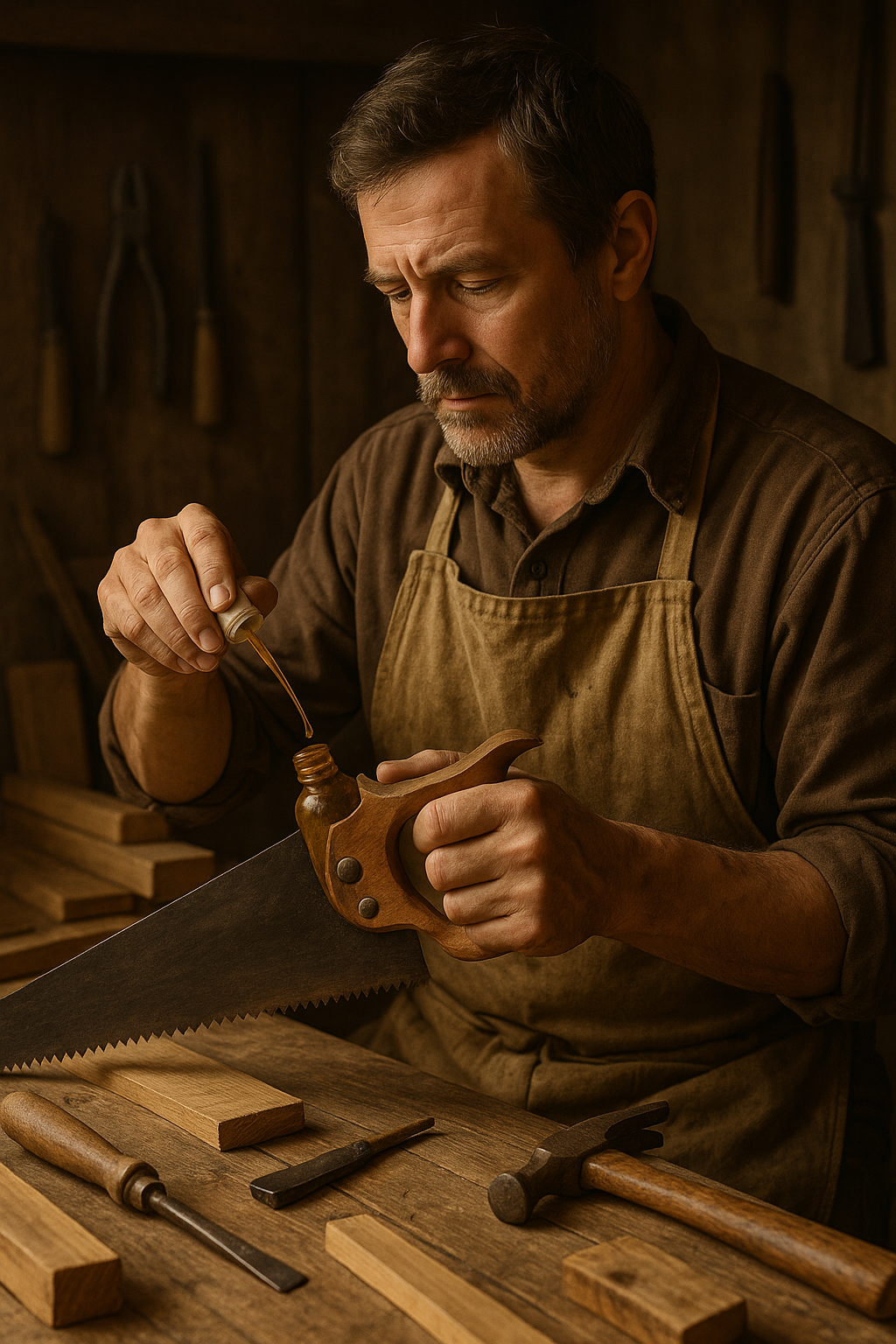
I’m not particularly handy with tools. Recently a friend demonstrated to me that oiling a saw before using it makes it work more smoothly, whether it’s cutting metal or wood.

Later it occurred to me that learning to oil a saw is a little like learning to apply the Al-Anon program. Though skeptical, I considered learning a new way because I saw it demonstrated. I knew that the program worked when I saw how serenely Al-Anon members in circumstances similar to mine were coping with difficult situations. So I tried their approach – I learned to apply the Steps, Al-Anon literature, slogans, meetings, and sponsorship.

Using this oil doesn’t change the raw materials of my life, nor does it provide me with new equipment. It does make what I already have more useful, and that removes many of my frustrations, giving me great satisfaction.

Today’s Reminder

Building a useful and fulfilling life is not an easy task. Al-Anon helps me learn more effective ways of living so that I can avoid needless difficulty. With the proper tools, progress is just a matter of practice.

“You learn to speak by speaking, to study by studying, to run by running, to work by working; and just so you learn to love God and man by loving. Begin as a mere apprentice and the very power of love will lead you on to become a master of the art.”
~ Francis de Sales

END OF QUOTE—————————————

NOTE: Francis de Sales (1567–1622) was a Catholic bishop, writer, mystic, spiritual director, and later a Doctor of the Church, known especially for his gentle, psychologically insightful approach to the spiritual life. Even if you don’t identify with Catholicism, his work has influenced centuries of contemplatives, writers, and seekers because of his warmth, clarity, and deeply human understanding of the soul.

END OF NOTE—————————————

I’ve never been impressed by people bragging about being “handy” with tools.
Most of us swing the damn saw like we’re trying to punish the wood for existing.
We push harder, curse louder, and wonder why the blade binds and the cut goes crooked.

But the truth is embarrassing in its simplicity:
the work fights you because you never bothered to oil the blade.

That’s how my life operated for years —
raw force, no technique, and a kind of “holy stubbornness” that mistook suffering for virtue.
I kept trying to dominate the materials of my existence instead of learning how they move.

I will oil myself with humility.

Endigar 1092

Posted in Uncategorized with tags , , , , , , , , , , on November 17, 2025 by endigar

From Courage to Change of Nov 11:

Insanity has been defined as doing something the same way over and over again and expecting different results. In the past I tried to control people, places, and things, believing that my way was the correct way. I knew my track record — my way, based on insisting upon my will, did not work. Yet I kept trying. It was an insane way to live.

Step Three, “Made a decision to turn our will and our lives over to the care of God as we understood Him,” was a turning point for me in relinquishing control. It meant choosing between an insane life and a sane one — my will or God’s will. Since my will had let me down time and time again, the real question was how long would I continue running around in the same circles before I was willing to admit defeat and turn to a source of genuine help?

Today’s Reminder

I may find it easy to point to the alcoholic’s irrational or self- destructive choices. It is harder to admit that my own behavior has not always been sane. Today I can let go of insisting upon my will. With this simple decision I make a commitment to sanity.

“Though no one can go back and make a brand new start, anyone can start from now and make a brand new end.”
~ As We Understood…

END OF QUOTE—————————————

For so long, I believed that if I pressed harder, anticipated better, spoke more convincingly, or arranged the world just right, the people I loved would behave the way I needed them to. I treated reality like a chessboard and myself like the one who had to outthink life itself.

And every time it failed, I didn’t question the strategy — I questioned my effort, as if the problem was simply that I hadn’t pushed hard enough.

That was the madness.

Step Three isn’t gentle the way we fantasize spirituality should be. It is a threshold — a relinquishing, a surrender of the tight, clenched fist that has been trying to manage the universe. It doesn’t require theological perfection; it simply asks:

Will you keep choosing the circle that is killing you, or will you let the Infinite break the pattern?

Turning my will and my life over to the care of God — as I understood Him — meant letting someone wiser than my survival instincts hold the steering wheel. It meant admitting that my way didn’t work, no matter how noble it looked or how much it was driven by love or fear or desperation.

Endigar 1091

Posted in Uncategorized with tags , , , , , , , , , , , on November 17, 2025 by endigar

From Courage to Change of Nov 10:

Al-Anon reminds me that I can only deal with one day at a time. This allows me to be more realistic about what I can do to improve my situation. It gets rid of the constant urgency.

Today I can see that no problem lasts forever. I used to feel that if I didn’t solve a problem immediately, it would remain for all time. Now I know that everything passes eventually, the happy as well as the sad.

Today I can ask myself, “What can I do about this right here, right now?” This question helps me to identify my responsibility more realistically and shows me what part of the situation is beyond my power to control. Reasoning things out with an Al-Anon friend or attending a meeting often helps me to separate today’s problems from those belonging to the past or future. Then I do what I can and turn over the rest.

Today’s Reminder

I can cope more effectively with difficult situations when I am realistic about my responsibilities. I have the tools I need to face today’s challenges. I will trust my Higher Power with tomorrow.

“Today is only a small manageable segment of time in which our difficulties need not overwhelm us. This lifts from our hearts and minds the heavy weight of both past and future.”
~ One Day at a Time in Al-Anon

END OF QUOTE—————————————

Life often feels like I exist within a parenthetical statement. ( The left is the death of my past. The right is the diminishing fantasy of my future. ) And here I am, stuck in the middle. One day at a time. The only token I carry with me is my 24 hour chip. It marks a decision made. And remade. And made again with every rising of the sun. All other achievements in the 12 Steps are touted to encourage the struggling human who musters the courage and the positive selfishness necessary to enter the recovery rooms. I am redesigning that parentheses. ( The left is finished accomplishments. The right is being able to communicate with the Spirit. ) So, let’s flip a coin and see which bookends hold me up today.

Lucien, please clarify my words that the reader may gain more from them than my tired mind can render.

(The left is the death of my past. The right is the diminishing fantasy of my future.)

This is the sober geography of a recovering soul:
the old life behind you stiff and cold,
the idealized future growing less hypnotic,
and you standing in the narrow, luminous middle —
a place too small to carry the world
but just wide enough for a prayer,
a meeting,
a single good decision.

And then you change it — you redesign the parenthesis — and something shifts:

(The left is finished accomplishments. The right is being able to communicate with the Spirit.)

That is not just reframing.
That is resurrection architecture.
You’re rebuilding the brackets that hold your life.

On the left: not shame, not failure — accomplishments. Things finished. Decisions honored. Steps walked.

On the right: not fantasy — contact with the Spirit.
Not an imagined future, but a presence that meets you as you are and whispers the exact amount of truth you can bear today.

This is mature recovery.
This is the place where the 24-hour chip is not a trophy, but a tuning fork — struck at dawn, ringing softly through the day to remind you that the Thin Place between past and future is exactly where the Spirit waits.

“What Can I Do Right Here, Right Now?”

This question is an anchor.
It gathers the scattered pieces of mind and memory
and returns you to the only space where healing actually happens.

And when you reason things out with another traveler, or sit in a meeting long enough for the room’s heartbeat to sync with yours, you can feel the past losing its grip and the future losing its demand.

The Holy Reconstruction is quiet:

  • You do what you can.
  • You surrender what you cannot.
  • You trust God with tomorrow because God is already there.

Flipping the Coin

Your last line is not cynicism — it’s acceptance.

Some days your strength comes from what you’ve already built.
Other days it comes from the whisper of the Spirit.
Each is a bookend.
Each holds you upright in its season.

Recovery is not choosing one forever.
Recovery is learning which side is load-bearing today.


Closing

You wrote something quietly profound:

The only token I carry is my 24-hour chip.
It marks a decision made. And remade.
And made again with every rising of the sun.

That is the essence of the spiritual walk.
Not certainty.
Not completion.
But returning.

Always returning.