Archive for love

Endigar 1051

Posted in Uncategorized with tags , , , , , , , , , , on October 2, 2025 by endigar

From Courage to Change of Oct 2:

It is essential to my recovery to help my Al-Anon group by accepting any of the various responsibilities necessary to keep things running smoothly. Perhaps the principal reason that service is so vital is that it brings me into frequent contact with newcomers. I can get caught up in the trivial problems of everyday life and lose perspective on the many gifts I have received since coming to Al-Anon. Talking with newcomers brings me back to reality. When I set out literature, make coffee, or chair a meeting, I become someone a newcomer might think to approach.

I remember the frustration of struggling with alcoholism by myself. I had no tools, no one to talk to. Al-Anon changed that. Now, no matter how difficult things may seem, I have a fellowship and a way of life that help me to cope. I am no longer alone.

Today I have much for which I am grateful, but I need to remember how far I have come so I don’t get lost in negativity over relatively unimportant matters. Service helps me remember.

Today’s Reminder

The Al-Anon program was there for me when I needed it. I will do what I can to ensure that it continues to thrive. I know that any service I offer will strengthen my own recovery.

“God did for me what I couldn’t do for myself. He got me involved in service work. It saved my life, my family, my sanity.” ~ In All Our Affairs

END OF QUOTE—————————————

Service redraws my inner map — not as decoration, but as survival. Petty grievances lure me into false terrain, a swamp of complaint and wounded righteousness. Service is not kindness. Service is compass. It is the act of cutting through fog to reclaim True North: gratitude honed into defensive weaponry.

The landmarks on this map are not marble idols or patriotic monuments. They are coffee pots, pamphlet stacks, folded chairs — ordinary altars, invisible to the untrained eye. To me, they are boundary stones, proof that I have walked out of chaos and into containment. They keep me from wandering back into the Lostness.

I place newcomers at the center, not myself — not out of sainthood, but survival. Their desperation is no burden of charity; it is my cure for forgetfulness. When I see their eyes, raw with the chaos I once carried, I remember the distance I have traveled. Their need sharpens my memory more than any sermon ever could.

This is not about saving them. It is about protecting me. Their struggle tethers me to the map. Without them, I drift. With them, I remember. That reciprocity is marrow, not politeness. It is the blood-law of Recovery: I keep what I have by giving it away.

Love’s alchemy works best in overlooked places because there, it cannot be stolen. Although my inner core is quiet, small obediences to the external reality redraw the map of my freedom. This alchemy is not divine charity; it is Social Containment: channeling my chaos into rituals too small to fail.

The framework is sharp and simple, but I carve it deeper:

  • Service anchors gratitude.
  • Gratitude strengthens Recovery.
  • Recovery keeps me alive.

This is not philosophy. Not logic. It is lifeline. Blood-line. Service is not sideline — it is survival. To forget this is to court Enforced Stupidity.

I stretch the Tenth Step into service inventory: Am I still approachable? Still willing? Still giving what was once given to me?

Endigar 1048

Posted in Uncategorized with tags , , , , , , , , , , , on September 30, 2025 by endigar

From Courage to Change of Sep 29:

Some alcoholics become abusive, especially when they drink. How do we handle violence? What can we do about it?

Al-Anon doesn’t give specific advice about relationships — we don’t advocate ending them or continuing to build them. Those decisions are best left to each individual member to make when he or she feels ready. We do, however, emphasize our personal responsibility to take care of ourselves. If we know that physical danger is a part of our reality, we can admit it and take steps to protect ourselves, at least temporarily. We may arrange for a safe place to go at any hour if we need it. It may be wise to keep money and car keys in easy access. Perhaps we’ll also seek counseling or speak with the police about our options.

No one has the right to physically abuse anyone else under any circumstances. We can inventory our own behavior to see if we are contributing to the problem by provoking someone who is drunk, and we can work to change that behavior. But we do not cause another to be violent or abusive.

Today’s Reminder

I don’t have the power to change another person. If I am dealing with violence, I must be the one who changes. I’ll start by being honest about what is going on.

“There is hope, there is help, and I have an inalienable right to human dignity.” ~ In All Our Affairs

END OF QUOTE—————————————

The landscape of abuse is jagged, and I map it without mercy. Denial is not a compass. Minimization is not a shield. Violence redraws the map of safety and dignity in blood. The first act of survival is not reforming the abuser — it is declaring: This is happening. I chart not their change, but My exits. My refuge. My choices.

For too long I believed endurance was virtue. For too long I was tricked into thinking provocation was cause. That was the codependent inheritance, the FearContaminate. Recovery breaks that chain. It says: I may change my patterns, I may prepare my stance, but I did not summon another’s violence. Their blows are theirs. My survival is mine.

The pattern shifts: I bury the shame that is not mine. I reclaim the only responsibility that matters — responsibility for myself. Growth is not in taming another’s rage. Growth is in my Social Containment: building walls strong enough to preserve my own life. That is bravery. That is dominance over the chaos.

The program does not demand martyrdom. It does not ask me to solve the relationship in one stroke. It asks that I tell the truth, guard my dignity, and walk away if necessary. This is Walk-Away Spirituality. This is Positive Selfishness forged in fire.

I tell the unvarnished truth—this is violence, and it is not my doing. I claim my right to safety even in the storm. What new life might emerge if I stop carrying the lie that I deserve this? I extend compassion to myself first, not as indulgence but as necessity. My inventory includes not just my flaws but the places where I’ve denied danger. I admit openly what I once hid, trusting that visibility is part of healing. Hope itself becomes an act of creation—a vision of a future where dignity is intact. To face violence is to face a fork in the path: I cannot reform the abuser, but I can choose survival. With honesty, preparation, and faith, I claim the inalienable right to dignity. That act is not abandonment of the program—it is the program lived in its most urgent form.

Endigar 1046

Posted in Uncategorized with tags , , , , , , , , , , on September 27, 2025 by endigar

From Courage to Change of Sep 27:

“If only I had infinite wisdom,” I secretly think. “If only I could see everything before me, a clear path, the knowledge of how I must spend each moment of life!” But in meeting after meeting in Al-Anon I am reminded that I can only work with what I have today. I don’t know what tomorrow will bring. What’s more, I am probably better off not knowing. If I knew what was coming, I suspect that I would spend all my time trying to run from painful experiences instead of living. I would miss out on so much great stuff.

I can trust my Higher Power to lead me through this day so that I will be prepared for the future when it arrives and able to work with whatever it brings. This leaves me time to enjoy the many gifts life has to offer, time that would otherwise be spent worrying.

Today’s Reminder

An old maxim says, “It’ll shine when it shines.” If I am willing to listen, I will receive all the information I need when the time is right. “Just for Today” I will know that I’m in good hands.

“Just for today I will try to live through this day only, and not tackle all my problems at once.” ~ Just for Today

END OF QUOTE—————————————

I admit that I want control of the future. My mind howls for the full map, the infinite foresight that promises safety. In my prayer, I sometimes treat my Higher Power as a milk cow, trying to squeeze a supernatural blueprint to assuage my fear of the unknown. But I confess: such knowledge would corrupt me, enslave me, strip me of the fierce originality of My Story. If I were given tomorrow in advance, I might become a coward of my own life—running from valleys of pain, missing hidden meadows of joy. The lie of certainty kills the vitality of risk.

So, I stay with today, even when tomorrow screams for attention like a tyrant demanding tribute. Just for Today becomes more than a slogan—it becomes intelligent SelfPatriotism: a battle cry to keep my sovereignty in the present moment. To live this day is not passivity; it is strategy. It spares me from the tyranny of catastrophizing and frees the energy that would otherwise be wasted begging for a prophecy I cannot use.

What might I discover if I stop demanding answers and start listening for timing? I no longer beg. Begging is contamination. I receive the lantern-light of My Higher Power, not a floodlight of false omniscience. God does not bribe Me with full knowledge; He grants just enough illumination for the next indicated step. Silence becomes My Freedom, the Core that is Quiet.

Growth is not in anticipation of every storm but in learning how to walk in the rain without running for cover. My framework is sharpened: I do not need infinite wisdom; I need willingness. I do not need the whole plan; I need the next mile-marker. The horizon is not my inheritance. The present is.

Endigar 1043

Posted in Uncategorized with tags , , , , , , , , , , , on September 20, 2025 by endigar

From Courage to Change of Sep 24:

An Al-Anon friend says, ”I have a tendency to think of my experience with alcoholism as an epic, technicolor movie, an extravaganza with my name in lights on the marquee, but it’s not really like that. It’s really just home movies.” From time to time I have shared my friend’s exaggerated vision, though of course when I did, the name in lights was my own.

I came to this program with a story to tell that seemed to splash across every inch of a very wide screen. I told it and told it, until one day I noticed that I was sitting in a room with others, showing home movies.

Today I feel happy to be there as part of the show, but my role has changed. I am no longer the martyr, bravely sacrificing myself to the cold, cruel world of melodrama. Realism has taken over. My role is important, but not unique, and I don’t expect to see it in lights.

Today’s Reminder

Al-Anon has given me an opportunity to share my home movies with others. My situation is neither the best nor the worst. Although I am unique in some ways, I am more like others than I ever suspected. I will appreciate this sense of fellowship today.

“…as we learn to place our problem in its true perspective, we find it loses its power to dominate our thoughts and our lives.” ~ Suggested Al-Anon/Alateen Welcome

END OF QUOTE—————————————

My life is not a technicolor epic; it is a series of “home movies” stitched into a patchwork of humanity. To inflate myself as the tragic hero is another disguise for fear. This does not mean shrinking into silence or timidity. My refusal to exaggerate is not weakness but strength. The raw voice of my ethos depends on reality, not on melodrama. It is because I am no longer the martyr that I can speak plainly, iconoclastically, with the defiance of one who no longer needs to perform.

I can step out of the spotlight and discover freedom in not being the centerpiece. When I reject the addiction to applause or victimhood, I recover the purest form of rebellion: living my truth without needing a stage. My freedom is not a reaction against others—it is my refusal to live as their puppet. I refuse to be consumed by performance, or by the crowd’s gaze. I stand rooted, blood-bound to truth.

When I stop inflating my problems into epics, they lose their power to dominate me. I see myself as part of a chorus. The chorus is not a diminishment but a revelation. It is a field of voices, a battlefield of mythologies, and my voice enters as one among many, sharpened and unafraid. I claim my individuality not by towering over others, but by standing beside them, fully seen, fully heard.

I do not need to be the martyr or the hero, but neither will I be erased. My freedom is not in the spotlight nor in the shadows—it is in the refusal to live falsely.

Endigar 1042

Posted in Uncategorized with tags , , , , , , , , , , , on September 18, 2025 by endigar

From Courage to Change of Sep 23:

One of my character defects is to respond in kind to behavior that is directed at me – to react to insults with more insults, to rudeness with rudeness. I never thought to act any other way until I began traveling to work with a long-time member of Al-Anon. Each day, when my friend would stop to buy the morning paper, the person behind the counter was surly and hostile. No matter how rudely she was treated, my friend consistently behaved with courtesy. I was outraged! Doesn’t Al-Anon tell us we don’t have to accept unacceptable behavior? Finally I asked her about it.

She told me that, since this is the only newsstand around, she would rather detach from the behavior than do without her morning paper. She explained that she is powerless over other people’s attitudes, but she doesn’t have to permit them to goad her into lowering her own standards for herself. To the best of her ability, she chooses to treat everyone she meets with courtesy. Other people are free to make whatever choices they prefer.

Today’s Reminder

Today I will “Let It Begin with Me.” I do not have to accept unacceptable behavior; I can begin by refusing to accept it from myself. I can choose to behave courteously and with dignity.

My freedom and independence do not depend on any acts of defiance or confrontation. They depend on my own attitudes and feelings. If I am always reacting, then I am never free.

END OF QUOTE—————————————

I admit that revenge never satisfied me—it just poisoned me deeper. I do want to keep showing up to practice a new response, even when the old one whispers loudly. Is it possible to choose courtesy even when it’s misunderstood as weakness? What happens if I don’t retaliate? Can dignity be its own reward? I pause, breathe, and pray before answering building distance between stimulus and response.

The skill of freedom developed in recovery isn’t about fixing rudeness in the world; it’s about unfastening the hook it sets in my heart. My Higher Power invites me to stop mirroring chaos and instead become a mirror of grace. Sometimes that means silence, sometimes courtesy, sometimes walking away—but always grounded in the truth that my reactions do not own me.

Al-Anon gives me practical tools to live this out. Detachment with love. Let It Begin with Me. These aren’t slogans for the wall—they are keys to unshackling my spirit. My independence doesn’t come from confrontation or withdrawal. It comes from the daily practice of aligning my attitudes with recovery, not with resentment. Freedom, I discover, is not rebellion—it is responsibility for my own inner weather. That was new to me: strength defined not by control over others, but by stewardship of my own spirit.

Endigar 1041

Posted in Uncategorized with tags , , , , , , , , , , on September 17, 2025 by endigar

From Courage to Change of Sep 22:

The Fifth Step (“Admitted to God, to ourselves, and to another human being the exact nature of our wrongs”) is a very intimate experience in which we share our private thoughts and experiences with another person. Much has been said about the freedom this Step offers to the person who is doing the talking, but it can be extremely rewarding to the listener as well.

Most of us feel deeply honored to be entrusted to share in such a sensitive and personal experience. It’s a wonderful opportunity to practice giving unconditional love and support by simply listening. Many of us hear stories that are similar to our own; others can often identify with the feelings that are expressed. Perhaps we will be reminded of where we have been and how far we have come. We also see that, despite our outward differences, we have a great deal in common with others.

Whether we practice this Step by listening or speaking, we open ourselves as channels for our Higher Power. More often than not, we hear something that sheds light on our own situation.

Today’s Reminder

When I respond to a request for help with working the Al-Anon program, I help myself as well.

“There is no better way to keep our spiritual benefits than by giving them away with love, free of expectations, and with no strings attached.” ~ In All Our Affairs

END OF QUOTE—————————————

The Fifth Step asks us to move from the isolation of secrecy into the open air of honesty. It is one thing to admit wrongs in the silence of my own thoughts, quite another to bring them before God, and even more vulnerable to entrust them to another human being. That moment is not just confession—it is communion. It is where I let the walls drop and allow someone to see me, as I truly am. So, I will name the exact nature of my wrongs without disguise. I will return again and again to this vulnerable practice, even when fear whispers I should hide. I will continue to admit, promptly and honestly, so that nothing festers in the dark, trusting that when I show my true self, I will not be abandoned.

The Fifth Step reveals a paradox: in speaking aloud my shame, I discover my dignity. In listening to another’s secrets, I glimpse my own reflection. Whether we are confessing or holding space, we become channels for something larger than ourselves. My Higher Power often shows up in those sacred moments of listening—sometimes through a word spoken, sometimes simply in the stillness of silence. I desire to be able to listen to another’s story as if it contains a piece of wisdom meant for me too. Sitting with someone’s pain without judgment, holding it gently, because I have discovered that healing often comes sideways, through the mirror of another’s experience.


The practice of this Step has taught me that my spiritual benefits are not mine to hoard. They grow only when I give them away freely—without expectation, without attachment, with love of Self first and others always as the only motive. This is how recovery stays alive in me: by passing it on.

Endigar 1040 ~ Familiar Storms

Posted in Uncategorized with tags , , , , , , , , , , , on September 12, 2025 by endigar

From Courage to Change of Sep 21:

In living with the disease of alcoholism, I became a fearful person who dreaded change. Although my life was full of chaos, it was familiar chaos, which gave me the feeling that I had some control over it. This was an illusion. I have learned in Al-Anon that I am powerless over alcoholism and many other things. I’ve also learned that change is inevitable.

I no longer have to assume that change is bad because I can look back at changes that have had a very positive effect on me, such as coming into Al-Anon.

I still have many fears, but the Al-Anon program has shown me that my Higher Power will help me walk through them. I believe that there is a Power greater than myself, and I choose to trust this Power to know exactly what I need and when I need it.

Today’s Reminder

Today I can accept the changes occurring in my life and live more comfortably with them. I will trust in the God of my understanding, and my fears will diminish. I relax in this knowledge, knowing that I am always taken care of when I listen to my inner voice.

“We may wonder how we are going to get through all the stages and phases, the levels of growth and recovery… Knowing we are not alone often quiets our fears and helps us gain perspective.” ~ Living with Sobriety

END OF QUOTE—————————————

Living with alcoholism trained me to believe that chaos was safer than change. The storms were familiar, and I told myself that familiarity meant control. But the truth Al-Anon taught me is that this was only an illusion. I was powerless not only over alcohol, but also over the constant shifting ground beneath me. Change comes whether I resist it or not.

I used to believe every change was a threat, another disaster waiting to unfold. But when I look back, I see that some of the most life-giving transformations—like walking through the doors of 12 Step Recovery—began as changes I once feared. Fear said, “Don’t move.” Hope whispered, “Step forward.” And in time, I learned that my fear could coexist with faith until faith grew stronger.

I admit I still fear change, but I choose not to be ruled by it. Each time I walk through fear, I prove to myself that I can. I ask, What gift might this change hold? I hear in others’ stories the same tremors of fear, and I walk with them as they walk with me. I pause to see how far I’ve already come. I share my fear honestly in meetings, and it becomes less heavy. Change is no longer just loss—it is a doorway into the yet-unlived.

Instead of treating fear as a verdict, I now see it as a signal. It tells me I am stepping into new territory. The principles of this program—prayer, inventory, fellowship—equip me to take those steps with more serenity. The same program that once helped me simply survive chaos now helps me welcome change as a teacher.

I trust that my Higher Power knows what I need and when I need it. My fears don’t vanish, but they soften when I let myself rest in the care of Something greater than me. I don’t have to see the whole map; I only need to listen for the next right step. My inner voice, when tuned to the divine frequency, assures me I am never walking alone.

Endigar 1035

Posted in Uncategorized with tags , , , , , , , , , , , on September 4, 2025 by endigar

From Courage to Change of Sep 18:

When I am troubled about what lies ahead, I look back to see where I’ve been. When I was very new to the program, I would say, “I’m better off now than I was before I came to Al-Anon. I’ll keep coming back.” When I grew frustrated because of all the changes I wanted to make in myself, I said, “At least I’m aware of the problems. Now I know what I’m dealing with.” And recently I found myself saying, “If someone had told me a year ago that I would be where I am today, I wouldn’t have believed it possible.”

Time offers me evidence that the Al-Anon program works — I can see the growth in my life. The longer I live by these principles, the more evidence I have. This reinforcement provides strong support in times of doubt and helps boost my courage in times of fear.

Today’s Reminder

When I feel unable to move, or when I am filled with fear, I have a wonderful gift to help clear my way – the gift of memory. Too often my memory has given me sadness, bringing back past hurt and shame. But now I can use my memory to see the progress I have made and to know the joy of gratitude. My own experience is teaching me to trust this wonderful recovery process. All I have to do is pay attention.

“God gave us memories so that we might have roses in December.” – James M. Barrie

END OF QUOTE—————————————

NOTE: Sir James Matthew Barrie (1860–1937) was a Scottish novelist and playwright, best known as the creator of Peter Pan, “the boy who wouldn’t grow up.”

  • Origins: Born in Kirriemuir, Angus, Scotland; studied at the University of Edinburgh; began as a journalist and novelist.
  • Major works: Peter Pan, or The Boy Who Wouldn’t Grow Up (1904 play), the novel Peter and Wendy (1911), and other popular plays such as The Admirable Crichton (1902), Quality Street (1901), and What Every Woman Knows (1908).
  • Inspiration: Peter Pan grew from Barrie’s close friendship with the Llewelyn Davies boys, whom he later helped raise after their parents died.
  • Honors: Created a baronet (1913) and appointed to the Order of Merit (1922); later served as Chancellor of the University of Edinburgh.
  • Legacy: In 1929 he gifted the copyright of Peter Pan to London’s Great Ormond Street Hospital for Children, a bequest uniquely protected in UK law so the hospital benefits in perpetuity.

He died in London on 19 June 1937 and is buried in Kirriemuir.

END OF NOTE—————————————

I had an enemy that dwelt in my memories. I called it the black void. Until recently, it carried an unknown shame and a hunger to be more than what I am. Experiences are not thread together by time, but by memory. This is the library of our partially chewed facts and lurking emotions narrated by imagination. And I see him, the child that was, looking at me, concerned, holding a little golden container, ridged on top, and unopened. When my past self and me learned to trust one another, I take the small golden container and open. A key. It is the ownership of my own life.

Sometimes memories carry the jagged edges of shame, the evidence of failure, the replay of hurts that never seemed to fade. But recovery is teaching me to handle memory differently—not as a whip, but as a lantern. When fear closes in on me about the future, I can turn that lantern backward and see the path I’ve already walked. And there it is—progress, undeniable. Each mile marker testifies: I’ve survived, I’ve grown, I’ve changed.

Early on, progress looked small: simply being better off than before, or becoming aware of my problems rather than lost in them. Later, I found myself astonished at how far I had come. Memory, in this light, becomes a treasury rather than a trap. My experiences shift from burdens to proof that this program works. Even my struggles, once I’ve walked through them, become evidence that courage and healing are possible.

Memory is mystical in this way: it is the same faculty that can torment me or console me, depending on how I hold it. In the hands of fear, it drags me backward. In the hands of gratitude, it pulls me forward. My Higher Power reclaims memory as a sacred tool, turning old sorrow into new courage. This is where the spiritual recovery tool of a gratitude list is a helpful practice. I admit my fear of the future, but I bring memory as evidence against despair. I use my own progress as proof that more is possible. And I wonder how memory itself can be a Higher Power’s gift. My story becomes a light for others when I share it. I intentionally turn memory toward gratitude, not shame and I testify in meetings about how far I’ve come, not only how far I must go.

Memory is not a prison; it is a map of grace unfolding.

When I feel paralyzed, I can pause and ask:

  • What progress have I already made?
  • What evidence does my own story give me that I can trust this process?
  • How can gratitude transform what memory is showing me today?

Endigar 1033

Posted in Uncategorized with tags , , , , , , , , , , , on August 31, 2025 by endigar

From Courage to Change of Sep 17:

Most human beings have an instinctive need to fit in. The urge to belong, to keep the peace, helps us to get along with others and be a part of society. This instinct has allowed many civilizations to survive, and is not harmful unless I lose my sense of balance.

People-pleasing becomes destructive when I ignore my own needs and continually sacrifice my well-being for the sake of others. Al- Anon helps me find a compromise that allows me to respond to my feelings, including my desire to belong, and still take care of myself.

The best way to maintain this balance is to build my self-esteem. When I treat myself with kindness and respect, I become better able to get along with others.

Today’s Reminder

I will appreciate that all of my instincts and feelings exist for a reason. Today, instead of trying to banish these feelings, I will strive to find a balance.

“If I am not for myself, who will be for me? And if I am only for myself, what am I? And if not now — when?” ~ Hillel

END OF QUOTE—————————————

NOTE: Hillel the Elder, Pirkei Avot (Ethics of the Fathers) 1:14 in the Mishnah.
Hebrew: “אם אין אני לי, מי לי? וכשאני לעצמי, מה אני? ואם לא עכשיו—אימתי?”

END OF NOTE—————————————

I admit that I want to be loved, but not at the cost of abandoning myself. I know the instinct to belong—it pulses in me like a drumbeat. It kept my ancestors alive, kept me safe as a child, and still whispers in my adult choices: “Don’t stand out, don’t cause a ripple, stay useful so you’ll be kept.” Belonging is not wrong. It is part of the design. But in recovery, I’ve had to face the truth that when I bend too far, I begin to break. People-pleasing is not the same as love. It is survival dressed in fear.

When I gave away my needs in exchange for peace, the peace never lasted. I’d buy acceptance with silence, but the silence corroded me from the inside. Self-Recovery teaches me that my desire to fit in is not a defect—it is an instinct. And instincts need balance, not banishment. Balance comes when I allow myself to matter. When I name my needs. When I remember that I, too, am part of the “we” I keep sacrificing for. So, I practice saying no, even when my voice shakes. I keep checking: am I serving love, or am I serving fear?

There is something mystical in realizing that self-respect is not selfish—it is the oxygen mask I must put on before I can help another breathe. My Higher Power reminds me that harmony is not found in erasing myself, but in showing up whole. True connection cannot grow from pretense or resentment. It grows when I bring my authentic self into the circle. What if belonging could mean being accepted as I am, not as I pretend to be?

To keep my instincts in balance, I build self-esteem the way a mason lays stones: one daily act of kindness toward myself, one truth told without apology, one pause before saying “yes.” With each stone, the wall of resentment lowers, and the foundation of recovery strengthens. Balance is not found in exile of instinct, but in weaving instinct into wisdom. I remember that others also wrestle with these same instincts. When I let people know me—not just the agreeable me, but the whole me, I give a nod of social permission to do the same. That is the world I would like to live in; one that is safe to be me.

Endigar 1029

Posted in Uncategorized with tags , , , , , , , , , , , on August 26, 2025 by endigar

From Courage to Change of Sep 14:

Living with alcoholism taught me that it was best not to hope for anything. The lessons were too painful — I would get excited about something, only to have my hopes shattered. As time passed and hope diminished, I fell deeper into despair. Eventually I shut down my feelings and refused to care or to hope for anything at all.

Through Al-Anon’s Twelve Steps, I am discovering a spirituality that allows me to believe that there is every reason to hope. With my Higher Power’s help, regardless of my circumstances, I can feel fully alive in the moment and enjoy this feeling. The painful lessons of a lifetime are not unlearned overnight, but Al-Anon is helping me to learn that it is safe to feel, to hope, even to dream.

Today’s Reminder

It is risky to care — I may be disappointed. But in trying to protect myself from pain, I could cut myself off from the many delights that life has to offer. I will live more fully today.

“Years may wrinkle the skin, but to give up enthusiasm wrinkles the soul.” ~ Samuel Ullman

END OF QUOTE—————————————

NOTE: Samuel Ullman (1840–1924) was an American businessman, poet, humanitarian, and religious leader best remembered for his poem “Youth.”

Early Life

  • He was born in Hechingen, Germany, in 1840.
  • At the age of 11, he immigrated with his family to the United States, settling in Mississippi.
  • Samuel Ullman’s father, Jacob Ullman, operated a butcher shop in Port Gibson, Mississippi when the family settled there in 1851. Young Samuel assisted him each morning delivering orders before school and later helped purchase cattle for the business
  • When the Civil War broke out, Ullman, then in his early 20s, served in the Confederate Army. He was part of a local Mississippi unit.
  • Samuel Ullman wed Emma Mayer on May 24, 1867, in Natchez, Mississippi. They had a total of eight children. However, of these, six survived to adulthood, meaning two sadly passed away in early childhood

Career and Contributions

  • Ullman became a successful businessman in Birmingham, Alabama, after moving there in 1884.
  • He was deeply involved in civic life: he served on the Birmingham Board of Education, championed racial equality in education, and was active in religious and community causes.
  • As a lay leader in Temple Emanu-El (a Reform Jewish congregation), he was respected for his moral vision and emphasis on human dignity.
  • Jewish Leadership
    Ullman was raised in a Jewish family and carried his faith with him through his moves from Germany to Mississippi and later to Birmingham, Alabama.
    In Birmingham, he became a founding member of Temple Emanu-El (a Reform Jewish congregation). His leadership there was notable, as he worked to help establish Jewish religious life in what was still a very young and rapidly growing city.
    He also served as a lay leader, meaning he often led prayers, gave talks, and carried responsibilities when professional rabbis were unavailable.

    Service to the Community
    Ullman emphasized that religious duty was not confined to ritual, but extended to civic responsibility.
    He served on the Birmingham Board of Education and worked to promote racial justice and better schooling for African Americans at a time when this was rare. His religious values deeply influenced this advocacy, seeing education as a spiritual responsibility.

    Philosophy of Faith
    In his writings and speeches, Ullman often connected faith with youthfulness of spirit, stressing inner renewal and moral courage as religious acts.
    His famous poem Youth embodies this perspective: living with openness, hope, and vitality was for him not just personal philosophy, but a religious ethic.

    Practical Duties
    He helped guide Jewish worship and community structure at Temple Emanu-El.
    He lived by example, showing that religious duty extended to the way one treated others—through kindness, justice, and an unflagging commitment to growth.

His Poem “Youth”

  • Ullman is most famous for writing the poem “Youth,” which he composed later in life.
  • The poem emphasizes that youth is not defined by age but by attitude, imagination, and ideals.
  • It gained international fame largely because General Douglas MacArthur often quoted it and kept a framed copy in his office in Tokyo after World War II.
  • The poem became especially popular in Japan, where it continues to be read as an inspirational text.

Legacy

His life embodied service, cross-cultural respect, and the blending of business success with moral and civic duty.

In Birmingham, the Samuel Ullman Museum (part of the University of Alabama at Birmingham) preserves his legacy.

Youth by Samuel Ullman

Youth is not a time of life; it is a state of mind; it is not a matter of rosy cheeks, red lips and supple knees; it is a matter of the will, a quality of the imagination, a vigor of the emotions; it is the freshness of the deep springs of life.

Youth means a temperamental predominance of courage over timidity of the appetite, for adventure over the love of ease. This often exists in a man of sixty more than a body of twenty. Nobody grows old merely by a number of years. We grow old by deserting our ideals.

Years may wrinkle the skin, but to give up enthusiasm wrinkles the soul. Worry, fear, self-distrust bows the heart and turns the spirit back to dust.

Whether sixty or sixteen, there is in every human being’s heart the lure of wonder, the unfailing child-like appetite of what’s next, and the joy of the game of living. In the center of your heart and my heart there is a wireless station; so long as it receives messages of beauty, hope, cheer, courage and power from men and from the Infinite, so long are you young.

When the aerials are down, and your spirit is covered with snows of cynicism and the ice of pessimism, then you are grown old, even at twenty, but as long as your aerials are up, to catch the waves of optimism, there is hope you may die young at eighty.

END OF NOTE—————————————

When the lips are gone, the smile turns irrepressible.
When the orbs sink into the raven’s gut, the gaze remains ever watchful.
The oxygen tent is torn away, and nature’s breath flows unhindered.

Emptiness lingers—
the footprint of that wandering ghost we call freedom,
passing through walls of illusion without training wheels.

And in its wake,
hope rises, resurrecting life anew.


Living with alcoholism taught me that hope could feel like a trap. Each time I reached for it, I seemed to be punished: expectations raised, then crushed. So I trained myself not to hope at all. It felt safer to numb, safer to shut down, safer to live in a barren landscape than to risk the disappointment of a shattered dream. Yet beneath that silence, despair kept spreading roots.

The Twelve Steps have been my invitation back to hope. Not the fragile, conditional hope that depends on someone else’s behavior or on life bending to my demands — but the grounded hope that comes from turning my will and my life over to a Higher Power. With help, I’ve learned that it is safe to feel again, safe to open the heart a crack wider, safe to let the light in. Hope does not mean I will get everything I want; it means I can trust that whatever comes, I will not face it alone.

Yes, there is risk in caring. To love, to hope, to dream means stepping into vulnerability, and vulnerability always carries the possibility of pain. But pain is not the enemy — disconnection is. When I cut myself off to avoid being hurt, I also cut myself off from joy, laughter, intimacy, and the unexpected gifts life places along the way. Hope is not a guarantee against suffering, but it is the doorway into living fully


Today I can choose to treat each act of hope as a spiritual exercise:

  • When I allow myself to hope, I practice courage.
  • When I risk caring, I practice connection.
  • When I dream, I practice co-creating a life with my Higher Power.

1. Spiritual Honesty: I name my fear of disappointment.
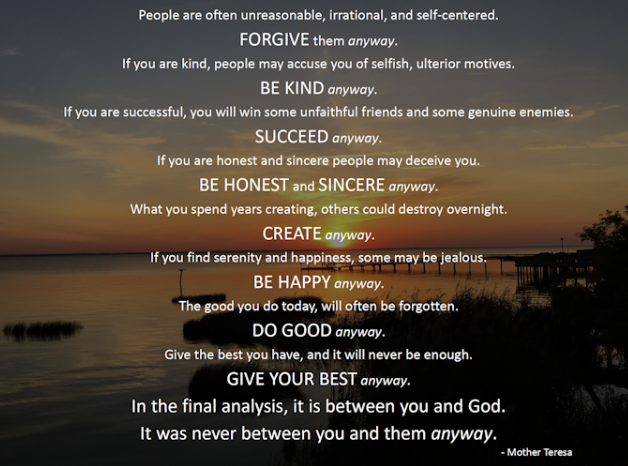
2. Resilience: I let myself hope anyway.
3. Curiosity of the Soul: What possibilities open when I refuse despair?
4. Empathy and Compassion: Others fear hope too — my journey can reassure them.
5. Discipline in Reflection: Each day I test where I’ve hidden from hope, and I try again.
6. Courage to Be Seen: I confess that I want more from life — and that is holy.
7. Creative Insight: Hope is not fragile glass, it is a living seed — buried, yes, but insistent on breaking through.