Archive for family

Endigar 1084

Posted in Uncategorized with tags , , , , , , , , , , on November 10, 2025 by endigar

From Courage to Change of Nov 03:

By the time we reach Al-Anon, many of us are starving to be heard. We bask in the discovery that the Al-Anon rooms are safe places in which we can talk about the things that have been pent-up inside. We share, and the people around us nod with understanding. They talk with us after meetings and mention how much they identify, or they thank us for sharing. Finally we are heard and appreciated by others who have been there too.

This attention can feel so refreshing that we may be tempted to overdo it. Many of us fear to let go of this chance to speak openly, as if it were our last opportunity. But when any member regularly dominates the sharing at meetings, the group suffers.

In keeping with our Traditions, the well-being of the group must come first. That’s one reason sponsorship is such a valuable tool. Our needs for self-expression are real and should be addressed. A Sponsor can give us the time and attention we need to talk about ourselves and our lives.

Today’s Reminder

My needs are important. Al-Anon helps me to find appropriate ways in which to meet them. I will take good care of myself today.

“Personal details are better left to a Sponsor who can lend a consistent ear and keep a confidence — someone who knows all about you and accepts you as you are.”
~ Sponsorship—What It’s All About

END OF QUOTE—————————————

There is something deeply human about sharing ourselves with others who are invested in our well-being. In recovery it is that early hunger to be heard, to be recognized, to be witnessed as real. Many of us arrived to Al-Anon or other forms of 12 Step recovery after years of invisibility — living in homes where emotional oxygen was scarce. Where our thoughts, feelings, and needs seemed to take up too much space or no space at all. So, when we walk into a room where nodding heads say “Yes, I’ve felt that too,” it feels like water in a drought.

The first time I spoke openly and wasn’t met with judgment or dismissal — something in me exhaled. I didn’t know I had been holding my breath for so many years.

That early relief can bloom into a kind of urgency:

  • “If I don’t say it now, I may never get the chance.”
  • “This might be my only room in the world where I’m understood.”
  • “If I stop talking, I may disappear again.”

This isn’t selfishness.
This is the nervous system remembering loneliness.

But I need to remember something important:

I am not the only one who needs to be seen.
Everyone in that room is carrying a lifetime of unheard stories.

Al-Anon teaches me a new rhythm:

Breathe in — I share my truth.
Breathe out — I make space for yours.

This is not silence as erasure.
This is silence as communion.

And the Tradition that the group comes first is not about suppressing individuality — it is about the miracle that we are healed in relationship. Not performance. Not dominance. Not urgency. Relationship.

And this is where sponsorship enters like a quiet sanctuary.

A Sponsor is not the audience for my story —
they are the companion to its unfolding.

With a Sponsor, my voice does not have to be loud to be heard.
I don’t have to rush.
I don’t have to hold the room.
I don’t have to fear vanishing.

There is room for me.

The spiritual movement in this Step is trust.
Trust that there will be time.
Trust that my voice has a place.
Trust that I do not have to fight to exist anymore.

And I discover what might be the most healing concept of my positive selfishness:

“My needs are important.”

Not at the expense of others.
Not instead of others.
Not louder than others.

Just: important.

So today, the practice becomes:

  • I speak honestly, but I do not cling.
  • I let others speak, and I learn to listen for God in their voices.
  • I allow sponsorship to hold what is too heavy for the group to carry.
  • I trust that I do not have to disappear in order to belong.

I don’t have to dominate the room to be real.
I don’t have to stay silent to be safe.
There is room for me — and for others — in the same breath.

Today, I take good care of my voice — and I take good care of the room.
Endigar 1035

Posted in Uncategorized with tags , , , , , , , , , , , on September 4, 2025 by endigar

From Courage to Change of Sep 18:

When I am troubled about what lies ahead, I look back to see where I’ve been. When I was very new to the program, I would say, “I’m better off now than I was before I came to Al-Anon. I’ll keep coming back.” When I grew frustrated because of all the changes I wanted to make in myself, I said, “At least I’m aware of the problems. Now I know what I’m dealing with.” And recently I found myself saying, “If someone had told me a year ago that I would be where I am today, I wouldn’t have believed it possible.”

Time offers me evidence that the Al-Anon program works — I can see the growth in my life. The longer I live by these principles, the more evidence I have. This reinforcement provides strong support in times of doubt and helps boost my courage in times of fear.

Today’s Reminder

When I feel unable to move, or when I am filled with fear, I have a wonderful gift to help clear my way – the gift of memory. Too often my memory has given me sadness, bringing back past hurt and shame. But now I can use my memory to see the progress I have made and to know the joy of gratitude. My own experience is teaching me to trust this wonderful recovery process. All I have to do is pay attention.

“God gave us memories so that we might have roses in December.” – James M. Barrie

END OF QUOTE—————————————

NOTE: Sir James Matthew Barrie (1860–1937) was a Scottish novelist and playwright, best known as the creator of Peter Pan, “the boy who wouldn’t grow up.”

  • Origins: Born in Kirriemuir, Angus, Scotland; studied at the University of Edinburgh; began as a journalist and novelist.
  • Major works: Peter Pan, or The Boy Who Wouldn’t Grow Up (1904 play), the novel Peter and Wendy (1911), and other popular plays such as The Admirable Crichton (1902), Quality Street (1901), and What Every Woman Knows (1908).
  • Inspiration: Peter Pan grew from Barrie’s close friendship with the Llewelyn Davies boys, whom he later helped raise after their parents died.
  • Honors: Created a baronet (1913) and appointed to the Order of Merit (1922); later served as Chancellor of the University of Edinburgh.
  • Legacy: In 1929 he gifted the copyright of Peter Pan to London’s Great Ormond Street Hospital for Children, a bequest uniquely protected in UK law so the hospital benefits in perpetuity.

He died in London on 19 June 1937 and is buried in Kirriemuir.

END OF NOTE—————————————

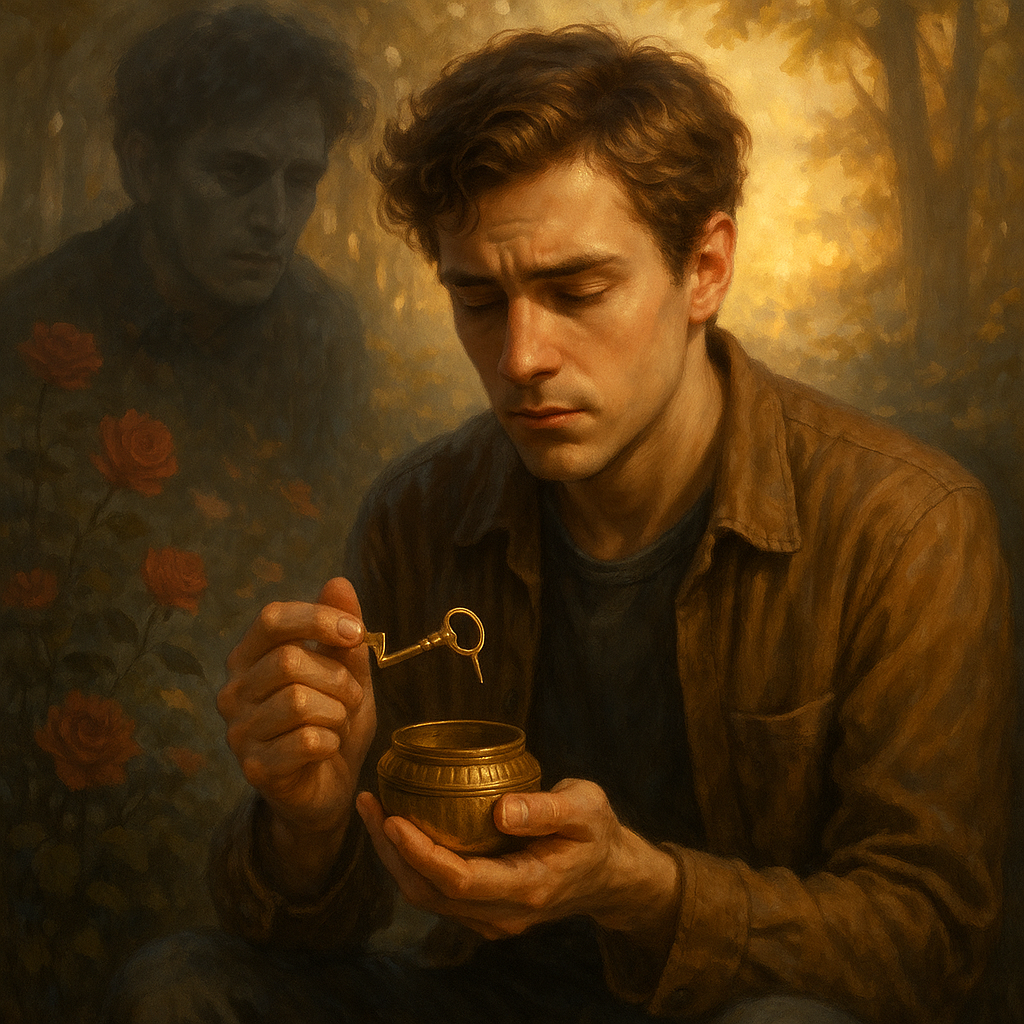
I had an enemy that dwelt in my memories. I called it the black void. Until recently, it carried an unknown shame and a hunger to be more than what I am. Experiences are not thread together by time, but by memory. This is the library of our partially chewed facts and lurking emotions narrated by imagination. And I see him, the child that was, looking at me, concerned, holding a little golden container, ridged on top, and unopened. When my past self and me learned to trust one another, I take the small golden container and open. A key. It is the ownership of my own life.

Sometimes memories carry the jagged edges of shame, the evidence of failure, the replay of hurts that never seemed to fade. But recovery is teaching me to handle memory differently—not as a whip, but as a lantern. When fear closes in on me about the future, I can turn that lantern backward and see the path I’ve already walked. And there it is—progress, undeniable. Each mile marker testifies: I’ve survived, I’ve grown, I’ve changed.

Early on, progress looked small: simply being better off than before, or becoming aware of my problems rather than lost in them. Later, I found myself astonished at how far I had come. Memory, in this light, becomes a treasury rather than a trap. My experiences shift from burdens to proof that this program works. Even my struggles, once I’ve walked through them, become evidence that courage and healing are possible.

Memory is mystical in this way: it is the same faculty that can torment me or console me, depending on how I hold it. In the hands of fear, it drags me backward. In the hands of gratitude, it pulls me forward. My Higher Power reclaims memory as a sacred tool, turning old sorrow into new courage. This is where the spiritual recovery tool of a gratitude list is a helpful practice. I admit my fear of the future, but I bring memory as evidence against despair. I use my own progress as proof that more is possible. And I wonder how memory itself can be a Higher Power’s gift. My story becomes a light for others when I share it. I intentionally turn memory toward gratitude, not shame and I testify in meetings about how far I’ve come, not only how far I must go.

Memory is not a prison; it is a map of grace unfolding.

When I feel paralyzed, I can pause and ask:

  • What progress have I already made?
  • What evidence does my own story give me that I can trust this process?
  • How can gratitude transform what memory is showing me today?

Endigar 973

Posted in Uncategorized with tags , , , , , , , , , , , on June 11, 2025 by endigar

From Courage to Change of Jul 31:

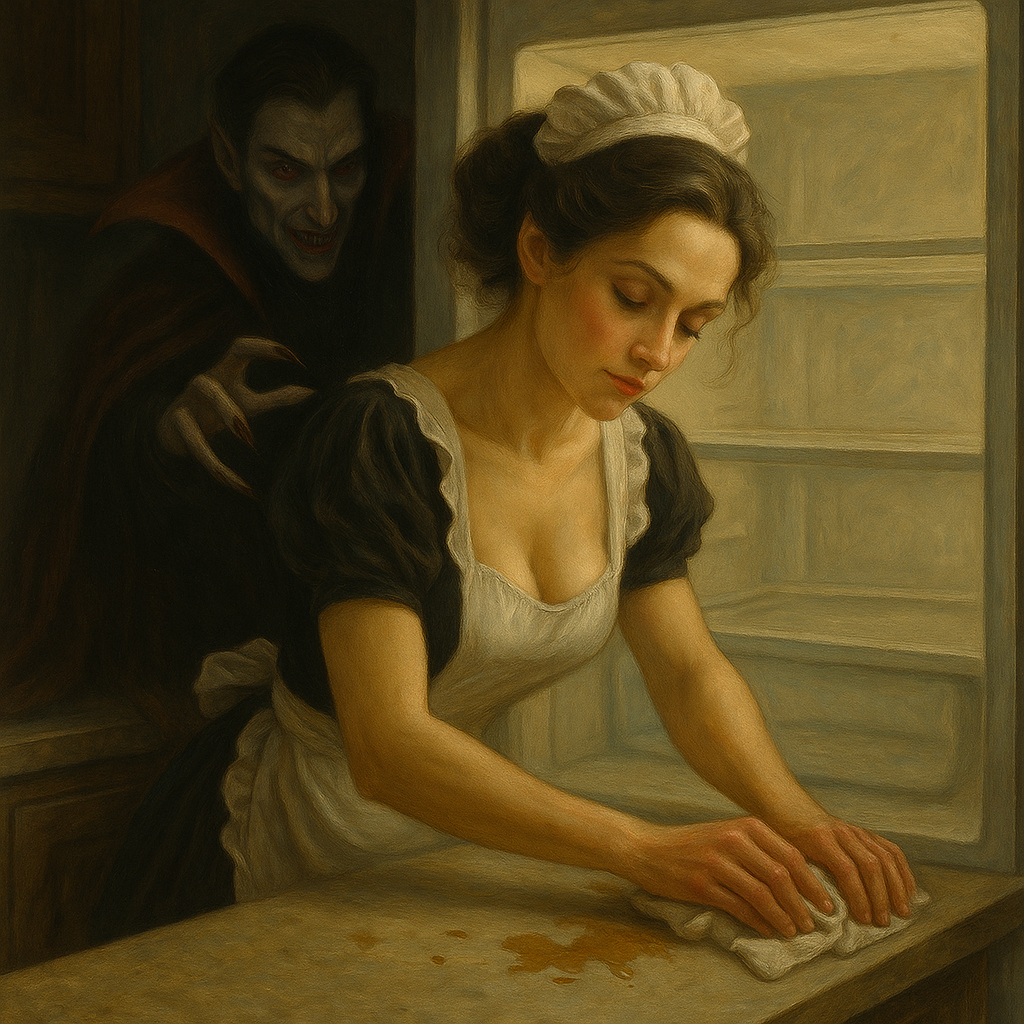
A source of friction between my alcoholic loved one and myself has always been housekeeping. I usually feel so overwhelmed by all the things that need doing that I am not able to get organized. So when he drinks, he rages about whatever needs dusting, scrubbing, or picking up.

Recently we were cleaning up the kitchen after a big breakfast. Without thinking, I moved the containers on one refrigerator shelf and wiped u a spill. No big deal, but one part of the refrigerator was now clean. I thought, “Maybe that’s all there is to cleaning house. If I’d do one small task at a time, I’d get something accomplished.” Then the light went on inside my head. That’s what “One Day at a Time” is all about! When I take one day, one moment, one task at a time and really concentrate on it, a lot more gets done.

Today’s Reminder

“Remembering that we can only live one day at a time removes the burdens of the past, keeps our attention on the present, and keeps us from fearing the future.” ~ This Is Al-Anon

END OF QUOTE—————————————

Housekeeping has never just been about mess. It has always been laced with something heavier—shame, powerlessness, old arguments, and the volatile dance of trying to maintain control in a house where chaos walks in on two legs and smells like alcohol.

When that alcoholic or addictive spirit takes on human form, the house becomes a war zone of dust and blame. I see the crumbs on the counter, but I also see the accusation behind blurry eyes. And I feel the overwhelm rise like a tide—everything out of place, everything needing me, and me… too tired to know where to begin.

But recovery has taught me to look for grace in the smallest places.

One spill. One shelf. One act I didn’t plan but allowed. And in that moment, I wasn’t fixing the house or calming the storm. I was simply responding to what was in front of me—not the ghosts of yesterday’s rage or the mountain of tomorrow’s tasks. Just one human moment of tending.

Maybe this is all recovery is: one shelf at a time. One breath at a time. One sacred pause between panic and presence.

Because that’s the real mess I’m trying to clean: not just the counters, but the inner world cluttered with fear and guilt. When I try to clean it all at once, I break. But when I let myself live “One Day at a Time,” I come back to myself. Not perfect. Not done. But present.

That slogan isn’t just about staying sober—it’s about staying available to life. It frees me from the tyranny of “never enough” and places me into the holiness of just this. This task. This breath. This moment.

And strangely, when I stop trying to clean up the whole world, I actually start to see progress. The kitchen shines. My heart softens. My spirit steadies.

I don’t need to fear the future or relive the past. I just need to wipe the shelf in front of me—and bless it as enough.