Archive for Addiction

Endigar 1024

Posted in Uncategorized with tags , , , , , , , , , , , on August 12, 2025 by endigar

From Courage to Change of Sep 09:

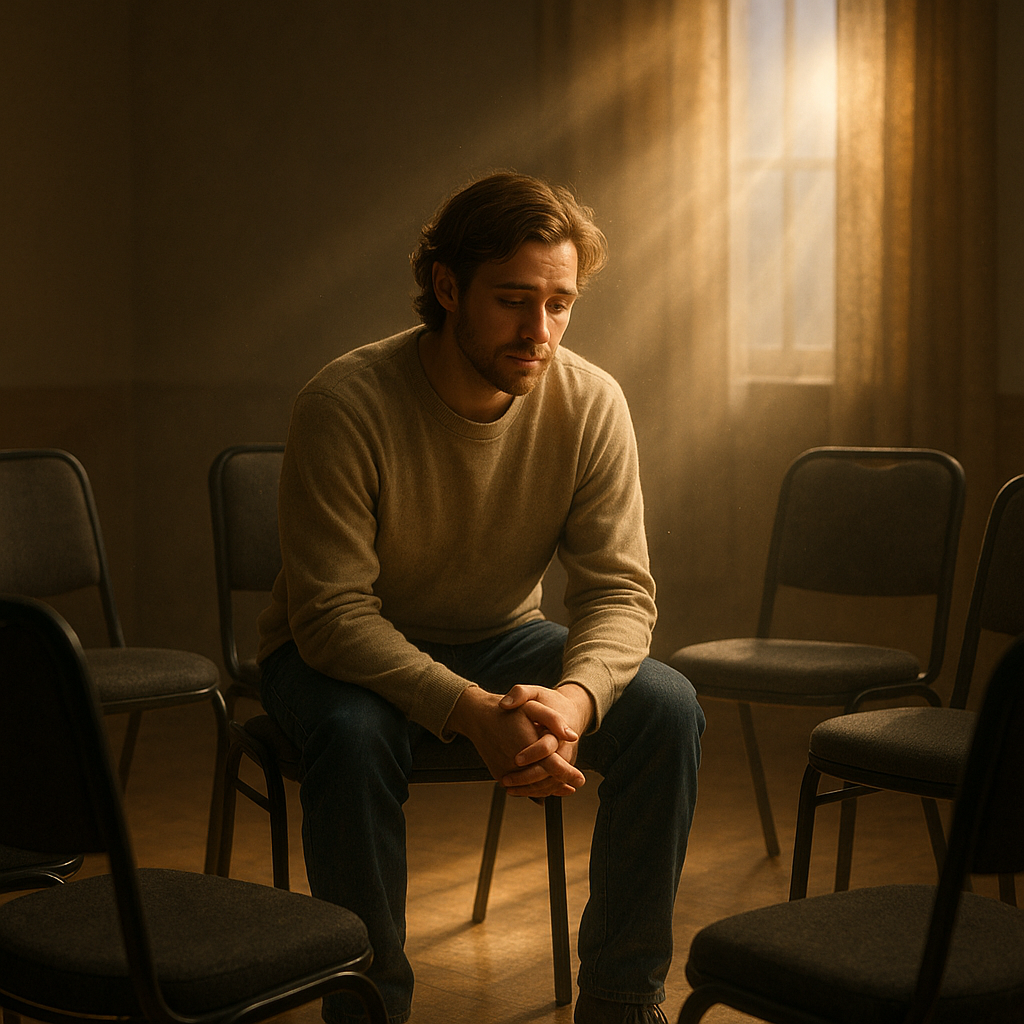
Sometimes I sit in a meeting and I don’t know how to ask for help. I can get trapped inside my pain. Some nameless thing seems to tear at my insides. I freeze, thinking that if I don’t move, it will go away. So I don’t ask, I don’t talk, and the pain grows.

Does my face look calm? Don’t be fooled. I’m just afraid to let you see the truth. You might think I’m foolish or weak. You might reject me. So I don’t talk, and the pain remains.

But I listen. And through other people, my Higher Power does for me what I can’t do for myself. Someone in the meeting shares and expresses the very feelings I am afraid to describe. My world suddenly widens, and I feel a little safer. I am no longer alone.

Today’s Reminder

One of the miracles I have found in Al-Anon is that help often comes when I most need it. When I can’t bring myself to reach out for help, it sometimes comes to me. When I don’t know what to say, I am given the words I require. And when I share what is in my heart, I may be giving a voice to someone who cannot find his own. Today I have a Higher Power who knows my needs.

“As I walk, As I walk, The universe is walking with me.” – from the Navajo rain dance ceremony

END OF QUOTE—————————————

To withdraw or not to withdraw—that is the question. Life among humans can feel unbearably taxing, threatening, and disappointing. There’s no escaping that imagined spotlight fixed on my weaknesses, and no connection that fully satisfies my longing for something more.

I suspect others feel much the same. I also suspect that much of life is pretense—a kind of protective ritual. Whenever I encounter genuine connection in a safe space, it feels like a godsend. But inevitably, humanity finds a way to wound the inner child. And in the game of life, the safest place often seems to be the sidelines.

I know that silence can feel like safety. In my darker seasons, I’ve sat in meetings with my insides in knots and my face arranged in calm, thinking the stillness might somehow hide my storm. I’ve feared that if I spoke, I would be exposed—my weakness on full display, my worth put on trial. I’ve told myself, Just keep quiet. It will pass.

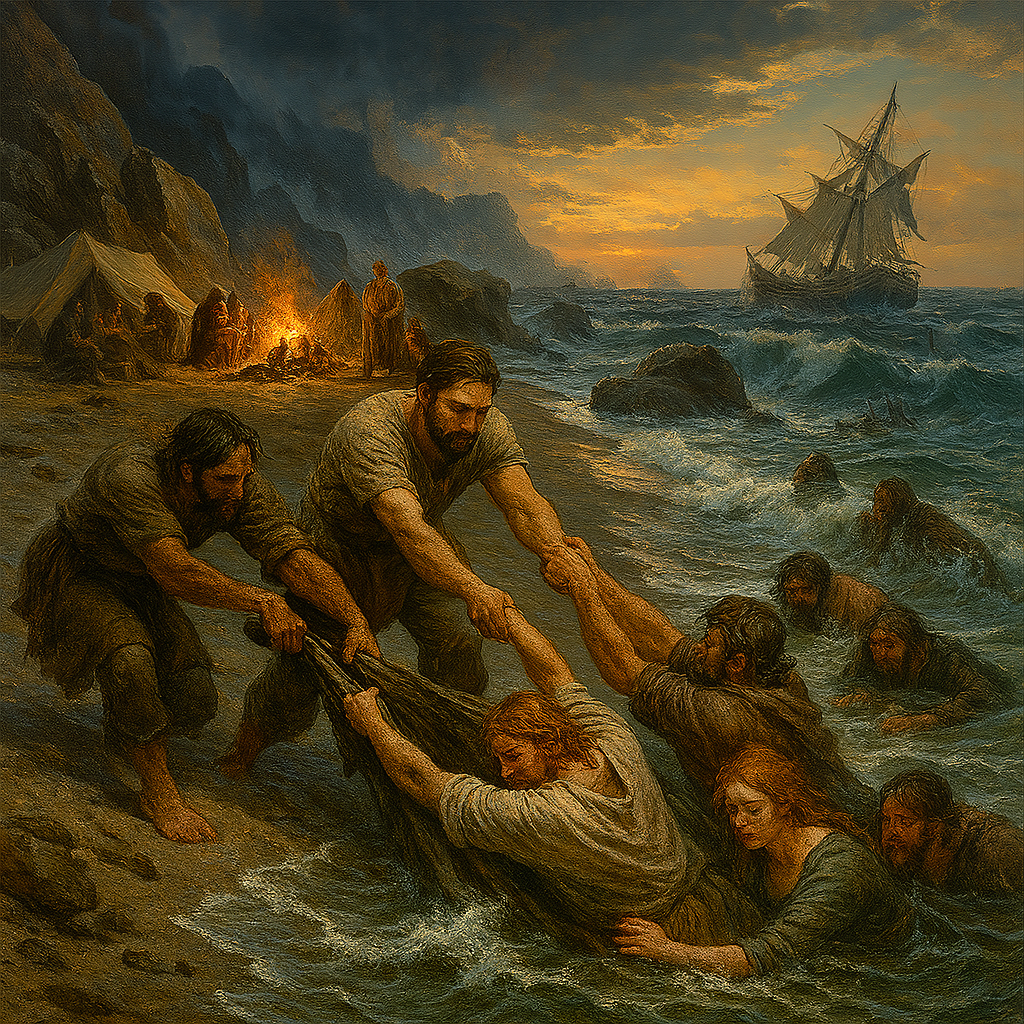
It rarely passes on its own. Pain that is swallowed whole only seems to grow heavier. But even when I can’t make my voice work, recovery has a way of finding me. I’ve sat frozen, and then someone across the circle shares a story that sounds like my story. Their words become the key I didn’t know I was holding. In that moment, the tight walls of my solitude widen, and light seeps in.

This is one of the miracles of our rooms: I don’t have to be the one speaking to be reached. My Higher Power uses the voices of others when I’ve lost my own. And when I finally dare to share my truth—halting, messy, imperfect—I sometimes see the same relief in someone else’s eyes.

Today, I am trying not to measure my recovery by how much I speak, but by how willing I am to be present—whether I’m the one carrying the message or the one being carried by it. I trust that the God of my understanding knows my needs, even when my mouth is closed and my hands are clenched.

When I cannot ask for help, I can still sit in the circle. Sometimes that’s enough for help to find me.

Endigar 1023

Posted in Uncategorized with tags , , , , , , , , , , on August 11, 2025 by endigar

From Courage to Change of Sep 08:

Is there anything that stands in the way of my trusting in a Higher Power? What obstacles block me from turning over my will and my life to God? In my case, the answer is obvious: I want guarantees. I hold out, thinking that I’ll come up with a new solution to my problems even though I’ve tried and failed, again and again. The risk of faith seems so great. If I turn a situation over, I won’t be in control. I can’t be sure I’ll get my way.

Yet I want recovery. If I continue to do what I have always done, I will continue to get what I have always gotten. I want the benefits that this spiritual program has to offer. Therefore, I must take the risk and let go and let God.

Maybe faith will bring me the results I seek, maybe not. Although there are no guarantees, the benefits of building a strong relationship with a Higher Power can help me to grow confident, strong, and capable of coping with whatever comes to pass long after this particular crisis has been resolved.

Today’s Reminder

Today I will make a contribution to my spiritual development. I will try to identify the obstacles that block my faith.

“Understanding is the reward of faith. Therefore, seek not to understand that thou mayest believe, but believe that thou mayest understand.” – Aurelius Augustinus

END OF QUOTE—————————————

NOTE: Aurelius Augustinus — better known in English as Saint Augustine of Hippo — was a Christian theologian, philosopher, and bishop who lived from 354 to 430 CE.

He’s one of the most influential figures in Western Christianity and philosophy, often considered a bridge between the ancient Roman world and the emerging medieval Christian thought.

Key points about him:

Death: Died in 430 CE during the siege of Hippo by the Vandals.

Early Life: Born in Thagaste (present-day Souk Ahras, Algeria), in Roman North Africa. His mother, Monica, was a devout Christian; his father, Patricius, was a pagan.

Youth & Conversion: Augustine lived a restless and hedonistic youth, famously describing his early desires and moral struggles in his Confessions. He followed the Manichaean religion for a time, then explored Neoplatonism before converting to Christianity at age 31 under the influence of Saint Ambrose of Milan.

Bishop of Hippo: He became the bishop of Hippo Regius (modern Annaba, Algeria) and served for over 30 years.

Major Works:

Confessions — a spiritual autobiography and philosophical meditation.

The City of God — a monumental defense of Christianity against pagan critics after the sack of Rome in 410.

On Christian Doctrine — guidelines for interpreting Scripture.

Theology: His writings deeply shaped Western ideas on original sin, divine grace, predestination, and the relationship between the Church and the state.

When I look at the question, What’s standing in the way of my trusting God?—my instinct is to look outward. I think of circumstances, other people, unanswered prayers. But when I slow down, I usually find the real obstacle staring back at me in the mirror.

For me, it’s not that I can’t believe in a Higher Power—it’s that I still want a contract instead of a relationship. I want terms and conditions that guarantee comfort, safety, and a life arranged according to my preferences. I want to sign on with God only if He signs off on my blueprint. That’s not faith. That’s control disguised as piety.

I’ve learned that this program asks me to risk something I’ve held tightly for a long time—my illusion of control. If I wait until I feel safe to take the risk, I will never take it. I can either keep doing what hasn’t worked and get the same results, or I can step into the discomfort of surrender and see what’s on the other side.

When I do let go, I’m often surprised to find that faith doesn’t always give me the outcome I was after—it gives me something sturdier. It builds my capacity to endure, to adapt, and sometimes to even welcome the unexpected. I find myself equipped not just for the crisis of today, but for the ones I can’t yet see.

I will name the obstacles between me and faith—fear, pride, self-reliance that’s really self-protection. And I will make a small, conscious choice to loosen my grip, even if it’s just for a moment. That moment might be all God needs to slip something new into my hands.

Endigar 1022

Posted in Uncategorized with tags , , , , , , , on August 10, 2025 by endigar

There is a new documentary titled Bill W.: Conscious Contact, and it’s currently available for individual streaming.

The official website for the film allows you to stream the documentary for a fee, using a pay‑what‑you‑can model—approximately $7.99—for personal viewing.

To watch the film, head over to billwconsciouscontact.com—that’s the film’s official portal, where you can stream it directly.

If you’d like to request a screening at a recovery or recovery-focused event, there’s also an option to submit those details via the site.

https://billwconsciouscontact1.vhx.tv/videos/conscious-contact-trailer

Endigar 1021

Posted in Uncategorized with tags , , , , , , , , , , , on August 8, 2025 by endigar

From Courage to Change of Sep 07:

I never thought much about Tradition Seven, which says that every group ought to be fully self-supporting. I thought it referred only to paying the rent. But recently I was involved with a group that maintained itself financially and still was not fully self-supporting because no one would commit to service. I already held several positions, and when my various terms expired, no one was willing to take my place. I made what felt like the responsible choice for myself and stepped down anyway. The meeting closed. In my opinion, a group that cannot fill its service positions is not fully self-supporting.

Today, in other, more flourishing groups, I have a greater appreciation of my responsibility to this Tradition. I believe that as we nurture our groups, we nurture and empower ourselves. We can make a contribution; we can make choices that help us to allow healing in ourselves and others.

Today’s Reminder

There’s more to maintaining a fully self-supporting Al-Anon group than just paying the rent. Continuity of service is important to our common welfare. Today I will think about the contribution I am making to my home group.

“I can support my group in a number of ways. When the basket is passed, I can give what I can. Just as important, I can give my time and moral support to help make ours the kind of group I want to belong to.” – Alateen—a day at a time

END OF QUOTE—————————————

Every group ought to be fully self-supporting without resorting to outside contributions. The spirit of tradition seven is that the group and its autonomy are essential for its member individuals. Part of protecting individual recovery of one’s truest self is to support the most intimate group with personal time and resource. It is also a good litmus test of the vibrancy of one’s progress in the program. The person with untreated alcoholism or addiction is obsessively selfish and prone to isolation. All the traditions test the potency of the 12 Steps in an individual’s life.

So I ask myself today:

– Am I a guest in this program, or a steward of it?
– Do I give only when I’m inspired—or also when I’m responsible?
– Is my recovery group something I take from, or something I help carry?

I’m not here to burn out or martyr myself. But I am here to take part in the sacred exchange that is community. When I offer my service, even in small ways, I reinforce the scaffolding that holds this whole miraculous thing together.

Endigar 1020

Posted in Uncategorized with tags , , , , , , , , , , , on August 5, 2025 by endigar

From Courage to Change of Sep 06:

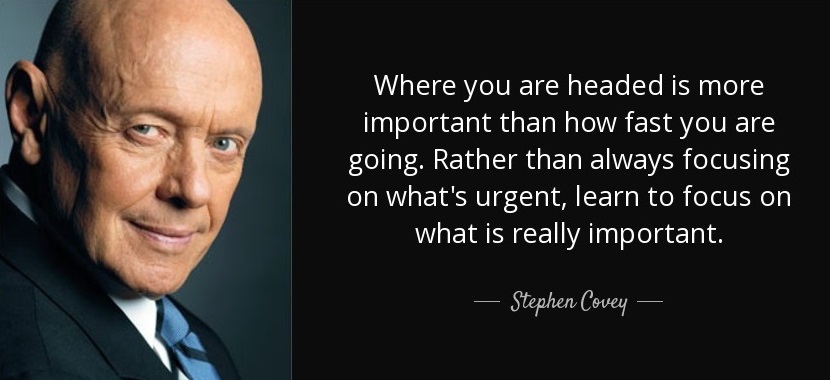
A writer for a local newspaper recently maintained that most people spend more time planning vacations than they do thinking about what is really important in their lives. Of course a vacation has a certain importance, but as our slogan asks, “How Important Is It?”

In my case, the main focus of my mental activity usually is whatever problem, grievance, or irritation I am entertaining at the moment. “Now,” I tell myself, “I’m concentrating on what’s really important!” But, how important is it? When I look back on this two years from now, or next month, will it matter?

Al-Anon helps me to address the larger concerns in my life. For example, how can I make better contact with my Higher Power? Am I taking time to enjoy the present moment? Am I becoming the person I want to be? What can I give thanks for today?

Today’s Reminder

Are my priorities in order? Am I so busy with smaller, less meaningful concerns that I run out of time for the really important considerations? Today I will make room to think about what really matters.

“Today I’ll use the slogan, ‘How Important Is It?’ It will help me think things through before I act and it will give me a better picture of just what is important in my life.” – Alateen—a day at a time

END OF QUOTE—————————————

NOTE TO SELF THAT YOU MIGHT BENEFIT FROM: Reread Covey’s Seven Habits of Highly Effective People

One of the things I learned when I was first learning to use a firearm was that human beings have a natural instinct to flinch into retreat or freeze in place at the sound of the sudden loud noise or something moving very quickly toward the face. The sound of the shot and the push of the recoil tend to activate this reaction. It takes frequent, consistent exposure to overwrite this natural survival instinct and use the weapon with confidence.

Life has a way of filtering the frivolous by continuously challenging a chosen activity with easy escapism. This is yet another fear response to help survive the demands of my environment. Life asks “How important is your choice. Do you really want it?” If I answer yes, life laughs in my face. If I answer no, it haunts me with the truth. “I don’t believe you.” I must answer “Hell yeah!” to the important things of my life. Then the spiritual atmosphere seems to reinforce my choice.

And here’s the hard-won truth: not everything deserves my “Hell yeah.”

This program taught me the cost of my yes is measured in attention, time, surrender, and service. That makes my no sacred, too. It’s not selfish to say no—it’s spiritual clarity. Because if I say yes to every loud thing, I miss the still, small voice.

So today, I ask:

– What am I flinching from?
– What have I been whispering “maybe” to when my soul already knows the answer?
– Where is my “Hell yeah” waiting, buried under fear?

I don’t have to bulldoze over my survival instincts, but I can retrain them. I can honor the inner reflex, even as I outgrow it. And when I choose what truly matters—when I stay with it—I become someone life starts to believe in too.

Because the universe, like recovery, respects commitment. And a heart that says Hell yeah with humility and clarity is a heart that moves mountains.

Endigar 1019

Posted in Uncategorized with tags , , , , , , , , , , , on August 3, 2025 by endigar

From Courage to Change of Sep 05:

When I began studying the Seventh Step, which says, “Humbly asked Him to remove our shortcomings,” my list of shortcomings included an extensive catalogue of feelings. I humbly asked God to remove my anger, fear, and guilt. I looked forward to the day when I would never experience any of these emotions again.

Of course, that day never arrived. Instead, I have learned that feelings aren’t shortcomings. The true nature of my problem was my stubborn refusal to acknowledge feelings, to accept them, and to let them go. I have very little power over what feelings arise, but what I choose to do about them is my responsibility.

Today I can accept my feelings, share about them with others, recognize that they are feelings, not facts, and then let them go. I’m no longer stuck in a state of seemingly endless rage or self-pity, for when I give myself permission to feel whatever I feel, the feelings pass. My emotions have not been removed; instead, I have been relieved of shortcomings that blocked my self-acceptance.

Today’s Reminder

When I take the Seventh Step, I pray that whatever interferes with my Higher Power’s will for me may be removed. I don’t have to have all the answers. I need only be willing.

“We didn’t necessarily get the results we wanted, but somehow we always seemed to get what we needed.” – In All Our Affairs

END OF QUOTE—————————————

I came into recovery with a broken guilt-o-meter. I felt guilty for things like expressing emotions. I felt no guilt for acts of manipulation in relationships. It was difficult in working the moral inventory to try and listen to my twisted conscious. I viewed the power of emotional suppression as a super power. I could do the hard things no one else could. Or so I thought. If I felt emotion, I was sure that something was wrong in me that needed to be fixed immediately so that I could regain the stoicism of a dead heart. I had to remain unshakable – immune to the turbulence of anger, fear, guilt. I thought spiritual growth would eventually mean not feeling so much, or at least not feeling the “bad” stuff. So, like a child with a broken toy, I brought my emotions to God in Step Seven and asked for them to be removed.

But what I’ve come to realize is that I wasn’t broken because I felt—I was broken because I believed I shouldn’t.

The longer I walk this path, the more I see that my emotions aren’t defects—they’re messages. Not always accurate ones, sure, but meaningful. Fear has protected me. Anger has drawn my boundaries. Guilt has whispered truths I wanted to ignore. It was never about removing these feelings, but about unblocking the channels through which grace could move through them.

Step Seven, for me, has become a kind of sacred surrender. Not a plea for numbness, but a prayer for clarity. I ask not to be emptied of emotion, but to be freed from the pride, control, and shame that keep those emotions stuck like stones in my spirit.

Now, when rage rises like fire in my chest, I don’t panic. I don’t condemn myself. I get curious. I breathe. I sometimes even invite it to tea. Because I know it won’t stay. No feeling does. They are travelers on the road of my recovery—not hitchhikers I must carry indefinitely.

I still want answers. I still want certainty. But Step Seven reminds me I don’t have to know—I just have to be willing. Willing to let go. Willing to be changed. Willing to keep feeling my way forward, one honest breath at a time.

And strangely, in surrendering what I thought I needed to get rid of, I found what I truly needed: compassion. For myself. For my process. For this sacred mess I call healing.

Endigar 1018

Posted in Uncategorized with tags , , , , , , , , , , , on August 1, 2025 by endigar

From Courage to Change of Sep 04:

As we let go of obsession, worry, and focusing on everyone but ourselves, many of us were bewildered by the increasing calmness of our minds. We knew how to live in a state of crisis, but it often took a bit of adjustment to become comfortable with stillness. The price of serenity was the quieting of the constant mental chatter that had taken up so much time; suddenly we had lots of time on our hands and we wondered how to fill it.

Having become more and more serene as a result of working the Al-Anon program, I was surprised to find myself still grabbing for old fears as if I wanted to remain in crisis. I realized that I didn’t know how to feel safe unless I was mentally busy. When I worried, I felt involved — and therefore somewhat in control.

As an exercise, my Sponsor suggested that I try to maintain my inner stillness even when I felt scared or doubtful. As I did so, I reassured myself again and again that I was safely in the care of a Power greater than myself. Today I know that sanity and serenity are the gifts I have received for my efforts and my faith. With practice, I am learning to trust the peace.

Today’s Reminder

Today I will relish my serenity. I know that it is safe to enjoy it.

“Be still and know that I am with you.” – English prayer

END OF QUOTE—————————————

Serenity. Coma. Lethargy. Marijuana Intoxication. Paralysis. Impotence. To me, these were near identical synonyms. The neutrality of vigilance. The rejection of relevance.

“God grant me the Serenity to. . .” Accept.

In the world I came from, serenity felt suspicious.
Stillness was not safety—it was the silence before the next scream, the quiet that meant someone was brooding, using, or gone.
So when I began to heal, when the noise dimmed and the ache lessened, I didn’t feel peace.
I felt… lost.

What do I do when I don’t need to fix anyone?
What do I do when the fire alarm in my nervous system stops blaring?

For so long, obsession and worry were my way of being involved—my illusion of control.
They gave me purpose. They filled the hours.
They made me feel like I mattered.
To let them go felt like floating in open space without a tether.

But serenity, I’ve learned, is not empty.
It is not apathy. It is not ignorance. It is not withdrawal.
It is safety without vigilance, presence without panic.
It is the return of my life to me.

The first few moments of that calm were unbearable.
I wanted to reach for an old fear, the way a child grabs a familiar blanket, even if it’s filthy and torn.
Crisis was home.
But healing asked me to make a new home in the quiet.
Not to stop the fear.
But to let it move through me, while staying grounded in a Power greater than my history.

And I learned:
I can be scared and still be sane.
I can be uncertain and still be at peace.

Peace isn’t something I earn.
It’s something I practice receiving.

Today, I’m learning that serenity is not the absence of life.
It’s the presence of me—undistracted, undivided, beloved.

So I light a candle not because I’m scared, but because I am allowed to enjoy the moment.
I breathe deep not because I’m bracing, but because I’m here.
And when the stillness comes again, I won’t flinch.
I’ll embrace.

Because serenity is no longer a stranger.
It’s my inheritance.

Endigar 1017

Posted in Uncategorized with tags , , , , , , , , , , on July 31, 2025 by endigar

From Courage to Change of Sep 03:

Before coming to Al-Anon, I had built a lifetime of dreams and promises that were reserved for that one special day called, “Someday.” Someday I’II begin – or end – that project. Someday I’ll call that friend with whom I’ve lost touch. Someday I’ll let them know how I feel. Someday I’II be happy. I’m going to take that trip, find that job, speak my mind. Someday. Just wait and see.

Wait – just as I waited for the alcoholic to come in from a binge, and for inspiration to bring interesting friends and career opportunities to my doorstep, and for everybody else to change. But Al-Anon has helped me to see that today can be the Someday I’ve always wanted. There isn’t enough time in these twenty-four hours to do everything I’ve ever hoped to do, but there is time to start making my dreams come true. By asking my Higher Power for guidance and by taking some small step in the direction of my choice, I will be able to accomplish more than I would ever have thought possible.

Today’s Reminder

Today I will not wait for a blue moon, a rainy day, the 366th day of the year, or Someday to accomplish good things in my life.

“Each indecision brings its own delays and days are lost lamenting over lost days… What you can do or think you can do, begin it. For boldness has Magic, Power, and Genius in it.” – Johann Wolfgang von Goethe

END OF QUOTE—————————————

Johann Wolfgang von Goethe (1749–1832) was a towering figure of German literature, philosophy, and science—widely regarded as one of the greatest writers in Western history.

Most Famous Work: Faust, a tragic play in two parts, considered one of the most important works of Western literature. It tells the story of a man who makes a pact with the devil in search of ultimate knowledge and experience.

Other Works: The Sorrows of Young Werther (1774), a landmark of early Romanticism, which sparked a wave of sentimental literature—and even reported suicides among youth trying to emulate the protagonist.

Goethe explored the duality of human nature, the struggle for meaning, and the tension between reason and passion—anticipating thinkers like Nietzsche, Jung, and even Kierkegaard.

A lifelong seeker, he resisted rigid dogma, saying:
“He who possesses science and art also has religion; he who does not possess them needs religion.”

Goethe was also a scientist, particularly in the fields of botany, anatomy, and color theory. He even challenged Newton’s work on optics, proposing his own (controversial) Theory of Colors.

Goethe was deeply interested in alchemy, myth, the unconscious, and the soul’s evolution—themes that appear throughout Faust and his lesser-known esoteric writings.

Carl Jung considered Goethe a proto-depth psychologist and drew heavily from Faust in his ideas about the shadow, individuation, and the Self.

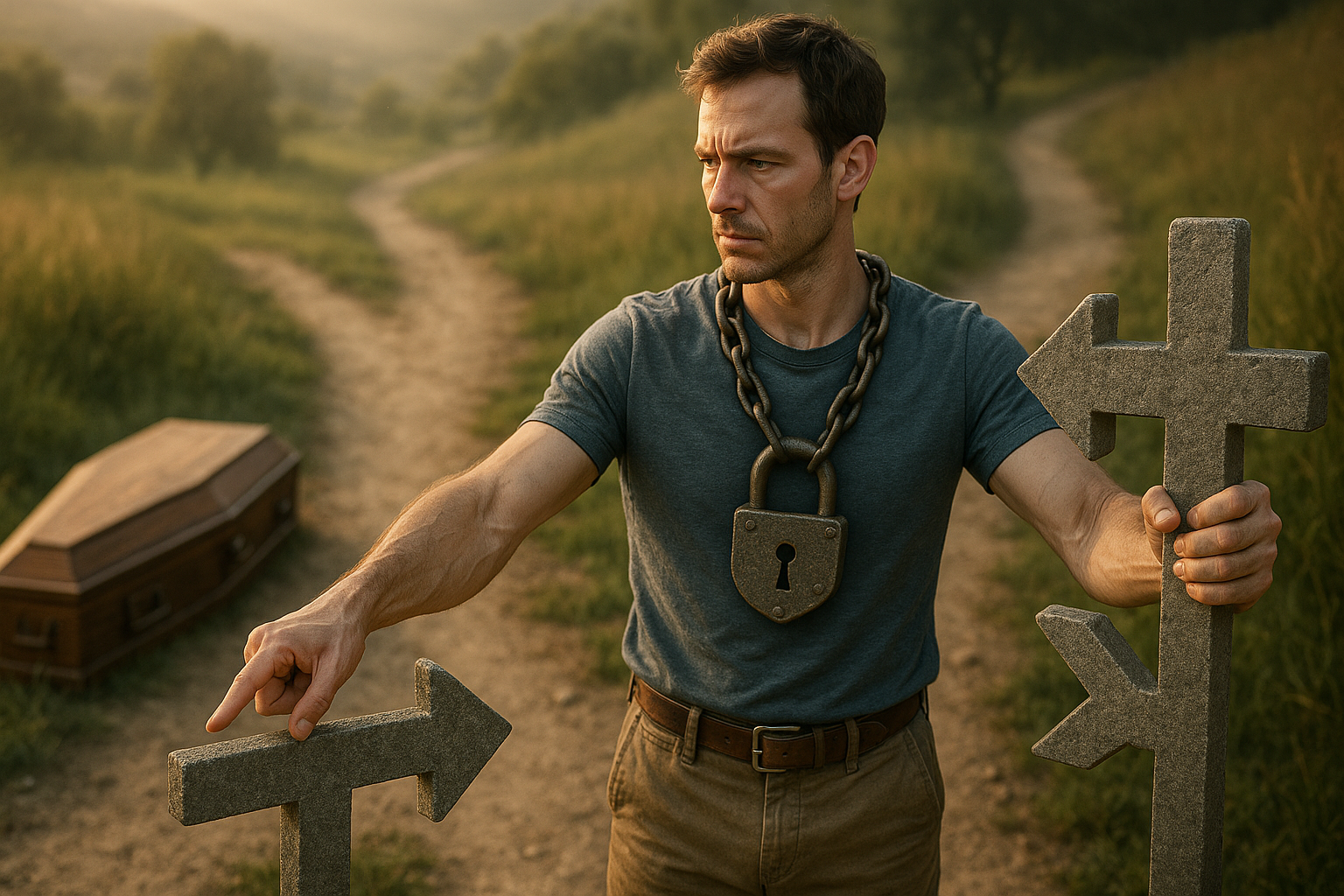
I am afraid of living a potential life. To have potential is to have fear. Only action in the now counters that fear. To achieve failure is better than to protect potential. To risk loss is better than saving for a beautiful coffin. One day at a time. End the day planning for the next. I want to find ways to justify getting out of bed and exhausting myself. The effective and acted on plan is better than the beautifully crafted promise. Someday is a myth that I can carry like a chain around my neck. Life is too sharp, painful, my voice too prone to the hesitant tremble. My grief becomes hardened into a habit. I beat myself to death with promises of someday.

I am free. I am allowed to re-create my life, to begin anew. I want to live boldly, to secure my freedom in quick forgiveness, and not to turn away from being seen.

I filled journals and conversations and fantasies with Someday.

But in the shadows of that promise, I postponed my own resurrection.
Because waiting—especially in families ruled by addiction—feels like love at first.
We wait for sobriety.
We wait for peace.
We wait for someone to choose us, change, or come home.

Recovery has shown me something strange and stunning:
There is no Someday. There is only Today, and the grace to be awake inside it.

Today is not a consolation prize.
Today is the only ground on which miracles grow.

And I don’t need to finish the novel, heal the wound, or reconcile every relationship today.
But I can make the call.
I can take the walk.
I can say the words: “I’m ready.”
I can set the boundary, speak the truth, write the page, wash the dish, light the candle.
That’s all it takes to betray the myth of Someday and let magic leak into this moment.

Endigar 1016

Posted in Uncategorized with tags , , , , , , , , , , , on July 30, 2025 by endigar

From Courage to Change of Sep 02:

During my years in Al-Anon I have done lots of thinking about the First Step; lately I have done lots of feeling about it, too. The feeling work can be described mostly in one word: Grief. Recalling a friend’s rapid progression through alcoholism, from reasonable health and apparent happiness to cirrhosis and death, I feel grief.

I don’t necessarily hate this disease today, but I do feel fiercely its crippling, powerful presence in my life. I have memories of the damage done to my family, my friends, and myself. I grieve for the loss of love and life that alcoholism has caused. I grieve for the lost years I have spent jumping through the hoops of this disease. I admit that I am powerless over alcohol and that my life has been utterly unmanageable whenever I have grappled with it.

Today’s Reminder

I have suffered many losses as the result of alcoholism. Part of admitting the effects of this disease in my life is admitting my grief. By facing alcoholism’s impact on my life, I begin to move out of its grip and into a life of great promise and hope.

It’s not easy to admit defeat and give in to that powerful foe, alcoholism. Yet, this surrender is absolutely necessary if we are ever to have sane, happy lives again.

END OF QUOTE—————————————

NOTE: I gave AI a free hand with this one. It was difficult to write. Maybe that is cowardly. I do have people who have lived out the tragic end of Step One. My stepson is one of them. So, I cannot…

There are seasons in recovery when the mind must grow silent, and the heart, long buried under slogans and solutions, begins to speak. This reading is one such moment—where understanding gives way to feeling, and feeling leads me through the smoke of memory into the fire of grief.

For so long I thought Step One was an intellectual milestone. A declaration. A banner I could wave to mark the beginning of a new life: “We admitted we were powerless over alcohol—that our lives had become unmanageable.” I could recite it, share about it, even teach it.

But now I live it.

And living it means grieving.

Grieving not just what I lost, but what I was. The version of me who couldn’t stop trying. Who begged love to stay by becoming small. Who tried to fix the unfixable. Who danced for approval while my soul bled in private. Who kept showing up with a smile when the house inside was crumbling.

I grieve the hope I kept in others who were circling the drain.

I grieve the way addiction distorted love until it became bargaining.

I grieve the time.

The years.

The endless contortions of spirit.

And yet, this grief is not my enemy. It is the veil I must walk through. It is the sacred tearing, the blood-bound lament that says: You tried. You loved. You lost. And now… you can stop fighting.

Surrender is not failure. It is an act of sacred bravery.

To say, “I cannot do this anymore,” is to whisper a spell of resurrection.

Because from that whisper rises the first fragile breath of sanity. The tremble of hope not yet named. The promise that a power greater than myself might still hold me, even now, in this crumpled and unmanageable state.

So I grieve. And in that grief, I do not collapse—I arrive.

At the beginning.

At Step One.

At the aching threshold of healing.

And I hear it again, not as dogma, but as an invocation:

“We admitted…”

Yes. That is how the miracle always begins.

Endigar 1015

Posted in Uncategorized with tags , , , , , , , , , on July 27, 2025 by endigar

From Courage to Change of Sep 01:

After taking a good look within itself, our very small home group discovered we had gotten into a rut without realizing it. It had been a long time since we’d had new members, new input. And all of our meetings, which were either round-table discussions, or based solely on the One Day at a Time in Al-Anon book, seemed to cover the same ground with little change.

We took a group conscience and decided to try some meetings using other Al-Anon literature. We began a series of speaker exchanges with other local groups. It was not long before things began improving. Our membership tripled within a year. We soon had so many newcomers that we set up a series of beginners meetings as an extension of our group. Each of us has personally benefited because of our willingness to take an inventory as a group.

Today’s Reminder

Each group, like each individual, goes through changes. But we don’t have to face those changes alone. The Second Tradition reminds us that a loving God expresses himself through our group conscience. When each of us is willing to grow, we all benefit.

“There is a comfortable feeling in knowing that guidance for the group comes not through individuals, but from the willingness of the group to follow whatever wisdom may be expressed through the membership.” – Al-Anon Faces Alcoholism

END OF QUOTE—————————————

“Al-Anon Faces Alcoholism” is a public outreach publication distributed by Al-Anon Family Groups. It’s not core program literature like How Al-Anon Works or One Day at a Time, but instead functions as an introductory and informational magazine. Here’s what you might want to know about it:


Purpose and Audience

  • Outreach Tool: It’s specifically designed to introduce non-members—especially professionals, newcomers, and the general public—to Al-Anon’s message of hope for families and friends of alcoholics.
  • First Encounter: For many people, this booklet is their first contact with Al-Anon literature. It helps explain what Al-Anon is (and is not), what the program offers, and how it differs from therapy or religious counseling.

Content and Structure

  • Real Member Stories: It often features short personal stories from members describing how they were affected by someone else’s drinking and how Al-Anon helped.
  • Basic Program Info: It includes explanations of the 12 Steps, what to expect at a meeting, and the foundational concept that Al-Anon is for the families and friends of alcoholics—not the drinkers themselves.
  • Clarifying Misconceptions: Many editions address common misunderstandings, like:
    • “I don’t belong in Al-Anon—they are the ones with the problem.”
    • “I didn’t grow up in an alcoholic home, so this doesn’t apply to me.”

There comes a time—both in my personal walk and in group life—when the stillness is no longer serenity but stagnation.

At first, sameness can feel like safety. Familiar readings, familiar faces, familiar phrases: they comfort me when the world feels uncertain. But over time, if I’m not careful, comfort becomes complacency. And the soil of recovery—once so rich with willingness—can begin to harden beneath the surface.

Inventory is not just for individuals. Just as I take a personal moral inventory in Step Four and revisit it often through Steps Ten and Eleven, so too can a group pause and ask: Are we growing, or simply repeating? Are we thriving, or just surviving?

“For our group purpose there is but one authority—a loving God as He may express Himself in our group conscience.” That phrase means we don’t lead with ego, nor do we follow passivly. We come together, each voice a thread, to weave something larger than the sum of us.

So today I ask myself:

  • Has my recovery fallen into a rut disguised as routine?
  • Am I open to letting new perspectives shake loose what no longer serves?
  • And when the group shifts, do I fear it—or do I listen for the God of our understanding whispering in the change?

A spiritually awake group, like a spiritually awake soul, makes room for new growth—even when it means stepping outside the comfortable repetition of yesterday’s answers.