The laughter provided me today was my daughter’s attempt to surprise me with a visit, securing herself in the darkness of my kitchen. It was a fun laughter mixed with deep gratitude for the moment.
Tonight, the auto-correct function transformed “Poe’s influence” that I was talk-to-text writing into “hoes in Florence.”
Al-Anon is where many of us who have lived with alcoholism begin to grow up for the first time. We learn to face the world as it really is and to take responsibility for our actions. We deal with our feeling and share honestly about our experiences. We learn about ourselves and nurture our spiritual growth and our physical and mental well-being. We become responsible adults.
An important part of the serious business of recovery involves recognizing our need to have fun–to take a tri, fly a kite, attend a concert, make noise, race down the street, or blow bubbles. Light-heartedness cn put troublesome situations into perspective. It reminds us that there is more to life than the problem at hand.
Taking ourselves too seriously won’t solve a problem any quicker. In fact, taking a break may help more than continuing to struggle–even Jello must be left alone in order to form as it should. A good laugh may be the best tool available to help us let go, and we’ll come back to our task refreshed.
Today’s Reminder
A well-developed sense of humor helps me detach from my personal struggles and triumphs. I will avoid taking myself too seriously today.
“One inch of joy surmounts of grief a span, because to laugh is proper to the man” ~ François Rabelais
END OF QUOTE—————————————
This is one of those times when the provided reading is right on target and is something I needed to hear, but not something I wanted.
Life in America lends itself toward some intensely dark seriousness. At least it does for me. And giggling seems like irresponsibility and social abdication.
I suppose humor, gratitude and satisfaction are the product of being able to trust my Higher Power. I really want to have that embedded within. Right now, I will chose to trust and to remain open for God’s laughter to manifest.
When I heard that Al-Anon was a program in which we learn to keep the focus on ourselves, I wondered what others would think of me if I acted on that principle? Surely they would think me inconsiderate, thoughtless, and uncaring. Those were my complaints about the alcoholics in my life! I didn’t want to be that way. Instead, I tried to do things for others that seemed loving and generous, even when I didn’t want to do them. I couldn’t understand why I so often grew resentful after such actions.
My efforts to be selfless by trying to please everyone but myself weren’t working. The focus was on their response rather than on what seemed right for me to do. There was nothing unconditional about this kind of giving. My Sponser helped me to see that if I paid more attention to myself and to doing what I thought was best, I would be free to give without strings attached. Then I could truly be generous.
Today’s Reminder
The Al-Anon program works when I keep the focus on myself, attend lots of Al-Anon meetings, and make recovery my top priority. As I become more fully myself, I am better able to treat others with love and respect.
“We are best able to help others when we ourselves have learned the way to achieve serenity.” ~ The Twelve Steps and Traditions
END OF QUOTE—————————————
There is a paradox of selfishness in the 12 Step programs of AA and Al-Anon. I was introduced to it by the statements “This is a selfish program, not for those who need it, but for those who want it,” followed by “selfishness – self-centeredness! This is the root of our troubles. We must be rid of this selfishness or it kills us. Active addiction is fueled by self-will run riot.” Only a paradoxical solution allows both to be true. This was the beginning of something I desperately needed in my life. If the English language was more specific, we would have two separate words to resolve this apparent contradiction of our perspective on selfishness. As far as I know, we do not.
The “bad” selfishness is isolating and resistant to accountability. It attempts to control the world around it, distrusting all that interferes with that agenda. It prevents those who suffer from getting help. It prevents those who care from being useful. It is deadly.
The “good” selfishness is the fall down seven get up eight resilience that causes an individual to overcome personal fear and leave the familiar behind for a potential solution. It is the desire to truly live even if that requires entering a room full of strangers who have what I want.
This good selfishness is more than self-care. It is a highly aggressive “hell yeah” to a fulfilling life. The fruit of this selfishness is inspiration and social utility. I become useful to others who want to live by tightly embracing the value of my own life. My example gives permission to others to do the same. My world becomes a better place when they do.
It’s time I started being nicer to myself. The voices in my head that tell me I’m not good enough do not speak the truth; they merely reflect the damaged self-esteem that results from living with alcoholism. When I recognize that fact, I can tell them to be quiet! I will no longer listen!
Al-Anon recovery has given me gentler, loving thoughts. These remind me that I am lovable and I can learn to love myself. When I open my mind enough to hear that message, I can begin to hear all the other wonderful sounds of life, and the abusive thoughts vanish.
Today’s Reminder
Treating myself with kindness and respect helps me to challenge my own self-criticism. Today I will pay particular attention to any voice that speaks lovingly.
“We need to learn to live, to focus on something good or useful to our lives and let the rest of the world go about its business.” ~ How Can I Help My Children?
END OF QUOTE—————————————
I often hear a chorus of voices that fire off in my brain – that hate me and make no bones about it. I think this is one of the reasons why I get along with everyone. My most potent venom is directed inward.
My mother was an adult child of an alcoholic and that unresolved pain rippled to her children.
The demoralization of active addiction takes generations to overcome, and those of us who desire to extinguish the flames of a family curse have to break all the mirrors in the cranial cavern except for those that are invested, truly invested, in our well-being. The 12 Step program produces some of these empowering reflectors. I am grateful to have something to compete with that chorus of condemnation.
What happens when I physically hold on tight to something? I turn my head away. I squeeze my eyes shut. My knuckles ache as my fists clench. Fingernails bite into my palms. I exhaust myself. I hurt!
On the other hand, when I trust God to give me what I need, I let go. I face forward. my hands are free for healthy, loving, and enjoyable activities. I find unexpected reserves of energy. My eyes open to see fresh opportunities, many of which have been there all along.
Before I complain about my suffering, I might do well to examine myself. I may be surprised by the amount of pain I can release by simply letting go.
Today’s Reminder
How much can God give me if I am not open to receive? When I hold onto a problem, a fear, or a resentment, I shut myself off to the help that is available to me. I will loosen my grip on something today. I will let go and let God.
“All I had to do was become the least bit willing to open my clutched fist a tiny, grudging bit and miracles happened. That’s God as I understand Him toady.” ~ As We Understood . . .
END OF QUOTE—————————————
What have I done with the gift of open hands? I petted the head of my fat and happy feline friend who displays her satisfaction with life by laying on her back in her roadkill pose. I have texted my children who live lives strong and free. I have those in my intimate sphere, to include my sponsor, that I touch base with as regularly as my sputtering discipline will allow. I do not milk my Higher Power like a cow when I am able to release my fearful demands. I honor the free will of those that surround me. I resist that sense of responsibility to hold my heart in a death grip of martyred control. I inhale and exhale with all the trusting faith that I find available in the rooms and in the faces of those who are also free to invest in others. I listen for the whispers of Lady Liberty, which is the Spirit of my Higher Power.
I imagine my addiction as a vine that wraps around a pole and uses its strength to climb, to intertwine with its surrounding and then to bare toxic fruit for myself and those I love.
The pole is a legitimate goal or pursuit. When it is embraced by the vine it is difficult to tell the two apart. The pole that my addiction finds greatest success in hijacking is my pursuit of happiness and satisfaction in the written word.
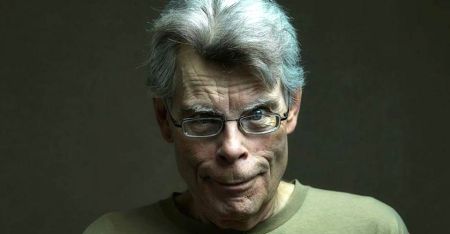
A little while back I discovered that Stephen King is a recovered alcoholic and addict. I read that there are writings such as “Christine” that he did not remember writing because it was a blur of chemical oblivion. His family and friends finally staged an intervention in the late 80’s.
My recovery applauded. My addiction looked at the work he did prior to his recovery. And then it whispered in my ear, “What about field testing that possibility? My recovery became the little boy with the Shining desperately repeating “Red Rum! Red Rum! Red Rum!” That message was only understood when I looked in the mirror.
“Murder all that you are.”
“Murder all that you love.”
“Murder all that could have been useful to others who struggle.”
So, I remove the vine and the pole and plant instead an oak sapling. It is slower but stronger. There can be no more quick and easy vines to tend. It is a long road and I cannot shy away from the pain in the journey. This is and always has been the beginning of my Sacred Grove.
I used to think that living meant surviving from crisis to crisis. I continued to function this way as an adult because it was the only way I knew.
Since that time, the Al-Anon fellowship has become like family to me. Our Twelve Traditions help me learn how a healthy family group functions. Today, when a problem involving other people arises, I turn to the Traditions for guidance.
They have made it possible for me to be part of a group that encourages my growth. They have led me to learn to detach, to respect other people’s privacy, and to find some release from my need to dominate and control. Because of the Twelve Traditions, I have discovered that I am an important member of any group in which I take part. I have a sense of my own value, as well as my limitations. As a result, I am developing “the wisdom to know the difference” between what I can change and what I must accept.
Today’s Reminder
Because the Traditions are based on spiritual principles, they often apply to personal matters as well as group concerns. When I get tangled up in problems with other people, the Traditions can offer guidance and perspective.
“The Twelve Steps and Twelve Traditions embody principles that lead to recovery and personal growth, helping each of us to discover and become the person we want to be.” ~ Al-Anon Spoken Here
END OF QUOTE—————————————
A counselor once surprised me with the notion that family’s are supposed to improve the lives of their members and all of the individual efforts should be fashioned to achieve that goal. It made sense after he described this ideal to me. When I examined my own view of family, I saw wagons circled in the desert protecting us from the savage outsiders. Protected status in the home required me to know certain code words and behaviors to stay free of “friendly fire.”
I carried this skilled façade into the creation of my own family. There were things that we should have addressed that I blamed on Satan. Satan was code for repressed and forbidden conversations. Until there was an epic crisis completely out of my control, I remained in a state of religiously supported co-dependent self-delusion.
The Twelve Steps empowered me to quit blaming Satan and outsiders and take responsibility for the realities of my life. This is life on life’s terms for me. Although I am not currently able to colonize on that planet called Truth, I tighten my orbit every day. I examine my motives and refuse to accept fear as invincible. As a result, I have developed these three skills:
I have empathy for those who suffer directly and indirectly from addiction, whatever form it takes. That empathy includes allowing consequences to unfold according to the expression of free will.
I detach from the morbid condemnation of myself and others and objectively review the facts of obstacles in my life. Facts are our friends.
I seek to learn from failures and improve the way I live, testing fantasy against flesh, and offering, when asked, whatever lessons I have learned along the way.
“Anything worth doing,” goes a slightly cockeyed version of the old saying, “is worth doing badly.” Perfectionism, procrastination, and paralysis are three of the worst effects of alcoholism upon my life.
I have a tendency to spend my life waiting for the past to change. I want to spend the first hundred years of my life getting all the kinks ironed out and the next hundred years actually living. Such an inclination to avoid taking risks, to avoid doing anything badly, has prevented me from doing some of the things I enjoy the most, and it has kept me from the regular practice that produces progress.
If I’m unwilling to preform a task badly, I can’t expect to make progress toward learning to do it well. The only task that I can pretend to perform perfectly is the one that I have left entirely undone.
Today’s Reminder
Al-Anon encourages me to take risks and to think of life not as a command performance but as a continuing series of experiments from which I learn more about living.
“All the beautiful sentiments in the world weigh less than a single lovely action” ~ James Russell Lowell
END OF QUOTE—————————————
How do I live a life beyond critique? Hide. How do I avoid the pain of rejection? Remain silent. How do I mitigate the humiliation of failure? Attempt nothing beyond my bathroom or kitchen. Failure teaches. Rejection grants empathy. Critique rewards humility. I chose to embrace the pain of becoming something more than a consuming belly. Possibilities belong to those who risk upward flight.
I came to Al-Anon confused about what was and was not my responsibility. Today, after lots of Step work, I believe I am responsible for the following: to be loyal to my values; to please myself first; to keep an open mind; to detach with love; to rid myself of anger and resentment; to express my ideas and feelings instead of stuffing them; to attend Al-Anon meetings and keep in touch with friends in the fellowship; to be realistic in my expectations; to make healthy choices; and to be grateful for my blessings.
I also have certain responsibilities to others: to extend a welcome to newcomers; to be of service; to recognize that others have a right to live their own lives; to listen, not just with my ears, but also with my heart; and to share my joy as well as my sorrow.
I am not responsible for my alcoholic loved one’s drinking, sobriety, job, cleanliness, diet, dental hygiene, or other choices. It is my responsibility to treat this person with courtesy, gentleness, and love. In this way we both can grow.
Today’s Reminder
Today, if I am tempted to interfere with something that is none of my business, I can turn my attention instead to some way in which I can take care of myself.
“I have a primary responsibility to myself; to make myself into the best person I can possibly be. Then, and only then, will I have something worthwhile to share.” ~ Living with Sobriety
END OF QUOTE—————————————
What can I share about that primary responsibility to myself? I find that fulfilling it seems to give loved ones, alcoholic or not, permission to do the same for themselves. Helping myself improve releases others from the prison of fear for my well-being. I quit being a soul-suck to those around me. My life proclaims manageability leading to satisfaction. When I say that I am not responsible for my addictive loved one’s responsibilities, it is more of a recognition of fact than a proclamation. I do not have the power to assume such a mantle. Their self-destructive free will gets in the way. No amount of gymnastic martyrdom will outrun the addictive progression and its consequences. In fact, the greatest gift an active alcoholic or addict can receive is consequences for their actions. The raw ore of consequence can be forged into personal responsibility and self awareness. My responsibility is to forge my own raw ore and through a successful example give others the freedom to do the same.
To balance, part of my self-responsibility is to develop the self-awareness to know when I need help and to ask for it from those who I know are invested in seeing me succeed and who do not have an ongoing battle with an active addiction. I build a trusted network of support. Only madness is produced in absolute isolation.
I had a very difficult time believing that alcoholism was a disease. I was convinced that if they really wanted to, alcoholics could stop drinking. After all, I quit smoking. Wasn’t that the same thing?
Then one day an Al-Anon member likened active alcoholism to Alzheimer’s disease. We see our loved one slip away without their being aware of what’s happening or being able to stop it. They look perfectly normal on the outside, but the sickness is progressing, and they become more and more irrational and difficult to be around. When they have lucid moments and once again seem to be themselves, we want to believe that they are well, but these moments pass, and we despair. Before long we find ourselves resenting the very people we once loved.
I’ll always be grateful to my friend because her explanation helped me to accept the reality of my situation. Once I did, it was much easier for me to separate the disease from the person.
Today’s Reminder
When I accept that alcoholism is a disease, I am forced to face the fact that I am powerless over it. Only then can I gain the freedom to focus on my own spiritual growth.
“A family member has no more right to state, ‘If you loved me you would not drink,’ than the right to say ‘If you loved me you would not have diabetes.’ Excessive drinking is a symptom of the disease. It is a condition, not an act.”
~ A Guide for the Family of the Alcoholic
END OF QUOTE—————————————
My mother told me of the time her Father died in Mobile. Initially she maintained that he had been crossing a road with her and her kids and he heroically pushed them out of the way of an oncoming vehicle. He was hit and hospitalized. She held him after the accident. It wasn’t until my adolescent years that an elder in the family let my Father know that what she was remembering wasn’t true. Dad took her to a solitary place to confront the delusion and faced her wrath for doing so. What a hard moment that had to have been for them both.
The reality was that she adored her Father and resented her Mother for leaving him. He was an active alcoholic who never found the solution. He went to the hospital with failing internal organs. It was the progression of the disease robbing him of any possibility of a heroic exit. He died before my Mother could get there. I believe she was around 16 or 17 years old during the Christmas season. Bing Cosby had just come out with a song, “I’m dreaming of a White Christmas,” and for a long time she was not able to listen to it with reliving this pain of that time. She said that it was so impossible for her to believe he was gone. She suspected she was being lied to. She would see the back of a stranger’s head and would go running up to him; “Dad! Dad!” Only to have the vision crushed as the surprised man turned around. She lost it for a little while.
To grow up with her was to dance around trip wires of her often irrational fear that she was being left, abandoned, and rejected. Dad said that he never knew what he was going to find when he got home. Her children were all injured in their own ways by her untreated response to her alcoholic Father. She was sick with her Father’s disease.
What if either father or daughter had grasped the reality of the disease as a disease. My Mother asked her minister if her Father was going to Hell. He was inconclusive. What if she had been able to see that it was not a loss of love or faith that drove him to a tragic end?
The comparison of the addictive disease with Alzheimer’s is potent and pretty accurate. I wish I had known my Grandfather. I wish I had known my Mother unshackled. I am glad that I can look back through the lens of the program and separate the person I love from the disease I hate.





 Daily Reprieve
You must be logged in to post a comment.