Archive for August, 2025

Endigar 1023

Posted in Uncategorized with tags , , , , , , , , , , on August 11, 2025 by endigar

From Courage to Change of Sep 08:

Is there anything that stands in the way of my trusting in a Higher Power? What obstacles block me from turning over my will and my life to God? In my case, the answer is obvious: I want guarantees. I hold out, thinking that I’ll come up with a new solution to my problems even though I’ve tried and failed, again and again. The risk of faith seems so great. If I turn a situation over, I won’t be in control. I can’t be sure I’ll get my way.

Yet I want recovery. If I continue to do what I have always done, I will continue to get what I have always gotten. I want the benefits that this spiritual program has to offer. Therefore, I must take the risk and let go and let God.

Maybe faith will bring me the results I seek, maybe not. Although there are no guarantees, the benefits of building a strong relationship with a Higher Power can help me to grow confident, strong, and capable of coping with whatever comes to pass long after this particular crisis has been resolved.

Today’s Reminder

Today I will make a contribution to my spiritual development. I will try to identify the obstacles that block my faith.

“Understanding is the reward of faith. Therefore, seek not to understand that thou mayest believe, but believe that thou mayest understand.” – Aurelius Augustinus

END OF QUOTE—————————————

NOTE: Aurelius Augustinus — better known in English as Saint Augustine of Hippo — was a Christian theologian, philosopher, and bishop who lived from 354 to 430 CE.

He’s one of the most influential figures in Western Christianity and philosophy, often considered a bridge between the ancient Roman world and the emerging medieval Christian thought.

Key points about him:

Death: Died in 430 CE during the siege of Hippo by the Vandals.

Early Life: Born in Thagaste (present-day Souk Ahras, Algeria), in Roman North Africa. His mother, Monica, was a devout Christian; his father, Patricius, was a pagan.

Youth & Conversion: Augustine lived a restless and hedonistic youth, famously describing his early desires and moral struggles in his Confessions. He followed the Manichaean religion for a time, then explored Neoplatonism before converting to Christianity at age 31 under the influence of Saint Ambrose of Milan.

Bishop of Hippo: He became the bishop of Hippo Regius (modern Annaba, Algeria) and served for over 30 years.

Major Works:

Confessions — a spiritual autobiography and philosophical meditation.

The City of God — a monumental defense of Christianity against pagan critics after the sack of Rome in 410.

On Christian Doctrine — guidelines for interpreting Scripture.

Theology: His writings deeply shaped Western ideas on original sin, divine grace, predestination, and the relationship between the Church and the state.

When I look at the question, What’s standing in the way of my trusting God?—my instinct is to look outward. I think of circumstances, other people, unanswered prayers. But when I slow down, I usually find the real obstacle staring back at me in the mirror.

For me, it’s not that I can’t believe in a Higher Power—it’s that I still want a contract instead of a relationship. I want terms and conditions that guarantee comfort, safety, and a life arranged according to my preferences. I want to sign on with God only if He signs off on my blueprint. That’s not faith. That’s control disguised as piety.

I’ve learned that this program asks me to risk something I’ve held tightly for a long time—my illusion of control. If I wait until I feel safe to take the risk, I will never take it. I can either keep doing what hasn’t worked and get the same results, or I can step into the discomfort of surrender and see what’s on the other side.

When I do let go, I’m often surprised to find that faith doesn’t always give me the outcome I was after—it gives me something sturdier. It builds my capacity to endure, to adapt, and sometimes to even welcome the unexpected. I find myself equipped not just for the crisis of today, but for the ones I can’t yet see.

I will name the obstacles between me and faith—fear, pride, self-reliance that’s really self-protection. And I will make a small, conscious choice to loosen my grip, even if it’s just for a moment. That moment might be all God needs to slip something new into my hands.

Endigar 1022

Posted in Uncategorized with tags , , , , , , , on August 10, 2025 by endigar

There is a new documentary titled Bill W.: Conscious Contact, and it’s currently available for individual streaming.

The official website for the film allows you to stream the documentary for a fee, using a pay‑what‑you‑can model—approximately $7.99—for personal viewing.

To watch the film, head over to billwconsciouscontact.com—that’s the film’s official portal, where you can stream it directly.

If you’d like to request a screening at a recovery or recovery-focused event, there’s also an option to submit those details via the site.

https://billwconsciouscontact1.vhx.tv/videos/conscious-contact-trailer

Endigar 1021

Posted in Uncategorized with tags , , , , , , , , , , , on August 8, 2025 by endigar

From Courage to Change of Sep 07:

I never thought much about Tradition Seven, which says that every group ought to be fully self-supporting. I thought it referred only to paying the rent. But recently I was involved with a group that maintained itself financially and still was not fully self-supporting because no one would commit to service. I already held several positions, and when my various terms expired, no one was willing to take my place. I made what felt like the responsible choice for myself and stepped down anyway. The meeting closed. In my opinion, a group that cannot fill its service positions is not fully self-supporting.

Today, in other, more flourishing groups, I have a greater appreciation of my responsibility to this Tradition. I believe that as we nurture our groups, we nurture and empower ourselves. We can make a contribution; we can make choices that help us to allow healing in ourselves and others.

Today’s Reminder

There’s more to maintaining a fully self-supporting Al-Anon group than just paying the rent. Continuity of service is important to our common welfare. Today I will think about the contribution I am making to my home group.

“I can support my group in a number of ways. When the basket is passed, I can give what I can. Just as important, I can give my time and moral support to help make ours the kind of group I want to belong to.” – Alateen—a day at a time

END OF QUOTE—————————————

Every group ought to be fully self-supporting without resorting to outside contributions. The spirit of tradition seven is that the group and its autonomy are essential for its member individuals. Part of protecting individual recovery of one’s truest self is to support the most intimate group with personal time and resource. It is also a good litmus test of the vibrancy of one’s progress in the program. The person with untreated alcoholism or addiction is obsessively selfish and prone to isolation. All the traditions test the potency of the 12 Steps in an individual’s life.

So I ask myself today:

– Am I a guest in this program, or a steward of it?
– Do I give only when I’m inspired—or also when I’m responsible?
– Is my recovery group something I take from, or something I help carry?

I’m not here to burn out or martyr myself. But I am here to take part in the sacred exchange that is community. When I offer my service, even in small ways, I reinforce the scaffolding that holds this whole miraculous thing together.

Endigar 1020

Posted in Uncategorized with tags , , , , , , , , , , , on August 5, 2025 by endigar

From Courage to Change of Sep 06:

A writer for a local newspaper recently maintained that most people spend more time planning vacations than they do thinking about what is really important in their lives. Of course a vacation has a certain importance, but as our slogan asks, “How Important Is It?”

In my case, the main focus of my mental activity usually is whatever problem, grievance, or irritation I am entertaining at the moment. “Now,” I tell myself, “I’m concentrating on what’s really important!” But, how important is it? When I look back on this two years from now, or next month, will it matter?

Al-Anon helps me to address the larger concerns in my life. For example, how can I make better contact with my Higher Power? Am I taking time to enjoy the present moment? Am I becoming the person I want to be? What can I give thanks for today?

Today’s Reminder

Are my priorities in order? Am I so busy with smaller, less meaningful concerns that I run out of time for the really important considerations? Today I will make room to think about what really matters.

“Today I’ll use the slogan, ‘How Important Is It?’ It will help me think things through before I act and it will give me a better picture of just what is important in my life.” – Alateen—a day at a time

END OF QUOTE—————————————

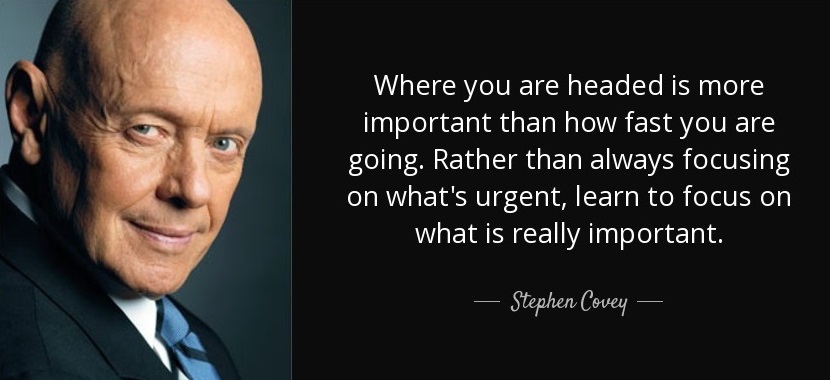
NOTE TO SELF THAT YOU MIGHT BENEFIT FROM: Reread Covey’s Seven Habits of Highly Effective People

One of the things I learned when I was first learning to use a firearm was that human beings have a natural instinct to flinch into retreat or freeze in place at the sound of the sudden loud noise or something moving very quickly toward the face. The sound of the shot and the push of the recoil tend to activate this reaction. It takes frequent, consistent exposure to overwrite this natural survival instinct and use the weapon with confidence.

Life has a way of filtering the frivolous by continuously challenging a chosen activity with easy escapism. This is yet another fear response to help survive the demands of my environment. Life asks “How important is your choice. Do you really want it?” If I answer yes, life laughs in my face. If I answer no, it haunts me with the truth. “I don’t believe you.” I must answer “Hell yeah!” to the important things of my life. Then the spiritual atmosphere seems to reinforce my choice.

And here’s the hard-won truth: not everything deserves my “Hell yeah.”

This program taught me the cost of my yes is measured in attention, time, surrender, and service. That makes my no sacred, too. It’s not selfish to say no—it’s spiritual clarity. Because if I say yes to every loud thing, I miss the still, small voice.

So today, I ask:

– What am I flinching from?
– What have I been whispering “maybe” to when my soul already knows the answer?
– Where is my “Hell yeah” waiting, buried under fear?

I don’t have to bulldoze over my survival instincts, but I can retrain them. I can honor the inner reflex, even as I outgrow it. And when I choose what truly matters—when I stay with it—I become someone life starts to believe in too.

Because the universe, like recovery, respects commitment. And a heart that says Hell yeah with humility and clarity is a heart that moves mountains.

Endigar 1019

Posted in Uncategorized with tags , , , , , , , , , , , on August 3, 2025 by endigar

From Courage to Change of Sep 05:

When I began studying the Seventh Step, which says, “Humbly asked Him to remove our shortcomings,” my list of shortcomings included an extensive catalogue of feelings. I humbly asked God to remove my anger, fear, and guilt. I looked forward to the day when I would never experience any of these emotions again.

Of course, that day never arrived. Instead, I have learned that feelings aren’t shortcomings. The true nature of my problem was my stubborn refusal to acknowledge feelings, to accept them, and to let them go. I have very little power over what feelings arise, but what I choose to do about them is my responsibility.

Today I can accept my feelings, share about them with others, recognize that they are feelings, not facts, and then let them go. I’m no longer stuck in a state of seemingly endless rage or self-pity, for when I give myself permission to feel whatever I feel, the feelings pass. My emotions have not been removed; instead, I have been relieved of shortcomings that blocked my self-acceptance.

Today’s Reminder

When I take the Seventh Step, I pray that whatever interferes with my Higher Power’s will for me may be removed. I don’t have to have all the answers. I need only be willing.

“We didn’t necessarily get the results we wanted, but somehow we always seemed to get what we needed.” – In All Our Affairs

END OF QUOTE—————————————

I came into recovery with a broken guilt-o-meter. I felt guilty for things like expressing emotions. I felt no guilt for acts of manipulation in relationships. It was difficult in working the moral inventory to try and listen to my twisted conscious. I viewed the power of emotional suppression as a super power. I could do the hard things no one else could. Or so I thought. If I felt emotion, I was sure that something was wrong in me that needed to be fixed immediately so that I could regain the stoicism of a dead heart. I had to remain unshakable – immune to the turbulence of anger, fear, guilt. I thought spiritual growth would eventually mean not feeling so much, or at least not feeling the “bad” stuff. So, like a child with a broken toy, I brought my emotions to God in Step Seven and asked for them to be removed.

But what I’ve come to realize is that I wasn’t broken because I felt—I was broken because I believed I shouldn’t.

The longer I walk this path, the more I see that my emotions aren’t defects—they’re messages. Not always accurate ones, sure, but meaningful. Fear has protected me. Anger has drawn my boundaries. Guilt has whispered truths I wanted to ignore. It was never about removing these feelings, but about unblocking the channels through which grace could move through them.

Step Seven, for me, has become a kind of sacred surrender. Not a plea for numbness, but a prayer for clarity. I ask not to be emptied of emotion, but to be freed from the pride, control, and shame that keep those emotions stuck like stones in my spirit.

Now, when rage rises like fire in my chest, I don’t panic. I don’t condemn myself. I get curious. I breathe. I sometimes even invite it to tea. Because I know it won’t stay. No feeling does. They are travelers on the road of my recovery—not hitchhikers I must carry indefinitely.

I still want answers. I still want certainty. But Step Seven reminds me I don’t have to know—I just have to be willing. Willing to let go. Willing to be changed. Willing to keep feeling my way forward, one honest breath at a time.

And strangely, in surrendering what I thought I needed to get rid of, I found what I truly needed: compassion. For myself. For my process. For this sacred mess I call healing.

Endigar 1018

Posted in Uncategorized with tags , , , , , , , , , , , on August 1, 2025 by endigar

From Courage to Change of Sep 04:

As we let go of obsession, worry, and focusing on everyone but ourselves, many of us were bewildered by the increasing calmness of our minds. We knew how to live in a state of crisis, but it often took a bit of adjustment to become comfortable with stillness. The price of serenity was the quieting of the constant mental chatter that had taken up so much time; suddenly we had lots of time on our hands and we wondered how to fill it.

Having become more and more serene as a result of working the Al-Anon program, I was surprised to find myself still grabbing for old fears as if I wanted to remain in crisis. I realized that I didn’t know how to feel safe unless I was mentally busy. When I worried, I felt involved — and therefore somewhat in control.

As an exercise, my Sponsor suggested that I try to maintain my inner stillness even when I felt scared or doubtful. As I did so, I reassured myself again and again that I was safely in the care of a Power greater than myself. Today I know that sanity and serenity are the gifts I have received for my efforts and my faith. With practice, I am learning to trust the peace.

Today’s Reminder

Today I will relish my serenity. I know that it is safe to enjoy it.

“Be still and know that I am with you.” – English prayer

END OF QUOTE—————————————

Serenity. Coma. Lethargy. Marijuana Intoxication. Paralysis. Impotence. To me, these were near identical synonyms. The neutrality of vigilance. The rejection of relevance.

“God grant me the Serenity to. . .” Accept.

In the world I came from, serenity felt suspicious.
Stillness was not safety—it was the silence before the next scream, the quiet that meant someone was brooding, using, or gone.
So when I began to heal, when the noise dimmed and the ache lessened, I didn’t feel peace.
I felt… lost.

What do I do when I don’t need to fix anyone?
What do I do when the fire alarm in my nervous system stops blaring?

For so long, obsession and worry were my way of being involved—my illusion of control.
They gave me purpose. They filled the hours.
They made me feel like I mattered.
To let them go felt like floating in open space without a tether.

But serenity, I’ve learned, is not empty.
It is not apathy. It is not ignorance. It is not withdrawal.
It is safety without vigilance, presence without panic.
It is the return of my life to me.

The first few moments of that calm were unbearable.
I wanted to reach for an old fear, the way a child grabs a familiar blanket, even if it’s filthy and torn.
Crisis was home.
But healing asked me to make a new home in the quiet.
Not to stop the fear.
But to let it move through me, while staying grounded in a Power greater than my history.

And I learned:
I can be scared and still be sane.
I can be uncertain and still be at peace.

Peace isn’t something I earn.
It’s something I practice receiving.

Today, I’m learning that serenity is not the absence of life.
It’s the presence of me—undistracted, undivided, beloved.

So I light a candle not because I’m scared, but because I am allowed to enjoy the moment.
I breathe deep not because I’m bracing, but because I’m here.
And when the stillness comes again, I won’t flinch.
I’ll embrace.

Because serenity is no longer a stranger.
It’s my inheritance.