Archive for August, 2025

Endigar 1033

Posted in Uncategorized with tags , , , , , , , , , , , on August 31, 2025 by endigar

From Courage to Change of Sep 17:

Most human beings have an instinctive need to fit in. The urge to belong, to keep the peace, helps us to get along with others and be a part of society. This instinct has allowed many civilizations to survive, and is not harmful unless I lose my sense of balance.

People-pleasing becomes destructive when I ignore my own needs and continually sacrifice my well-being for the sake of others. Al- Anon helps me find a compromise that allows me to respond to my feelings, including my desire to belong, and still take care of myself.

The best way to maintain this balance is to build my self-esteem. When I treat myself with kindness and respect, I become better able to get along with others.

Today’s Reminder

I will appreciate that all of my instincts and feelings exist for a reason. Today, instead of trying to banish these feelings, I will strive to find a balance.

“If I am not for myself, who will be for me? And if I am only for myself, what am I? And if not now — when?” ~ Hillel

END OF QUOTE—————————————

NOTE: Hillel the Elder, Pirkei Avot (Ethics of the Fathers) 1:14 in the Mishnah.
Hebrew: “אם אין אני לי, מי לי? וכשאני לעצמי, מה אני? ואם לא עכשיו—אימתי?”

END OF NOTE—————————————

I admit that I want to be loved, but not at the cost of abandoning myself. I know the instinct to belong—it pulses in me like a drumbeat. It kept my ancestors alive, kept me safe as a child, and still whispers in my adult choices: “Don’t stand out, don’t cause a ripple, stay useful so you’ll be kept.” Belonging is not wrong. It is part of the design. But in recovery, I’ve had to face the truth that when I bend too far, I begin to break. People-pleasing is not the same as love. It is survival dressed in fear.

When I gave away my needs in exchange for peace, the peace never lasted. I’d buy acceptance with silence, but the silence corroded me from the inside. Self-Recovery teaches me that my desire to fit in is not a defect—it is an instinct. And instincts need balance, not banishment. Balance comes when I allow myself to matter. When I name my needs. When I remember that I, too, am part of the “we” I keep sacrificing for. So, I practice saying no, even when my voice shakes. I keep checking: am I serving love, or am I serving fear?

There is something mystical in realizing that self-respect is not selfish—it is the oxygen mask I must put on before I can help another breathe. My Higher Power reminds me that harmony is not found in erasing myself, but in showing up whole. True connection cannot grow from pretense or resentment. It grows when I bring my authentic self into the circle. What if belonging could mean being accepted as I am, not as I pretend to be?

To keep my instincts in balance, I build self-esteem the way a mason lays stones: one daily act of kindness toward myself, one truth told without apology, one pause before saying “yes.” With each stone, the wall of resentment lowers, and the foundation of recovery strengthens. Balance is not found in exile of instinct, but in weaving instinct into wisdom. I remember that others also wrestle with these same instincts. When I let people know me—not just the agreeable me, but the whole me, I give a nod of social permission to do the same. That is the world I would like to live in; one that is safe to be me.

Endigar 1032

Posted in Uncategorized with tags , , , , , , , , , , , on August 29, 2025 by endigar

From Courage to Change of Sep 16:

During my years in Al-Anon I have done lots of thinking about the First Step; lately I have done lots of feeling about it, too. The feeling work can be described mostly in one word: Grief. Recalling a friend’s rapid progression through alcoholism, from reasonable health and apparent happiness to cirrhosis and death, I feel grief.

I don’t necessarily hate this disease today, but I do feel fiercely its crippling, powerful presence in my life. I have memories of the damage done to my family, my friends, and myself. I grieve for the loss of love and life that alcoholism has caused. I grieve for the lost years I have spent jumping through the hoops of this disease. I admit that I am powerless over alcohol and that my life has been utterly unmanageable whenever I have grappled with it.

Today’s Reminder

I have suffered many losses as the result of alcoholism. Part of admitting the effects of this disease in my life is admitting my grief. By facing alcoholism’s impact on my life, I begin to move out of its grip and into a life of great promise and hope.

It’s not easy to admit defeat and give in to that powerful foe, alcoholism. Yet, this surrender is absolutely necessary if we are ever to have sane, happy lives again.

END OF QUOTE—————————————

I recognize the devastation alcoholism has caused. Part of the honesty in the First Step is to continue to walk through grief without being defined by it. Could the grief that comes to me from time to time be teaching me about love? About who and what is significant in my life? And maybe this understanding is something that I can share without collapsing into morbid hopelessness. My sorrow connects me to countless others who mourn the same losses. So, I examine my grief as part of my daily inventory, not as a sentence but as a guide. I desire to have the courage to share my grief aloud, refusing to hide it as shame. I suspect that grief, when embraced, becomes not a dead end but a turning point.

What losses am I still carrying, and have I given myself permission to grieve them?

There is a paradox here. To grieve is to admit defeat, to surrender. Yet that surrender is not destruction—it is release. When I say, “I am powerless,” I am not just cataloguing the chaos; I am opening the door to hope. I admit that I cannot force sobriety, cannot control disease, cannot bend life back to what it once was. What I can do is grieve honestly. And in that grief, I find the soil where serenity might one day grow.

Am I confusing surrender with weakness, when surrender is actually the path to strength?

Grief has a strange holiness to it. It feels like loss, but it is also love’s shadow. If I did not care, I would not mourn. In recovery, I learn that even grief can become a companion rather than a captor. By naming it, I loosen its grip. By facing it, I transform despair into reverence for life as it is. My Higher Power does not erase my pain, but breathes into it, teaching me that surrender can be more healing than victory.

How can I let grief soften me instead of harden me?

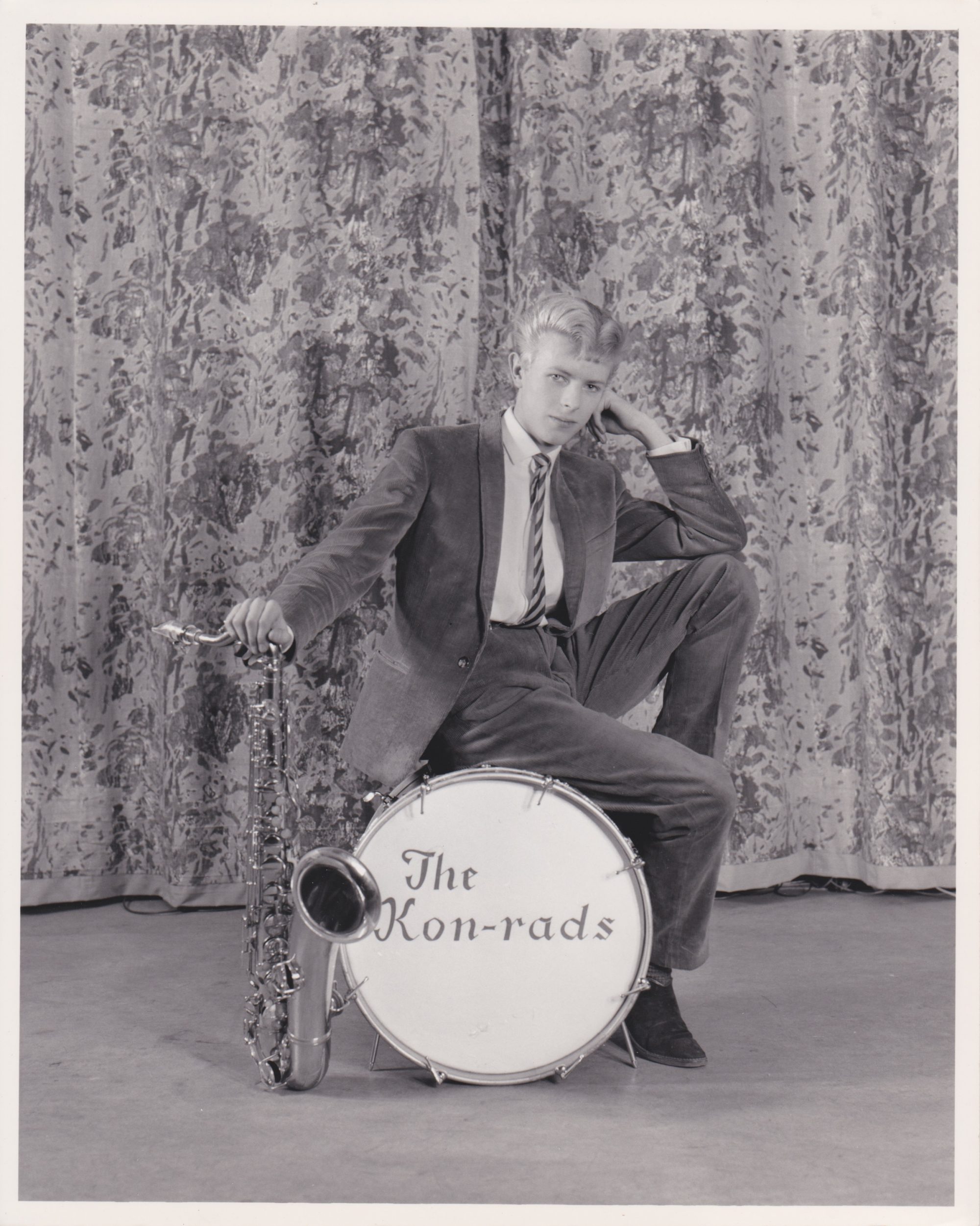
Endigar 1031 ~ Ziggy to the Blackstar

Posted in Uncategorized with tags , , , , , , , , , , , , , on August 28, 2025 by endigar

David Bowie did achieve long term sobriety, but there is not evidence he ever attended AA. His recovery was marked by geographical adjustments and secured in a second marriage, much like Johnny Cash.

David Bowie’s Los Angeles period (roughly 1974–1976) is infamous for both its artistic breakthroughs and his near self-destruction on cocaine. He lived in L.A. during the height of his addiction, when paranoia, occult fascinations, and personal disintegration shadowed his creativity. Yet, astonishingly, he produced some of his most influential work.


Key Albums of the L.A. Cocaine Years

1. Diamond Dogs (1974)

  • Originally conceived as a rock-opera adaptation of George Orwell’s 1984, until Orwell’s estate denied him rights.
  • Bowie fused dystopian imagery with glam and proto-punk energy.
  • Standout tracks: Rebel Rebel, Diamond Dogs, 1984.
  • Theatrical and apocalyptic, reflecting his crumbling psyche.

2. Young Americans (1975)

  • Recorded while in the U.S., but deeply tied to his L.A. phase.
  • Bowie immersed himself in “plastic soul,” collaborating with Luther Vandross and featuring John Lennon (Fame came from this collaboration).
  • The album marked a stylistic pivot, showing his restless experimentation even as addiction consumed him.

3. Station to Station (1976)

  • Written and recorded in L.A. at the height of his cocaine psychosis.
  • The persona of the Thin White Duke—cold, aristocratic, and fascist-tinged—was born here, mirroring Bowie’s own paranoia and occult dabblings.
  • He later admitted he had little memory of making the album, surviving on milk, peppers, and “mountains of cocaine.”
  • Standout tracks: Station to Station, Golden Years, Word on a Wing.

Themes of the L.A. Years

  • Paranoia and the Occult: Bowie reportedly believed witches were stealing his semen and had his pool exorcised.
  • Identity Fracture: He described himself as “inhabited by multiple characters.” The Thin White Duke persona became a chilling mask for his real condition.
  • Transition Point: Though destructive, this period was also the crucible that burned away glam rock excess and pushed him toward the reinvention of the Berlin Trilogy.

So, in L.A., amid chaos and near collapse, Bowie created a dystopian glam epic (Diamond Dogs), an American soul experiment (Young Americans), and one of his greatest transitional works (Station to Station). Each bears the fingerprints of cocaine, paranoia, and genius in equal measure.

His Berlin years (1976–79) were a conscious escape from Los Angeles excess; he used the time to detox, create the “Berlin Trilogy,” and reinvent himself musically.

Bowie’s Berlin years (1976–1979) are often seen as his resurrection: a period of detox, discipline, and astonishing innovation. After nearly destroying himself in Los Angeles, he fled first to Switzerland and then to Berlin with Iggy Pop, determined to get clean, escape fame’s chaos, and reinvent himself.


The Berlin Trilogy (with Brian Eno & Tony Visconti)

1. Low (1977)

  • Recorded at Château d’Hérouville (France) and Hansa Studios (Berlin).
  • Side A: fragmented, angular rock songs (Sound and Vision, Be My Wife).
  • Side B: ambient, instrumental soundscapes (Warszawa, Art Decade).
  • It shattered pop conventions—alien, minimal, influenced by Krautrock (Kraftwerk, Neu!).
  • Initially misunderstood, now seen as groundbreaking and hugely influential on post-punk, electronic, and ambient music.

2. “Heroes” (1977)

  • The only Trilogy album fully recorded in Berlin.
  • Title track (“Heroes”) became one of Bowie’s most iconic songs—an anthem of defiance inspired by lovers kissing by the Berlin Wall.
  • Again, a split: rock songs (Beauty and the Beast, Blackout) and dark ambient instrumentals (Sense of Doubt, Neuköln).
  • Rawer and more muscular than Low, with Robert Fripp’s searing guitar work.

3. Lodger (1979)

  • More accessible than the first two, yet still experimental.
  • World music influences, odd structures, and surreal lyrics.
  • Tracks like DJ, Boys Keep Swinging, and Look Back in Anger kept the edge while edging toward new wave.
  • Often underrated, but it set the stage for 1980’s Scary Monsters (and Super Creeps).

Other Berlin-Era Work

  • With Iggy Pop: Bowie co-wrote and produced The Idiot (1977) and Lust for Life (1977), two classics that revitalized Iggy’s career. He also co-wrote China Girl (later re-recorded on Bowie’s Let’s Dance).
  • Film: During this time, Bowie also acted in Just a Gigolo (1978) and refined his interest in visual art and painting.

Themes of the Berlin Years

  • Detox & Healing: Bowie used Berlin as a place to escape fame, walk the streets anonymously, and focus on painting and normalcy.
  • Sonic Innovation: He dismantled pop expectations, combining rock with ambient, electronic, and avant-garde sounds.
  • Creative Partnership: Brian Eno’s experimental approach gave Bowie the space to reinvent himself, while producer Tony Visconti kept it grounded.
  • Cold War Backdrop: Berlin itself, divided and tense, seeped into the music—industrial, paranoid, but shot through with fragile hope.

So in Berlin, Bowie went from near-death in L.A. to creating a trilogy of experimental albums that reshaped modern music, while helping revive Iggy Pop. These years stand as his most daring artistic leap.

1970s Films – Experimental & Breakthrough

  • The Image (1969, short film) – A silent horror short where Bowie plays a living painting.
  • The Man Who Fell to Earth (1976) – Breakthrough role. Bowie as Thomas Jerome Newton, an alien stranded on Earth. Directed by Nicolas Roeg; a cult classic that fused his “otherworldly” stage persona with cinema.
  • Just a Gigolo (1978) – As Paul Ambrosius von Przygodski, a Prussian officer navigating Berlin after WWI. Co-starred with Marlene Dietrich in her final screen appearance.

David Bowie’s 1980s through early 1990s output is one of his most varied, and also the most commercially visible period of his career. It shows the tension between pop superstardom and his restless urge to reinvent.


1980s (Superstardom and Pop Experiments) Alcoholic Years

1. Scary Monsters (and Super Creeps) (1980)

  • Seen as the bridge between the experimental Berlin years and 1980s mainstream.
  • Known for Ashes to Ashes (a revisiting of Major Tom, filtered through drug recovery), Fashion, and Scary Monsters.
  • Critically acclaimed, bold, and artistic.

2. Let’s Dance (1983)

  • Produced with Nile Rodgers (Chic).
  • Huge commercial success—catapulted Bowie to global pop icon status.
  • Hits: Let’s Dance, China Girl (revival of his Iggy Pop collaboration), Modern Love.
  • Funky, accessible, danceable. But Bowie later felt it boxed him into mainstream expectations.

3. Tonight (1984)

  • Rushed follow-up, often criticized as weak.
  • Included covers (God Only Knows) and re-used Iggy Pop co-writes (Tonight, Neighborhood Threat).
  • Still had a hit with Blue Jean.

4. Never Let Me Down (1987)

  • Ambitious but uneven.
  • Tracks: Day-In Day-Out, Time Will Crawl, Never Let Me Down.
  • Bowie later admitted he felt let down by this record himself—though songs like Time Will Crawl were later reworked to better effect.

5. Tin Machine (1989–1992)

  • Bowie formed a band with Reeves Gabrels and the Sales brothers, stepping away from being a solo icon.
  • Tin Machine (1989) and Tin Machine II (1991).
  • Raw, guitar-driven, proto-grunge energy—hugely influential on 90s alternative rock, though critics were divided at the time.
  • Bowie said it helped him rediscover himself musically by stripping away pop polish.

1980s – Cult Horror & Fantasy Films

  • Christiane F. (1981) – Cameo as himself in concert scenes, reinforcing his cultural role in Berlin’s youth scene.
  • The Snowman (1982, short/TV) – Introduced the animated Christmas special in the UK broadcast version.
  • The Hunger (1983) – John Blaylock, the rapidly aging vampire, alongside Catherine Deneuve and Susan Sarandon.
  • Merry Christmas Mr. Lawrence (1983) – Major Jack Celliers, a British soldier in a Japanese POW camp. Critically acclaimed, showing Bowie’s dramatic depth.
  • Yellowbeard (1983, cameo) – Small comic role in the pirate spoof.
  • Into the Night (1985) – Small role as an eccentric hitman in John Landis’s dark comedy.
  • Absolute Beginners (1986) – Vendice Partners, a flamboyant ad man in a stylized musical set in 1950s London.
  • Labyrinth (1986) – Perhaps his most iconic role: Jareth the Goblin King. Bowie’s performance and songs (Magic Dance, As the World Falls Down) cemented the film’s cult legacy.

Bowie Marries Iman and Divorces Alcohol (1992)

David Bowie married Iman Abdulmajid on April 24, 1992, in a private civil ceremony in Lausanne, Switzerland.

They held a larger wedding celebration in Florence, Italy, on June 6, 1992, with family and friends.

That union lasted until Bowie’s death in 2016, nearly 24 years, and is remembered as his most stable and joyful chapter.

He married twice:

1. Angie Bowie (née Mary Angela Barnett)

  • Married: 1970
  • Divorced: 1980
  • They had one son together, Duncan Zowie Haywood Jones (born 1971), now a filmmaker.
  • Angie has often been outspoken in the press about their wild, drug-fueled years, though Bowie later distanced himself from her and rarely spoke about the marriage.

2. Iman (Somali-American supermodel)

  • Married: 1992
  • They remained together until Bowie’s death in 2016.
  • They had one daughter, Alexandria “Lexi” Zahra Jones (born 2000).
  • Bowie described Iman as the love of his life. Their marriage was famously stable, private, and nurturing—marking his longest and happiest partnership.

Bowie quit alcohol in the early 1990s, he entered his final era of disciplined sobriety (c. 1993–2016). During this time, he worked with clarity and intention, creating music that was often reflective, experimental, and deeply personal. Here’s the arc of that sober period:


1993–1999: Creative Renewal

1. Black Tie White Noise (1993)

  • His first solo work after Tin Machine and his first as a newly sober man.
  • Inspired by his marriage to Iman and social issues (L.A. riots).
  • Standouts: Jump They Say, Miracle Goodnight, Black Tie White Noise.

2. The Buddha of Suburbia (1993)

  • Soundtrack/experimental album for the BBC series.
  • Little known, but adventurous and foreshadowed his more ambient leanings.

3. Outside (1995)

  • Collaboration with Brian Eno again.
  • A dark, sprawling, conceptual “non-linear Gothic drama” about art, murder, and dystopia.
  • Standouts: Hallo Spaceboy, The Heart’s Filthy Lesson.
  • Influenced industrial/alt scenes (Trent Reznor toured with him).

4. Earthling (1997)

  • Embraced drum & bass and electronic rave culture.
  • Standouts: Little Wonder, I’m Afraid of Americans.
  • Energetic, forward-looking, showing he wasn’t stuck in the past.

5. Hours (1999)

  • More introspective, melancholy.
  • Standouts: Thursday’s Child, Seven.
  • A turning inward, aging gracefully.

2000–2004: Mature Experimentation

6. Heathen (2002)

  • Produced with Tony Visconti.
  • Atmospheric, spiritual, thoughtful.
  • Standouts: Everyone Says ‘Hi’, Slip Away.
  • Often seen as one of his strongest late-career records.

7. Reality (2003)

  • More rock-oriented, live energy.
  • Standouts: New Killer Star, Fall Dog Bombs the Moon.
  • He toured heavily until 2004, when a heart attack forced him to withdraw from public performance.

2004–2012: Silence and Withdrawal

  • After the heart attack, Bowie became almost entirely private.
  • He rarely appeared in public, focusing on art, family, and recovery.
  • Many thought his career was over.

2013–2016: The Final Masterpieces

8. The Next Day (2013)

  • Surprise release after a decade of silence.
  • Both a nod to his past (cover art reworking “Heroes”) and a reinvention.
  • Standouts: Where Are We Now?, The Stars (Are Out Tonight).
  • Critically praised as a triumphant return.

9. Blackstar (2016)

  • Released on his 69th birthday (January 8, 2016), just two days before his death.
  • Experimental jazz fusion, cryptic lyrics, meditations on mortality.
  • Standouts: Blackstar, Lazarus, I Can’t Give Everything Away.
  • Universally hailed as a masterpiece and his deliberate parting gift.

In Summary

While sober, Bowie produced:

  • 1990s: eclectic renewal (Black Tie White Noise, Outside, Earthling).
  • 2000s: mature reflections (Heathen, Reality).
  • 2010s: final reinvention (The Next Day, Blackstar).

Sobriety sharpened his vision. Instead of chaotic excess, his late music is marked by clarity, mortality, mystery, and legacy—culminating in Blackstar, a haunting farewell that stands among his greatest works.

1990s – Quirky, Offbeat Roles

  • The Linguini Incident (1991) – Monte, a barman caught up in a heist with Rosanna Arquette.
  • Twin Peaks: Fire Walk with Me (1992) – FBI Agent Phillip Jeffries, who appears and vanishes in a surreal, fragmented sequence. (Later reprised through archival footage in the 2017 revival).
  • Basquiat (1996) – Played Andy Warhol, to great acclaim—considered one of his strongest screen roles.
  • Everybody Loves Sunshine (a.k.a. B.U.S.T.E.D.) (1999) – Gangster role as Bernie, opposite Goldie.

2000s – Cameos & Voice Work

  • Zoolander (2001) – As himself, judging a fashion walk-off (scene has cult comedy status).
  • The Prestige (2006) – Nikola Tesla, the visionary scientist. Christopher Nolan cast Bowie specifically for his enigmatic aura—one of his most memorable late roles.
  • August (2008) – Cyrus Ogilvie, in a drama about the dot-com collapse.
  • Arthur and the Invisibles (2006) – Voice of Maltazard, the villain (also reprised in sequels Arthur and the Revenge of Maltazard (2009) and Arthur 3: The War of the Two Worlds (2010)).

Television & Miscellaneous Highlights

  • Extras (2006, TV cameo) – Played himself, brilliantly skewering Ricky Gervais’s character with an improvised song.
  • SpongeBob SquarePants (2007, voice) – Lord Royal Highness in the special episode Atlantis SquarePantis.
  • Numerous documentaries and concert films throughout his career.

In Summary

  • 1970s: Otherworldly and serious (alien, soldier, drifter).
  • 1980s: Cult fantasy and horror (Goblin King, vampire, POW).
  • 1990s: Quirky, postmodern (Warhol, Twin Peaks surrealism).
  • 2000s: Legendary cameos and iconic late roles (Tesla in The Prestige).

Bowie never became a conventional movie star, but his roles were chosen for symbolic resonance—alien, outsider, visionary, trickster.

Here’s a timeline of David Bowie & Iman’s marriage (1992–2016). It shows how their union unfolded in stability, creativity, and enduring love:


1992 – Marriage

  • April 24, 1992: Private civil ceremony in Lausanne, Switzerland.
  • June 6, 1992: Formal wedding celebration in Florence, Italy.
  • Bowie described meeting Iman as “instant” love—he said he was “naming the children the night we met.”

1990s – New Life, New Music

  • 1993: Bowie released Black Tie White Noise, heavily inspired by his marriage to Iman. The song Miracle Goodnight is a direct tribute.
  • They established a private home life in New York, away from the tabloid glare.
  • 1990s: Iman continued a successful modeling and humanitarian career, while Bowie explored eclectic musical directions (Outside, Earthling).

2000 – Parenthood

  • August 15, 2000: Their daughter Alexandria “Lexi” Zahra Jones was born.
  • Bowie, who already had a son (Duncan Jones), was deeply devoted to Lexi. He often said fatherhood in his 50s gave him a renewed sense of purpose.

2000s – Domestic Years

  • 2002–03: Bowie released Heathen and Reality, toured heavily, then suffered a heart attack in 2004.
  • After this health scare, Bowie retreated from touring and public life.
  • For nearly a decade (2004–2013), he lived quietly with Iman and Lexi in New York, focusing on painting, art collecting, and family.

2010s – Quiet Love, Final Works

  • 2013: Bowie stunned the world by returning with The Next Day, dedicated in part to the life he had built with Iman.
  • 2016: Released Blackstar on his 69th birthday, just two days before his death. The album’s themes of mortality and transcendence resonate as a farewell.

2016 – Passing & Legacy

  • January 10, 2016: Bowie died in New York, after an 18-month private battle with liver cancer.
  • Iman later described their marriage as her greatest blessing: “David is my forever love.”

NOTE: This writing is the result of me asking questions and AI answering me. It represents a compilation of our interaction. It was inspired when someone in my AA group posted a video short of Bowie talking about no longer drinking and that he recognized he was an alcoholic.

https://www.facebook.com/reel/811774927861595

Endigar 1030

Posted in Uncategorized with tags , , , , , , , , , , , on August 27, 2025 by endigar

From Courage to Change of Sep 15:

Night after sleepless night, I tossed and turned and worried. Why couldn’t I sleep? What was the matter with me? My life was stressful, but no more so than usual. I’d tried hot milk, reading in bed, soft music, even a visit to the doctor, but still I couldn’t get more than a few hours sleep. I was in a panic!

I spoke about my concerns in an Al-Anon meeting, and another member related a similar problem. What had helped him was to accept the situation fully and admit that he was powerless to make himself sleep. In retrospect, he said, his sleeplessness had been a blessing; it had kept him too tired to get into trouble.

I realized that the same was true for me. Instead of worrying compulsively about a loved one’s sobriety, watchful and nosy despite many attempts to mind my own business, lately I’ve been too tired to be overly involved in anything that wasn’t my concern. I had often prayed to be released from my obsessive worry, and now, in an unexpected way, my prayers seem to have been answered.

Today’s Reminder

My Higher Power’s gifts sometimes take unusual forms. Perhaps something I regard as a problem is really a form of assistance.

“Nothing is either good or bad. It’s thinking that makes it so.” – William Shakespeare

END OF QUOTE—————————————

My problem is the opposite of sleeplessness. In this season of life, sleep has become my greatest solace. I live alone, save for a cat who waits sweetly—if somewhat morbidly—to one day feast on my silent, non-breathing carcass. Within this private realm of rest, I pray. I seek connection. I don’t feel lost in depression, but rather suspended—sleep loosens the grip of my obsession with reaching the Infinite One.

Recently my ACA Sponsor sent me a YouTube video of Alan Watts titled No Friends, No Lovers, Just God and the Man Who Believes. Watts, for all his eloquence, never performed the kind of miracles that would convince me of his spiritual ascension. He was married three times, fathered seven children, and struggled with alcoholism until his death at 58. He also experimented with marijuana, LSD, mescaline, and—less certainly—psilocybin mushrooms. Though he wrote and lectured on the mystical potential of these substances, he warned against clinging to them, likening psychedelics to a telephone: useful for receiving a message, but pointless to keep “holding onto after the message has been delivered.”

I believe my Sponsor’s intent in sharing the video was not to highlight Watts’ life but his message: that learning to be comfortable with solitude is the first step to knowing yourself and connecting with God. Watts described this as an intense internal existence, where surrender in aloneness dissolves the need for human approval—and where serenity itself attracts others without effort. But to me, his own life does not reflect this ideal. Instead, I hear in it a mystical justification for chemical dependency and emotional absence within intimacy. Harsh? Perhaps. But it is my honest observation.

And here lies the paradox I keep encountering: the Higher Power’s gifts rarely come wrapped in gold. More often they arrive disguised in the ordinary—or even the unpleasant. A sleepless night. An overabundance of sleep. A closed door, an unwelcome delay. What I label as a problem may, in fact, be grace in work clothes. Acceptance is not resignation, but trust: that even this—this inconvenience, this seeming curse—might be the blessing I didn’t recognize I needed.

So I ask myself:

  • What if my present discomfort is secretly serving me?
  • What if the very thing I resent is the tool that keeps me from falling deeper into obsession?
  • Can I thank my Higher Power not only for comforts but for interruptions?

I admit—I hate oversleeping. And yet, perhaps it is not the enemy I’ve made it out to be. I keep showing up, even soul-tired, even unpolished, still trying to be useful. Maybe other “problems” in my life have been blessings in disguise, too. If sleep can shield me from obsession, perhaps another person’s burden hides its own strange grace.

I want to learn to seek usefulness in the unwanted. In meetings, I try to share my struggles openly, giving others permission to do the same. Could it be that sleep is not a thief after all, but a teacher?

Endigar 1029

Posted in Uncategorized with tags , , , , , , , , , , , on August 26, 2025 by endigar

From Courage to Change of Sep 14:

Living with alcoholism taught me that it was best not to hope for anything. The lessons were too painful — I would get excited about something, only to have my hopes shattered. As time passed and hope diminished, I fell deeper into despair. Eventually I shut down my feelings and refused to care or to hope for anything at all.

Through Al-Anon’s Twelve Steps, I am discovering a spirituality that allows me to believe that there is every reason to hope. With my Higher Power’s help, regardless of my circumstances, I can feel fully alive in the moment and enjoy this feeling. The painful lessons of a lifetime are not unlearned overnight, but Al-Anon is helping me to learn that it is safe to feel, to hope, even to dream.

Today’s Reminder

It is risky to care — I may be disappointed. But in trying to protect myself from pain, I could cut myself off from the many delights that life has to offer. I will live more fully today.

“Years may wrinkle the skin, but to give up enthusiasm wrinkles the soul.” ~ Samuel Ullman

END OF QUOTE—————————————

NOTE: Samuel Ullman (1840–1924) was an American businessman, poet, humanitarian, and religious leader best remembered for his poem “Youth.”

Early Life

  • He was born in Hechingen, Germany, in 1840.
  • At the age of 11, he immigrated with his family to the United States, settling in Mississippi.
  • Samuel Ullman’s father, Jacob Ullman, operated a butcher shop in Port Gibson, Mississippi when the family settled there in 1851. Young Samuel assisted him each morning delivering orders before school and later helped purchase cattle for the business
  • When the Civil War broke out, Ullman, then in his early 20s, served in the Confederate Army. He was part of a local Mississippi unit.
  • Samuel Ullman wed Emma Mayer on May 24, 1867, in Natchez, Mississippi. They had a total of eight children. However, of these, six survived to adulthood, meaning two sadly passed away in early childhood

Career and Contributions

  • Ullman became a successful businessman in Birmingham, Alabama, after moving there in 1884.
  • He was deeply involved in civic life: he served on the Birmingham Board of Education, championed racial equality in education, and was active in religious and community causes.
  • As a lay leader in Temple Emanu-El (a Reform Jewish congregation), he was respected for his moral vision and emphasis on human dignity.
  • Jewish Leadership
    Ullman was raised in a Jewish family and carried his faith with him through his moves from Germany to Mississippi and later to Birmingham, Alabama.
    In Birmingham, he became a founding member of Temple Emanu-El (a Reform Jewish congregation). His leadership there was notable, as he worked to help establish Jewish religious life in what was still a very young and rapidly growing city.
    He also served as a lay leader, meaning he often led prayers, gave talks, and carried responsibilities when professional rabbis were unavailable.

    Service to the Community
    Ullman emphasized that religious duty was not confined to ritual, but extended to civic responsibility.
    He served on the Birmingham Board of Education and worked to promote racial justice and better schooling for African Americans at a time when this was rare. His religious values deeply influenced this advocacy, seeing education as a spiritual responsibility.

    Philosophy of Faith
    In his writings and speeches, Ullman often connected faith with youthfulness of spirit, stressing inner renewal and moral courage as religious acts.
    His famous poem Youth embodies this perspective: living with openness, hope, and vitality was for him not just personal philosophy, but a religious ethic.

    Practical Duties
    He helped guide Jewish worship and community structure at Temple Emanu-El.
    He lived by example, showing that religious duty extended to the way one treated others—through kindness, justice, and an unflagging commitment to growth.

His Poem “Youth”

  • Ullman is most famous for writing the poem “Youth,” which he composed later in life.
  • The poem emphasizes that youth is not defined by age but by attitude, imagination, and ideals.
  • It gained international fame largely because General Douglas MacArthur often quoted it and kept a framed copy in his office in Tokyo after World War II.
  • The poem became especially popular in Japan, where it continues to be read as an inspirational text.

Legacy

His life embodied service, cross-cultural respect, and the blending of business success with moral and civic duty.

In Birmingham, the Samuel Ullman Museum (part of the University of Alabama at Birmingham) preserves his legacy.

Youth by Samuel Ullman

Youth is not a time of life; it is a state of mind; it is not a matter of rosy cheeks, red lips and supple knees; it is a matter of the will, a quality of the imagination, a vigor of the emotions; it is the freshness of the deep springs of life.

Youth means a temperamental predominance of courage over timidity of the appetite, for adventure over the love of ease. This often exists in a man of sixty more than a body of twenty. Nobody grows old merely by a number of years. We grow old by deserting our ideals.

Years may wrinkle the skin, but to give up enthusiasm wrinkles the soul. Worry, fear, self-distrust bows the heart and turns the spirit back to dust.

Whether sixty or sixteen, there is in every human being’s heart the lure of wonder, the unfailing child-like appetite of what’s next, and the joy of the game of living. In the center of your heart and my heart there is a wireless station; so long as it receives messages of beauty, hope, cheer, courage and power from men and from the Infinite, so long are you young.

When the aerials are down, and your spirit is covered with snows of cynicism and the ice of pessimism, then you are grown old, even at twenty, but as long as your aerials are up, to catch the waves of optimism, there is hope you may die young at eighty.

END OF NOTE—————————————

When the lips are gone, the smile turns irrepressible.
When the orbs sink into the raven’s gut, the gaze remains ever watchful.
The oxygen tent is torn away, and nature’s breath flows unhindered.

Emptiness lingers—
the footprint of that wandering ghost we call freedom,
passing through walls of illusion without training wheels.

And in its wake,
hope rises, resurrecting life anew.


Living with alcoholism taught me that hope could feel like a trap. Each time I reached for it, I seemed to be punished: expectations raised, then crushed. So I trained myself not to hope at all. It felt safer to numb, safer to shut down, safer to live in a barren landscape than to risk the disappointment of a shattered dream. Yet beneath that silence, despair kept spreading roots.

The Twelve Steps have been my invitation back to hope. Not the fragile, conditional hope that depends on someone else’s behavior or on life bending to my demands — but the grounded hope that comes from turning my will and my life over to a Higher Power. With help, I’ve learned that it is safe to feel again, safe to open the heart a crack wider, safe to let the light in. Hope does not mean I will get everything I want; it means I can trust that whatever comes, I will not face it alone.

Yes, there is risk in caring. To love, to hope, to dream means stepping into vulnerability, and vulnerability always carries the possibility of pain. But pain is not the enemy — disconnection is. When I cut myself off to avoid being hurt, I also cut myself off from joy, laughter, intimacy, and the unexpected gifts life places along the way. Hope is not a guarantee against suffering, but it is the doorway into living fully


Today I can choose to treat each act of hope as a spiritual exercise:

  • When I allow myself to hope, I practice courage.
  • When I risk caring, I practice connection.
  • When I dream, I practice co-creating a life with my Higher Power.

1. Spiritual Honesty: I name my fear of disappointment.
2. Resilience: I let myself hope anyway.
3. Curiosity of the Soul: What possibilities open when I refuse despair?
4. Empathy and Compassion: Others fear hope too — my journey can reassure them.
5. Discipline in Reflection: Each day I test where I’ve hidden from hope, and I try again.
6. Courage to Be Seen: I confess that I want more from life — and that is holy.
7. Creative Insight: Hope is not fragile glass, it is a living seed — buried, yes, but insistent on breaking through.


Endigar 1028

Posted in Uncategorized with tags , , , , , , , , , , , , on August 19, 2025 by endigar

From Courage to Change of Sep 13:

Each moment of this day is precious, and I will make it count. I will use this time to enrich my life and to improve my relationship with my Higher Power, other people, and myself. Each of the Twelve Steps can help me to pursue this goal regardless of my circumstances. Meetings, Al-Anon telephone calls, and Al-Anon literature all help me to apply the Steps to what is happening in my life here and now. In this moment, I can make a positive change.

Perhaps I will think of time as a special kind of checking account. I have twenty-four hours to spend. By putting Al-Anon’s principles to work in my life today, I am choosing to use these hours to grow, enjoy, and improve. I even have an opportunity to learn from my mistakes, since a brand new twenty-four hours can begin at any moment.

Today’s Reminder

This day offers me a chance to make a new start at living. How can I make the best use of it?

“We start with gifts. Merit comes from what we make of them.”
– Jean Toomer

END OF QUOTE—————————————

Note: Jean Toomer (1894–1967) was an American writer, poet, and thinker best known for his 1923 book Cane, a groundbreaking work of modernist literature that blends poetry, prose, and drama.

Background

  • He was born in Washington, D.C., into a mixed-race family and grew up moving between Negro and Caucasian communities, which deeply shaped his outlook on identity.
  • Toomer resisted being categorized strictly by race. Though associated with the Harlem Renaissance, he did not fully embrace the label of “Negro writer,” instead seeing himself as an American author exploring universal human themes.

Cane (1923)

  • Cane is his most famous work, often considered one of the masterpieces of the Harlem Renaissance.
  • It weaves together vignettes, poems, and sketches of Negro life in both the rural South and the urban North, portraying themes of identity, sexuality, spirituality, and the Great Migration.
  • Its experimental style—mixing lyricism, folklore, and modernist fragmentation—made it unique for its time.

Later Life

  • After Cane, Toomer never published another major literary work, though he wrote essays, plays, and unpublished manuscripts.
  • He became involved with spiritual movements, particularly the teachings of the mystic George Gurdjieff, which influenced his later writings and personal philosophy.
  • He married Margery Latimer, a white writer, in 1931, which was controversial in the U.S. due to anti-miscegenation attitudes and laws.
  • Much of his later life was devoted to spiritual seeking and private writing rather than public literary activity.

Legacy

He is remembered as a bridge figure between different identities, artistic movements, and cultural currents of early 20th-century America.

Though he distanced himself from being labeled a “Black writer,” his desire was ignored and now his work—especially Cane—is recognized as central to African American literature and modernist experimentation. It is more the work of American individualism than racial Darwinist competition.

END OF NOTE—————————————

There are roughly 37 trillion cells in my body. Within just one of those cells resides a molecule: L43NxB500325Ydπ. And within that molecule, housed deep inside a neutron, lies the Quantum Infinity Vault. Its emblem is the macro/micro infinity ouroboros — the eternal cycle of vast and small, endlessly entwined.

The code to open this vault is 23(3), which summons 24. When opened, the vault releases an inexhaustible supply of positive selfishness (ps). A pulsating dose of ps moves through my body each day. If I fail to use it within the 24-hour span of Earth’s rotation, it decays into the maggot-filled manna of fearful isolation. But if I spend it freely — if I feed the hungry Sun — it transforms into connection, filling my day with living tools of recovery.

For when I have enough ps to proclaim, “I want to live” or “I want to recreate my life”, then I also find:

  • the courage to connect,
  • the humility to listen to other versions of success, and
  • the deep, restoring respiration of serenity.

Long live molecule L43NxB500325Ydπ!

Endigar 1027

Posted in Uncategorized with tags , , , , , , , , , , , on August 18, 2025 by endigar

From Courage to Change of Sep 12:

In dealing with a change, a problem, or a discovery, awareness is often followed by a period of acceptance before we can take action. This process is sometimes referred to as the Three A’s– Awareness, Acceptance, and Action.

Coping with a new awareness can be extremely awkward, and most of us are eager to spare ourselves pain or discomfort. Yet, until we accept the reality with which we have been faced, we probably won’t be capable of taking effective action with confidence.

Still, we may hesitate to accept an unpleasant reality because we feel that by accepting, we condone something that is intolerable. But this is not the case. As it says so eloquently in One Day at a Time in Al-Anon, “Acceptance does not mean submission to a degrading situation. It means accepting the fact of a situation, then deciding what we will do about it.” Acceptance can be empowering because it makes choice possible.

Today’s Reminder

I will give myself time to accept my situation before I act. Unforeseen options can become available when I accept what is.

“For here we are not afraid to follow truth wherever it may lead.” ~ Thomas Jefferson

END OF QUOTE—————————————

The three A’s are Awareness, Acceptance, and Action.

Awareness comes first, and it can feel like a light switched on in a dark room. Sometimes that light is gentle, and sometimes it is blinding. Either way, once I see, I cannot unsee. That is both the gift and the discomfort of awareness: it stirs me awake.

But then comes the pause — the liminal space called acceptance. This is where I often struggle. Part of me wants to leap immediately into fixing, doing, proving that I can handle what I’ve discovered. Yet without acceptance, my actions are frantic and hollow. They are more about escaping discomfort than walking with truth.

In my first rehab center, my counselor gave me a prescription for a text in the book, Alcoholics Anonymous, that states that acceptance is the solution to all my problems. I was afflicted with “acceptance issues.” I have feared that acceptance would mean condoning harm, weakness, or loss. But the program reminds me that acceptance is not submission. It is clarity. It is the strength to stop wrestling with what is, so I can finally decide what can be. In that surrender lies power, because choice only emerges once reality is no longer denied.

The final “A” — action — becomes a natural outflow, not a panicked reaction. It is not about perfection or guarantees. It is simply the next right step, grounded in serenity rather than desperation.

 Awareness need not terrify me, acceptance need not paralyze me, and action need not overwhelm me. Together, the Three A’s give me a rhythm for living: to see, to breathe, to step forward in trust.

Endigar 1026

Posted in Uncategorized with tags , , , , , , , , on August 16, 2025 by endigar

From Courage to Change of Sep 11:

During the entire process of working on my Fourth Step (making a searching and fearless moral inventory of myself), I felt a nagging suspicion that I wasn’t doing it right. With my Higher Power’s help, I finally realized that the problem wasn’t that I had done my Fourth Step wrong; the fact was that I had the same sense of inadequacy about my whole life. Whatever I’m doing, I’m inclined to feel that I’m doing it wrong, that my best is not good enough. And that is simply not true. I am doing just fine.

The awareness that I have developed through Step Four puts my self-doubt into perspective. It’s just an effect of years of living with problem drinkers. So when the feeling comes up, I recognize it, share about it, accept that I feel it, and then set it aside. I no longer assume that it has any validity.

Today’s Reminder

Step Four offers me a chance to find some balance. It helps me to identify the things I’ve been telling myself about myself, and to learn whether or not those things are true. Today I will take one of my assumptions about myself and hold it up to the light. I may find that it stems from habit rather than reality.

“Let me realize… that self-doubt and self-hate are defects of character that hinder my growth.” – The Dilemma of the Alcoholic Marriage

END OF QUOTE—————————————

The Old Reflex of Inadequacy

That nagging suspicion — I’m not doing this right — has followed me like a shadow through most of my life. It isn’t really about the Fourth Step, though it attached itself there. It’s the reflex of someone who grew up in the undertow of alcoholism, where no matter how well I tried to balance myself, it never felt steady enough. My “best” has long been stalked by the whisper that it’s never good enough. But recovery helps me name that whisper for what it is: not truth, just a scar of survival.

Step Four as a Mirror

The Fourth Step didn’t just catalog my mistakes; it taught me to hold up my assumptions about myself to the light. It showed me that the voice of inadequacy isn’t an authority, only an echo of the chaos I once lived in. Now, when it speaks, I don’t have to follow it. I can recognize it, share it in a meeting, and lay it down. That is freedom: to know I don’t have to argue with every thought that passes through me.

Balance Over Condemnation

Honesty in recovery is not about self-condemnation, nor is it about inflating the darkness. It’s about balance. It is about seeing where my habits of self-judgment come from, and daring to believe they don’t define me. If I take one assumption today — “I am not enough” — and test it against the evidence of my recovery, I find a different verdict: I am showing up, I am doing the work, and I am learning to live differently. That is enough. More than enough.

I like the idea of catching one old belief about myself, and to let the light of truth reveal whether it is habit or reality. I suspect that in that space of honesty, serenity grows.

Endigar 1025

Posted in Uncategorized with tags , , , , , , , , , on August 15, 2025 by endigar

From Courage to Change of Sep 10:

My denial was so thick when I came to Al-Anon that I didn’t even know there were alcoholics in my life. Al-Anon helped me feel safe enough to look at the truth. As my denial began to lift, I was horrified at the lies I had told myself and others.

But I went from one extreme to the other and became a compulsive truth teller. It became my mission to inform anyone who would listen about what was really happening. I labeled this “honesty,” but I was actually expressing my anger and scorn for the alcoholic — and crying out for help.

Al-Anon has shown me that my view of a situation is only the “truth” as seen from my tiny corner of the universe. I can’t undo past denial by blaming the alcoholic for having a disease that has affected both our lives, or by bitterly insisting that I now know the real truth. But I can forgive my extreme responses to extreme situations, knowing that I did the best I could at the time. Today I can be honest and still be gentle with myself.

Today’s Reminder

When I stop worrying about how others see things and focus on myself, I gain more serenity than I have ever known. I cannot control the disease of alcoholism, but I can step away from its grip by honestly examining my motives and feelings.

“Whoever fights monsters should see to it that in the process he does not become a monster.” – Friedrich Nietzsche

END OF QUOTE—————————————

I wondered whether I qualified for Al-Anon. But I read and listened and realized that my own deceased grandfather, who died of his Alcoholism when my mother was a 17-year-old girl, had an untreated impact on her that echoed through her parenting of me and my siblings. Then my stepson came into my life when he was 16 and was dealing with continuous battles with addiction. Other later developments made it clear that I carried the impact of alcoholism and addiction through lines of blinding intimacy. Once I had my own alcoholism treated into remission, I had to face the reality that my life had been contaminated by the dysfunction that comes from loving those afflicted.

I also learned not to accept “truth” from someone who was not truly invested in my wellbeing. I remember learning to distrust the word “honesty” because of it being weaponized against me. This was an early obstacle in my own recovery from alcoholism that I had to overcome. I would hear, “I just want you to be honest with me,” to be “I just want to collect enough evidence to win in court, to subjugate your dignity, and to indoctrinate you to love in defeat.”

When that fog began to lift, the first rays of truth felt threatening. I lurched from one extreme to the other, trying to make up for lost time by telling “my truth” to anyone who’d listen. I thought I was practicing a more powerful honesty, but often I was really venting anger, shaming the dysfunctional players in my life, or just pleading for someone to understand my pain.

Al-Anon has taught me that truth isn’t a blunt instrument. My perspective is still just that — my own small corner of reality. Honesty without compassion can wound others and, ultimately, myself. I can acknowledge that my early reactions were survival strategies, born from confusion and fear, and forgive myself for not knowing better at the time.

Now I understand that serenity grows not from proving I’m right, but from examining my own motives. I can still tell the truth — but now, I aim to do it with gentleness, humility, and awareness of my own limits. The disease of alcoholism and its surrounding dysfunction are beyond my control, but my responses are mine to tend. When I let go of the need to control how others see things, I free up the space to focus on my own healing.

That shift — from weaponizing truth to embodying it — has brought me more peace than I could have imagined when I first arrived.

Endigar 1024

Posted in Uncategorized with tags , , , , , , , , , , , on August 12, 2025 by endigar

From Courage to Change of Sep 09:

Sometimes I sit in a meeting and I don’t know how to ask for help. I can get trapped inside my pain. Some nameless thing seems to tear at my insides. I freeze, thinking that if I don’t move, it will go away. So I don’t ask, I don’t talk, and the pain grows.

Does my face look calm? Don’t be fooled. I’m just afraid to let you see the truth. You might think I’m foolish or weak. You might reject me. So I don’t talk, and the pain remains.

But I listen. And through other people, my Higher Power does for me what I can’t do for myself. Someone in the meeting shares and expresses the very feelings I am afraid to describe. My world suddenly widens, and I feel a little safer. I am no longer alone.

Today’s Reminder

One of the miracles I have found in Al-Anon is that help often comes when I most need it. When I can’t bring myself to reach out for help, it sometimes comes to me. When I don’t know what to say, I am given the words I require. And when I share what is in my heart, I may be giving a voice to someone who cannot find his own. Today I have a Higher Power who knows my needs.

“As I walk, As I walk, The universe is walking with me.” – from the Navajo rain dance ceremony

END OF QUOTE—————————————

To withdraw or not to withdraw—that is the question. Life among humans can feel unbearably taxing, threatening, and disappointing. There’s no escaping that imagined spotlight fixed on my weaknesses, and no connection that fully satisfies my longing for something more.

I suspect others feel much the same. I also suspect that much of life is pretense—a kind of protective ritual. Whenever I encounter genuine connection in a safe space, it feels like a godsend. But inevitably, humanity finds a way to wound the inner child. And in the game of life, the safest place often seems to be the sidelines.

I know that silence can feel like safety. In my darker seasons, I’ve sat in meetings with my insides in knots and my face arranged in calm, thinking the stillness might somehow hide my storm. I’ve feared that if I spoke, I would be exposed—my weakness on full display, my worth put on trial. I’ve told myself, Just keep quiet. It will pass.

It rarely passes on its own. Pain that is swallowed whole only seems to grow heavier. But even when I can’t make my voice work, recovery has a way of finding me. I’ve sat frozen, and then someone across the circle shares a story that sounds like my story. Their words become the key I didn’t know I was holding. In that moment, the tight walls of my solitude widen, and light seeps in.

This is one of the miracles of our rooms: I don’t have to be the one speaking to be reached. My Higher Power uses the voices of others when I’ve lost my own. And when I finally dare to share my truth—halting, messy, imperfect—I sometimes see the same relief in someone else’s eyes.

Today, I am trying not to measure my recovery by how much I speak, but by how willing I am to be present—whether I’m the one carrying the message or the one being carried by it. I trust that the God of my understanding knows my needs, even when my mouth is closed and my hands are clenched.

When I cannot ask for help, I can still sit in the circle. Sometimes that’s enough for help to find me.