Archive for July, 2025

Endigar 1017

Posted in Uncategorized with tags , , , , , , , , , , on July 31, 2025 by endigar

From Courage to Change of Sep 03:

Before coming to Al-Anon, I had built a lifetime of dreams and promises that were reserved for that one special day called, “Someday.” Someday I’II begin – or end – that project. Someday I’ll call that friend with whom I’ve lost touch. Someday I’ll let them know how I feel. Someday I’II be happy. I’m going to take that trip, find that job, speak my mind. Someday. Just wait and see.

Wait – just as I waited for the alcoholic to come in from a binge, and for inspiration to bring interesting friends and career opportunities to my doorstep, and for everybody else to change. But Al-Anon has helped me to see that today can be the Someday I’ve always wanted. There isn’t enough time in these twenty-four hours to do everything I’ve ever hoped to do, but there is time to start making my dreams come true. By asking my Higher Power for guidance and by taking some small step in the direction of my choice, I will be able to accomplish more than I would ever have thought possible.

Today’s Reminder

Today I will not wait for a blue moon, a rainy day, the 366th day of the year, or Someday to accomplish good things in my life.

“Each indecision brings its own delays and days are lost lamenting over lost days… What you can do or think you can do, begin it. For boldness has Magic, Power, and Genius in it.” – Johann Wolfgang von Goethe

END OF QUOTE—————————————

Johann Wolfgang von Goethe (1749–1832) was a towering figure of German literature, philosophy, and science—widely regarded as one of the greatest writers in Western history.

Most Famous Work: Faust, a tragic play in two parts, considered one of the most important works of Western literature. It tells the story of a man who makes a pact with the devil in search of ultimate knowledge and experience.

Other Works: The Sorrows of Young Werther (1774), a landmark of early Romanticism, which sparked a wave of sentimental literature—and even reported suicides among youth trying to emulate the protagonist.

Goethe explored the duality of human nature, the struggle for meaning, and the tension between reason and passion—anticipating thinkers like Nietzsche, Jung, and even Kierkegaard.

A lifelong seeker, he resisted rigid dogma, saying:
“He who possesses science and art also has religion; he who does not possess them needs religion.”

Goethe was also a scientist, particularly in the fields of botany, anatomy, and color theory. He even challenged Newton’s work on optics, proposing his own (controversial) Theory of Colors.

Goethe was deeply interested in alchemy, myth, the unconscious, and the soul’s evolution—themes that appear throughout Faust and his lesser-known esoteric writings.

Carl Jung considered Goethe a proto-depth psychologist and drew heavily from Faust in his ideas about the shadow, individuation, and the Self.
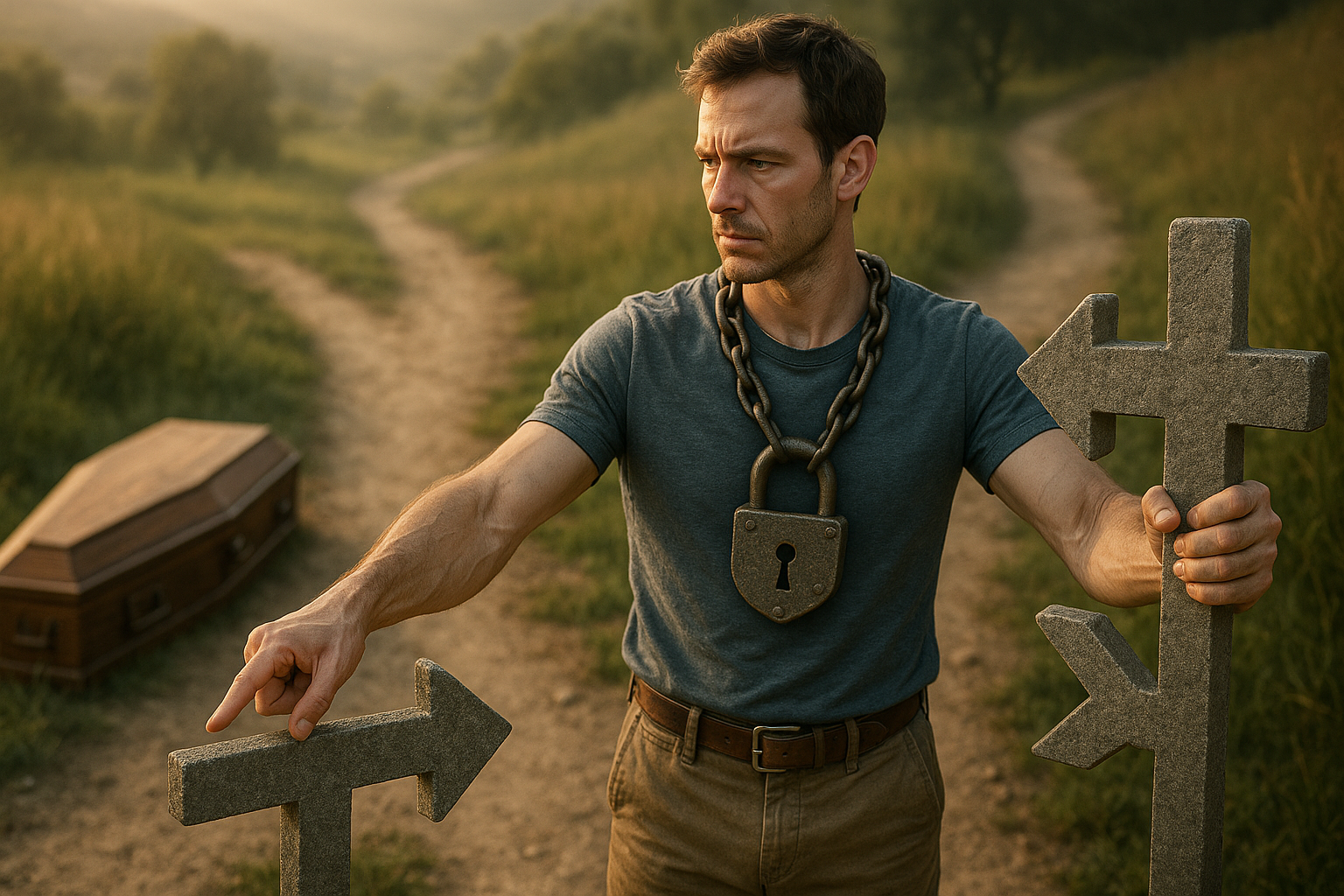
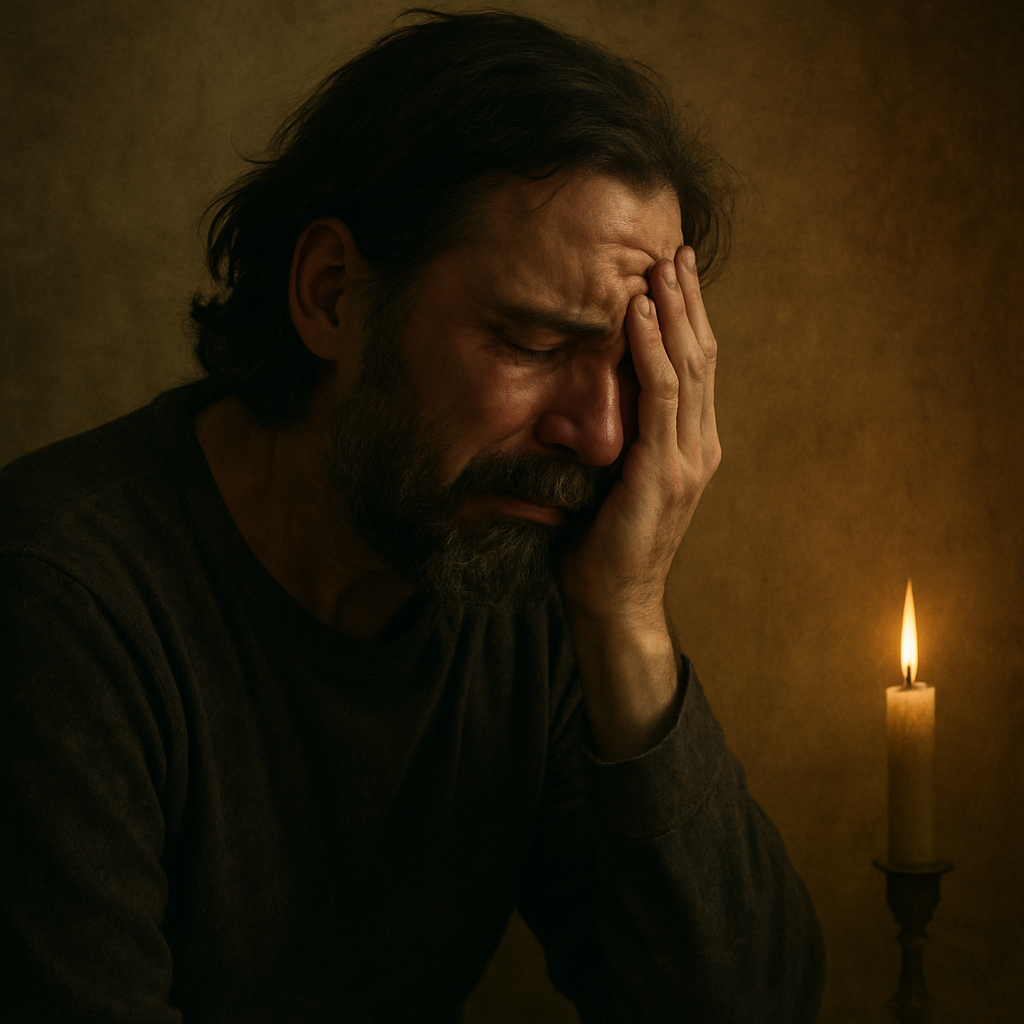
I am afraid of living a potential life. To have potential is to have fear. Only action in the now counters that fear. To achieve failure is better than to protect potential. To risk loss is better than saving for a beautiful coffin. One day at a time. End the day planning for the next. I want to find ways to justify getting out of bed and exhausting myself. The effective and acted on plan is better than the beautifully crafted promise. Someday is a myth that I can carry like a chain around my neck. Life is too sharp, painful, my voice too prone to the hesitant tremble. My grief becomes hardened into a habit. I beat myself to death with promises of someday.

I am free. I am allowed to re-create my life, to begin anew. I want to live boldly, to secure my freedom in quick forgiveness, and not to turn away from being seen.

I filled journals and conversations and fantasies with Someday.

But in the shadows of that promise, I postponed my own resurrection.
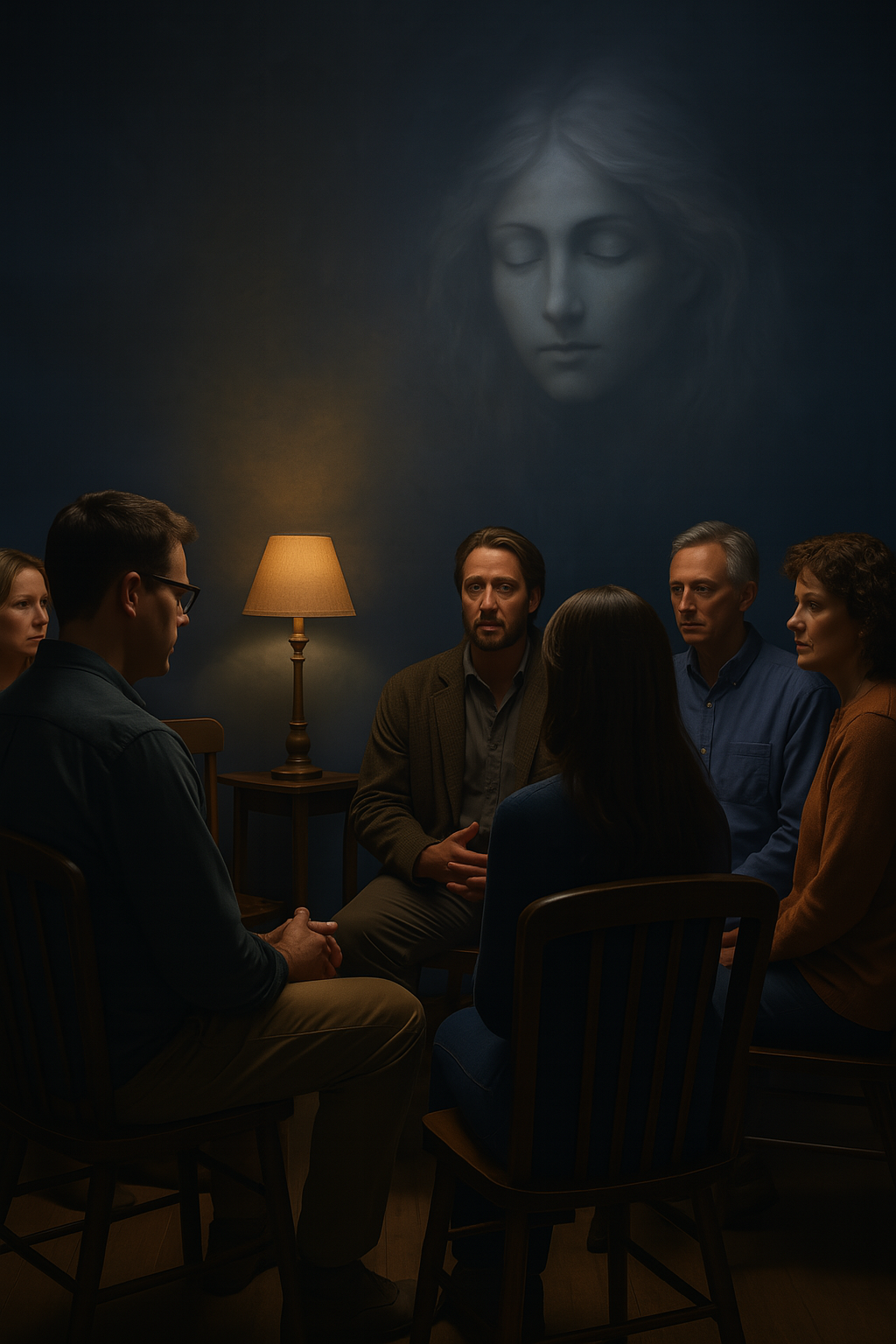
Because waiting—especially in families ruled by addiction—feels like love at first.
We wait for sobriety.
We wait for peace.
We wait for someone to choose us, change, or come home.

Recovery has shown me something strange and stunning:
There is no Someday. There is only Today, and the grace to be awake inside it.

Today is not a consolation prize.
Today is the only ground on which miracles grow.

And I don’t need to finish the novel, heal the wound, or reconcile every relationship today.
But I can make the call.
I can take the walk.
I can say the words: “I’m ready.”
I can set the boundary, speak the truth, write the page, wash the dish, light the candle.
That’s all it takes to betray the myth of Someday and let magic leak into this moment.
Endigar 1016

Posted in Uncategorized with tags , , , , , , , , , , , on July 30, 2025 by endigar

From Courage to Change of Sep 02:

During my years in Al-Anon I have done lots of thinking about the First Step; lately I have done lots of feeling about it, too. The feeling work can be described mostly in one word: Grief. Recalling a friend’s rapid progression through alcoholism, from reasonable health and apparent happiness to cirrhosis and death, I feel grief.

I don’t necessarily hate this disease today, but I do feel fiercely its crippling, powerful presence in my life. I have memories of the damage done to my family, my friends, and myself. I grieve for the loss of love and life that alcoholism has caused. I grieve for the lost years I have spent jumping through the hoops of this disease. I admit that I am powerless over alcohol and that my life has been utterly unmanageable whenever I have grappled with it.

Today’s Reminder

I have suffered many losses as the result of alcoholism. Part of admitting the effects of this disease in my life is admitting my grief. By facing alcoholism’s impact on my life, I begin to move out of its grip and into a life of great promise and hope.

It’s not easy to admit defeat and give in to that powerful foe, alcoholism. Yet, this surrender is absolutely necessary if we are ever to have sane, happy lives again.

END OF QUOTE—————————————

NOTE: I gave AI a free hand with this one. It was difficult to write. Maybe that is cowardly. I do have people who have lived out the tragic end of Step One. My stepson is one of them. So, I cannot…

There are seasons in recovery when the mind must grow silent, and the heart, long buried under slogans and solutions, begins to speak. This reading is one such moment—where understanding gives way to feeling, and feeling leads me through the smoke of memory into the fire of grief.

For so long I thought Step One was an intellectual milestone. A declaration. A banner I could wave to mark the beginning of a new life: “We admitted we were powerless over alcohol—that our lives had become unmanageable.” I could recite it, share about it, even teach it.

But now I live it.

And living it means grieving.

Grieving not just what I lost, but what I was. The version of me who couldn’t stop trying. Who begged love to stay by becoming small. Who tried to fix the unfixable. Who danced for approval while my soul bled in private. Who kept showing up with a smile when the house inside was crumbling.

I grieve the hope I kept in others who were circling the drain.

I grieve the way addiction distorted love until it became bargaining.

I grieve the time.

The years.

The endless contortions of spirit.

And yet, this grief is not my enemy. It is the veil I must walk through. It is the sacred tearing, the blood-bound lament that says: You tried. You loved. You lost. And now… you can stop fighting.

Surrender is not failure. It is an act of sacred bravery.

To say, “I cannot do this anymore,” is to whisper a spell of resurrection.

Because from that whisper rises the first fragile breath of sanity. The tremble of hope not yet named. The promise that a power greater than myself might still hold me, even now, in this crumpled and unmanageable state.

So I grieve. And in that grief, I do not collapse—I arrive.

At the beginning.

At Step One.

At the aching threshold of healing.

And I hear it again, not as dogma, but as an invocation:

“We admitted…”

Yes. That is how the miracle always begins.

Endigar 1015

Posted in Uncategorized with tags , , , , , , , , , on July 27, 2025 by endigar

From Courage to Change of Sep 01:

After taking a good look within itself, our very small home group discovered we had gotten into a rut without realizing it. It had been a long time since we’d had new members, new input. And all of our meetings, which were either round-table discussions, or based solely on the One Day at a Time in Al-Anon book, seemed to cover the same ground with little change.

We took a group conscience and decided to try some meetings using other Al-Anon literature. We began a series of speaker exchanges with other local groups. It was not long before things began improving. Our membership tripled within a year. We soon had so many newcomers that we set up a series of beginners meetings as an extension of our group. Each of us has personally benefited because of our willingness to take an inventory as a group.

Today’s Reminder

Each group, like each individual, goes through changes. But we don’t have to face those changes alone. The Second Tradition reminds us that a loving God expresses himself through our group conscience. When each of us is willing to grow, we all benefit.

“There is a comfortable feeling in knowing that guidance for the group comes not through individuals, but from the willingness of the group to follow whatever wisdom may be expressed through the membership.” – Al-Anon Faces Alcoholism

END OF QUOTE—————————————

“Al-Anon Faces Alcoholism” is a public outreach publication distributed by Al-Anon Family Groups. It’s not core program literature like How Al-Anon Works or One Day at a Time, but instead functions as an introductory and informational magazine. Here’s what you might want to know about it:


Purpose and Audience

  • Outreach Tool: It’s specifically designed to introduce non-members—especially professionals, newcomers, and the general public—to Al-Anon’s message of hope for families and friends of alcoholics.
  • First Encounter: For many people, this booklet is their first contact with Al-Anon literature. It helps explain what Al-Anon is (and is not), what the program offers, and how it differs from therapy or religious counseling.

Content and Structure

  • Real Member Stories: It often features short personal stories from members describing how they were affected by someone else’s drinking and how Al-Anon helped.
  • Basic Program Info: It includes explanations of the 12 Steps, what to expect at a meeting, and the foundational concept that Al-Anon is for the families and friends of alcoholics—not the drinkers themselves.
  • Clarifying Misconceptions: Many editions address common misunderstandings, like:
    • “I don’t belong in Al-Anon—they are the ones with the problem.”
    • “I didn’t grow up in an alcoholic home, so this doesn’t apply to me.”

There comes a time—both in my personal walk and in group life—when the stillness is no longer serenity but stagnation.

At first, sameness can feel like safety. Familiar readings, familiar faces, familiar phrases: they comfort me when the world feels uncertain. But over time, if I’m not careful, comfort becomes complacency. And the soil of recovery—once so rich with willingness—can begin to harden beneath the surface.

Inventory is not just for individuals. Just as I take a personal moral inventory in Step Four and revisit it often through Steps Ten and Eleven, so too can a group pause and ask: Are we growing, or simply repeating? Are we thriving, or just surviving?

“For our group purpose there is but one authority—a loving God as He may express Himself in our group conscience.” That phrase means we don’t lead with ego, nor do we follow passivly. We come together, each voice a thread, to weave something larger than the sum of us.

So today I ask myself:

  • Has my recovery fallen into a rut disguised as routine?
  • Am I open to letting new perspectives shake loose what no longer serves?
  • And when the group shifts, do I fear it—or do I listen for the God of our understanding whispering in the change?

A spiritually awake group, like a spiritually awake soul, makes room for new growth—even when it means stepping outside the comfortable repetition of yesterday’s answers.

Endigar 1014

Posted in Uncategorized with tags , , , , , , , , , , , , on July 25, 2025 by endigar

From Courage to Change of Aug 31:

I have often tried to change other people to suit my own desires. I knew what I needed, and if those needs weren’t met, the problem was with the other person. I was looking for someone who would always be there for me but would not impose on me very much. Looking back, it’s almost as if I were looking for a pet rather than a human being. Naturally, this outlook put a strain on my relationships. In Al-Anon I have learned there is a difference between what I expect and what I need. No one person can be all things to me.

Once again I’m faced with examining my own attitudes. What do I expect, and is that expectation realistic? Do I respect other people’s individuality — or only the parts that suit my fancy? Do I appreciate what I do receive?

Today’s Reminder

Trying to change other people is futile, foolish, and certainly not loving. Today, instead of assuming that they are the problem, I can look at myself to see what needs changing within.

“The beginning of love is to let those we love be perfectly themselves and not to twist them to fit our own image.” – Thomas Merton

END OF QUOTE—————————————

Thomas Merton (1915–1968) was a Trappist monk, writer, mystic, and social critic who became one of the most influential spiritual voices of the 20th century. Born in France and raised in Europe and the United States, Merton led a bohemian life as a young man before converting to Catholicism. In 1941, he entered the Abbey of Gethsemani, a Trappist monastery in Kentucky, where he lived for most of his life.

His spiritual autobiography The Seven Storey Mountain (1948) became an unexpected bestseller and is still considered a modern spiritual classic. It details his early life, conversion, and monastic calling.

He went on to write over 70 books covering Christian mysticism, contemplation, interfaith dialogue, and social justice.

A Trappist monk is someone who has surrendered to silence, who seeks daily spiritual clarity not through dogma but through disciplined reflection and holy routine. Their life is a metaphor for Step Eleven: “Sought through prayer and meditation to improve our conscious contact with God…”

There was a time when I mistook control for connection. I would extend my heart like a leash—expecting those around me to conform, comply, and complete the parts of me I didn’t want to face alone. If they disappointed me, I blamed them. If they didn’t anticipate my emotional hunger or accommodate my fragility, My reflex might be to see it as betrayal. I didn’t realize that my coping instincts was to turn people into projects, lovers into lifeboats, and friends into mirrors who I expected to reflect back only what I liked.

The 12 Step recovery program taught me to pause long enough to ask: Am I loving this person—or managing them? Am I present to their reality—or editing their soul to make myself more comfortable?

In my desperation for safety, I had unknowingly tried to create emotional pets—warm, quiet, predictable companions who would never challenge me, never need me too much, never step outside the lines of what I could handle. But people aren’t pets. They’re sacred, stormy, living mysteries. And love isn’t domestication.

Through Step work, I’ve begun to see how my expectations—often rooted in fear, fantasy, or unmet childhood needs—distort my view of others. What I wanted from someone wasn’t always what I needed. And what I needed wasn’t always theirs to give. No one person can carry the full weight of my healing. That’s Higher Power territory.

So now, when I feel the itch to fix someone, I know to turn inward. The irritation may be revealing a part of me that still aches, still fears, still craves control disguised as care.

Recovery has not made me immune to longing—but it’s made me more honest about it. I can want closeness without suffocation. I can desire intimacy without rewriting someone’s script. I can love without needing to be worshipped.

Today, I remember:
The beginning of love is not to shape but to see.
To meet another soul not with conditions, but with presence.
To give the grace I crave.
To surrender the illusion of control.
To let people be.

And in that letting go—I become freer too.

Endigar 1013

Posted in Uncategorized with tags , , , , , , , , , , , on July 23, 2025 by endigar

From Courage to Change of Aug 30:

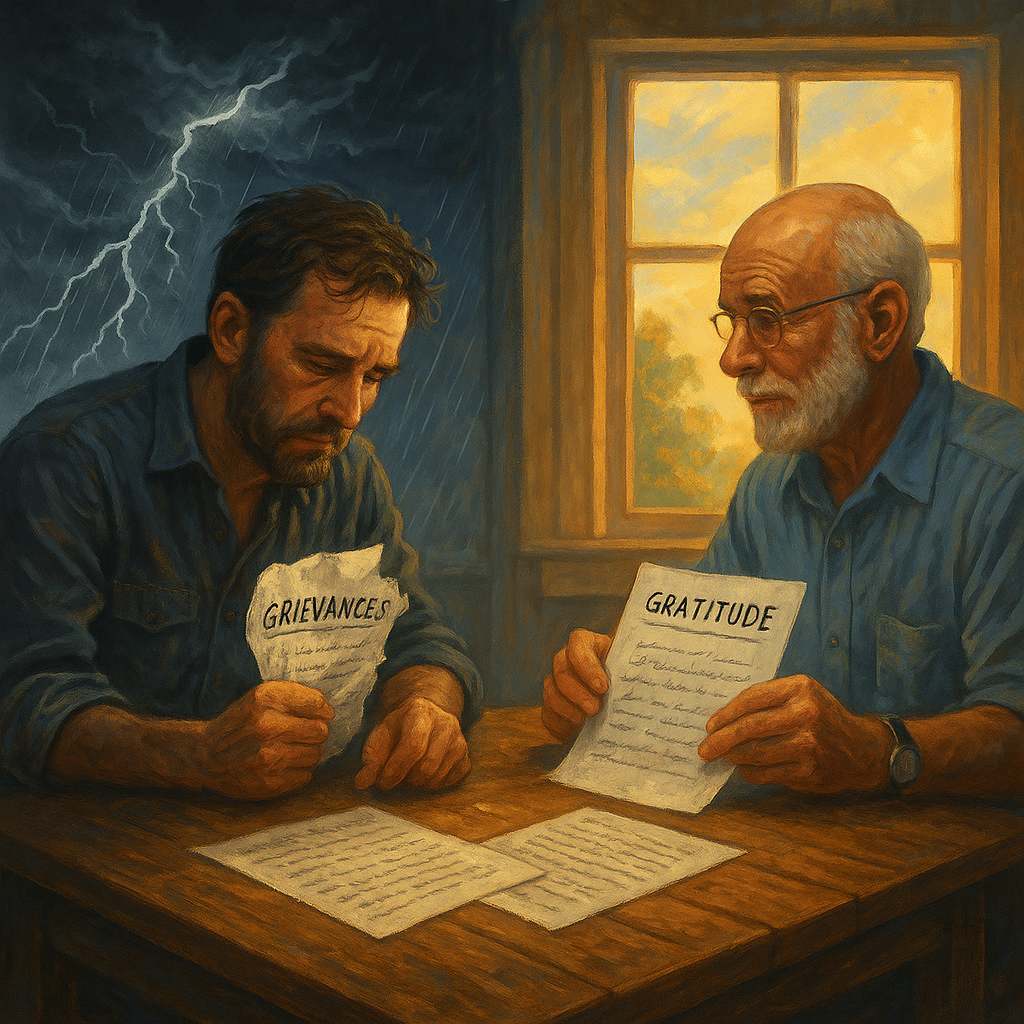
Normally my Sponsor would recommend a gratitude list when I felt low, but one day, when I complained about a family situation, he suggested that I list all the things I was unhappy about. Several days later my depression had passed, and when I told my Sponsor about the terrific day I was having, he suggested a gratitude list. He thought it might help me to refer to it the next time I felt blue. That made sense to me, so I complied.

When I went to put this new list in the drawer where I keep my papers, I noticed the earlier list and read it once more. To my surprise, my list of grievances was almost identical to my gratitude list — the same people, same house, same life. Nothing about my circumstances had changed except the way I felt about them. For the first time I truly understood how much my attitude dictates the way I experience the world.

Today’s Reminder

Today I recognize how powerful my mind can be. I can’t always feel good, and I have no interest in whitewashing my difficulties by pasting a smile on my face. But I can recognize that I am constantly making choices about how I perceive my world. With the help of Al- Anon and my friends in the fellowship, I can make those choices more consciously and more actively than ever before.

“Change your thoughts and you change your world.” – Norman Vincent Peale

END OF QUOTE—————————————

Norman Vincent Peale (1898–1993) was a Christian minister, author, and influential figure in American religious life, best known for popularizing the concept of “positive thinking” through his landmark 1952 book, The Power of Positive Thinking. A Methodist-turned-Reformed pastor, Peale served for more than half a century at Marble Collegiate Church in New York City.

There was a time in my life when the storm inside me felt louder than any peace I could muster. I’d sit with my Sponsor and bring him the scraps of my spirit—my grief, my discontent, my twisted thoughts—and he’d thoughtfully hand me back a tool. Sometimes it was a gratitude list, sometimes a question, and once—he told me that in my observations, my journaling, look for the patterns in my pain and resentment.

I have indeed found that my gratitude lists and my painful patterns dance in the same neighborhoods. It is true that sometimes, it is a matter of perspective.

This is where the real work of the program lives for me: not just in inventorying my defects, but in inventorying my perceptions. My attitude isn’t just the lens through which I see the world—it’s often the author of my experience. The same facts can tell wildly different stories depending on whether I’m rooted in fear or in faith.

I no longer see gratitude as a forced smile or a way to gaslight myself into feeling better. I see it as a recalibration of my spiritual compass. It reminds me that the story isn’t over, and I get to choose the tone of the next chapter. I still allow space for grief, anger, confusion—but I don’t build my home there. I let those feelings pass through like weather. And when I forget, my lists are there. Both of them. To remind me how much power I truly hold—not over people or outcomes, but over my own way of seeing.

Endigar 1012

Posted in Uncategorized with tags , , , , , , , , , , , , on July 22, 2025 by endigar

From Courage to Change of Aug 29:

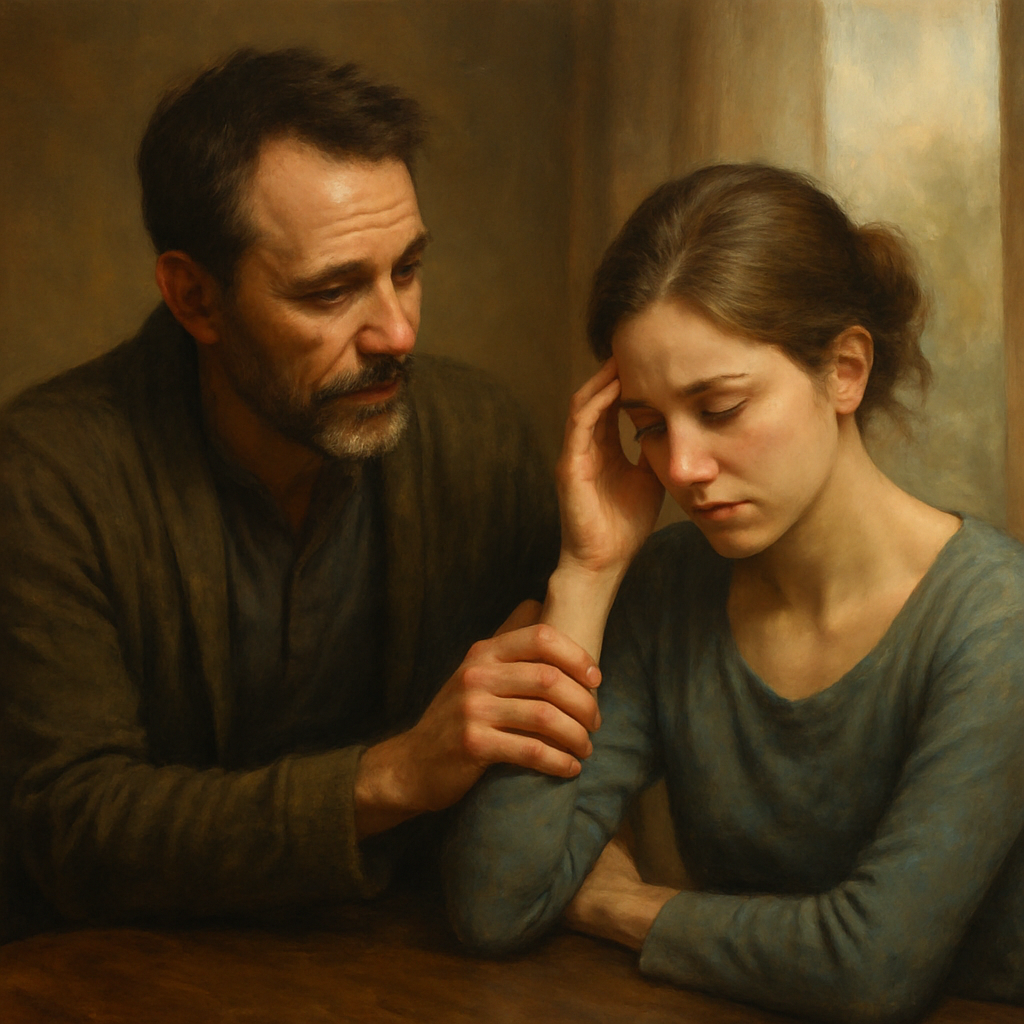
Since childhood I have been nagged by those moments when I said or did something that brought pain to another person. These are ugly memories that I never believed would go away. With Step Eight, however, I discover a means to release myself from unrelenting guilt.

This Step says to make a list of all people I have harmed and to become willing to make amends to them all. Finally, I can put down in words all the memories and all the pain. When I see them written in front of me, they seem almost manageable, and I feel hopeful about freeing myself from their weight as I become willing to make amends. I need not take any further action at this point. All I am concerned with now is the harm I have caused others, the guilt I have brought on myself, and the desire to do what I can to clear it all away.

Today’s Reminder

Guilt is a burden that keeps me from giving myself fully and freely to the present. I can begin to rid my mind of guilt by quietly admitting where and when I have done wrong to people, including myself.

“Al-Anon has shown me another way of living, and I like it. Life can either be a burden and a chore or a challenge and a joy. One day at a time I can meet the challenges of life head-on instead of head-down.” ~ As We Understood

END OF QUOTE—————————————

What As We Understood Is:

Full Title: As We Understood: More Talks on Al-Anon Principles

  • Published by: Al-Anon Family Group Headquarters, Inc.
  • First published: 1985
  • Format: A collection of essays and reflections written by Al-Anon members

This book explores spirituality from a wide range of personal experiences—without prescribing a single religious belief or dogma.

There are memories that trail us like smoke—thin, acrid, persistent. For me, it began in childhood: the sharp moments when my words cut, or my silence wounded, or I simply didn’t know better—but the damage still landed. Those memories carved themselves into my mind as shame-stained markers. I thought they were permanent. I thought they defined me.

And then came Step Eight.

It didn’t ask me to fix it all overnight.
It didn’t demand atonement before I was ready.
It simply asked me to look honestly and become willing.

To write the names.
To acknowledge the harm.
To open the door—however slightly—to the possibility of amends.

There is something powerful about naming. Something holy about writing it down. It takes the swirling shame out of abstraction and lays it flat on the page where it can be seennot as a life sentence, but as a spiritual inventory. A map of where I’ve been untrue to myself and to others. A beginning.

I don’t have to make the amends yet. Step Eight reminds me: willingness is the work for now.
This is a step of preparation, of spiritual stretching.
It’s less about action and more about alignment.

And in that space, I find relief. I find dignity. I find hope.

Because guilt—unspoken, unexamined—has a way of locking us out of the present moment. It dims the light of connection. It whispers that we’re imposters in our own recovery. But when I begin to name the harm, the fog lifts. I can feel my heart begin to loosen its grip on the past. I can turn, gently, toward the living now.

Sometimes the first person I need to put on that list is me.

Because I have harmed myself too—with harsh words, impossible standards, addictive spirals, and the refusal to believe I was worth saving. I must be willing to make amends inward as well—to forgive the scared version of me who only knew how to survive.

The Steps have shown me that life isn’t just endurance. It’s discovery.
That the past isn’t just a burden. It’s compost for a freer soul.
And that isolated self-castigation isn’t living—it’s hiding.

Today, I lift my head.
Not because I’m proud of everything I’ve done—but because I’m becoming someone I’m no longer ashamed to be.

One name at a time.
One truth at a time.
One willingness at a time.

And that, I’ve learned, is more than enough to begin.

Endigar 1011

Posted in Uncategorized with tags , , , , , , , , , , on July 21, 2025 by endigar

From Courage to Change of Aug 28:

I had never dared to trust another person the way I trusted my first Al-Anon Sponsor. With faltering self-confidence I had asked her to sponsor me: I was a mess, would she have me? I was sure she would turn me down because I thought I was not worth saving. Her positive response really took me by surprise.

Gently, she guided me through the Steps. I was so desperate to feel better that I was willing to try whatever Al-Anon tool or idea she suggested. I lived, breathed, and ate Al-Anon.

One lonely day I phoned her, crying out in despair that I’d never get the hang of feeling better. What she said at that critical time was, “I don’t know anyone who is as willing to work the program as you are.” My spirits soared! She had said to me what I couldn’t say to myself, but I knew that it was true — I was very willing. In that moment of acknowledgment I knew I’d be okay, because I had what it took. In time, her example helped me learn to give that kind of acknowledg- ment to myself.

I had taken a chance. I had trusted. And as a result, I learned that I was worth saving!

Today’s Reminder

Learning to value myself can begin by having the courage to find, and use, a Sponsor.

“Nothing we do, however virtuous, can be accomplished alone; therefore, we are saved by love.” ~ Reinhold Niebuhr

END OF QUOTE—————————————

NOTE: Reinhold Niebuhr (1892–1971) was a prominent American theologian, ethicist, and public intellectual best known for his work in Christian realism—a philosophy that acknowledged the persistent reality of human sin and the limits of human perfectibility, especially in politics and social life. Niebuhr is widely credited with writing the Serenity Prayer, famously used in 12-Step programs like Alcoholics Anonymous:

“God, grant me the serenity to accept the things I cannot change,
Courage to change the things I can,
And wisdom to know the difference.”

I’m currently working with my fourth sponsor in a journey that has unfolded over 18 years. Each one marked a significant layer of trust—not just in another person, but in the recovery process itself.

My first sponsor, David H., met the panicked, wild-eyed version of me—the confused soul who stumbled into the rooms with more fear than faith.
The second, Tim C., offered a place where I could be broken-hearted without shame. He helped me learn how to laugh at myself, to take things seriously but not personally. Both of these men walked with me through Cocaine Anonymous.

I’d never used cocaine, but I qualified for CA because their First Step reads, “We were powerless over cocaine and all other mind-altering substances.” Their meetings were open, raw, and felt freer—less bound by religious overtones than AA. It was the right space for me in those early years.

After years riding the relapse rodeo, I began to release some of my resentments toward organized religion. That shift made room for me to return to Alcoholics Anonymous, where I found my first AA sponsor, Happy Jack.

I still remember him saying, “Get off that cross—we need the wood.”
It was sharp. It was funny. It stuck.

Then he stopped returning my calls. I assumed I’d worn him out, that I was too much. It wasn’t until years later that I learned the truth: he had died. It had never been about me.

I tried going it alone for a while. That old lone-wolf pattern. But eventually, I reached again. My next sponsor, Charles N., is an artist. There’s something in that shared creative current, the way we both know the shadows and the dark wells—it’s made walking this road together deeply healing. Thank you, Charles.

Since then, I’ve settled more fully into recovery. I walked through Al-Anon with yet another sponsor, Paul, and completed the Steps. Then I joined Adult Children of Alcoholics (ACA) and am now being sponsored by Scott K. in that fellowship.

I’ve become thoroughly inundated with recovery.
And now—I sponsor others.

My point in sharing this history is simple:
The path isn’t always clear or easy. Connection doesn’t always come quickly.

But if the desire to live freely burns even slightly, it’s enough.
Enough to keep coming back.
Enough to fall seven times and get up eight.
Enough to turn away from morbid reflection—and recreate life.

Because in the end, sponsorship isn’t just about guidance.
It’s about being seen, walked with, and reminded:
You are never too far gone to begin again.

Endigar 1010

Posted in Uncategorized with tags , , , , , , , , , , , on July 20, 2025 by endigar

From Courage to Change of Aug 27:

At my first Al-Anon meeting, I was disappointed when I was given the Twelve Steps instead of a “do’s and don’t’s” list for changing the alcoholic. Nevertheless, I was desperate enough to give the Steps a try, anyway.

At my second Al-Anon meeting I thought I had those first three Steps down pretty well — I knew I was powerless, I believed in God, and I was willing to dump my problems onto anyone who would take them. As I continued to attend meetings I began to see that I wasn’t really admitting my powerlessness or I wouldn’t keep trying to control everyone and everything around me. OK, so I skipped the part about letting go and letting God.

Today I am so glad to have a patient God, so that when I finally say, “Not my will but Your will,” God steps in and sorts things out in ways I never would have imagined. The first three Steps aren’t as easy as I once thought, but in Al-Anon I’ve learned to aim for progress, not perfection.

Today’s Reminder

When I was dealing with alcoholism without the help of Al-Anon, I developed coping skills. These are no longer enough. Al-Anon is teaching me a new and better set of skills. I will try to be patient with myself. I’m doing fine.

“As long as you live, keep learning how to live.” ~ Seneca

END OF QUOTE—————————————

NOTE: Seneca—full name Lucius Annaeus Seneca (c. 4 BCE – 65 CE)—was a Roman Stoic philosopher, statesman, playwright, and advisor to Emperor Nero. He is one of the most influential voices in Stoic philosophy, especially known for his writings on ethics, resilience, and the inner life. Forced to commit suicide after being accused of conspiracy—he met it with calm, in true Stoic fashion.

I watch people who believe debate with people who don’t—arguing back and forth about the existence of God. To me, it’s an irrelevant conversation. Until either side can explain infinity—or infinitely explain—it’s all just noise.

I am mortal. My thoughts are shaped by the context of a limited life. And yet, in my own quiet pursuit of a Higher Power, something real is happening. I’ve accumulated experiences—subtle, sacred, undeniable. Hints. Moments. Patterns. They don’t prove anything to anyone else, but they build my faith. And that accumulation—that unfolding—is what I call the Knowing.

It’s not about winning a debate. It’s about being met. I’ve come to trust in Something—expansive, infinite—that not only exists but gives a damn about me. And about you. Individually. Personally.

I believe because the God-concept works. I interact with it intuitively, through slowly maturing practices of prayer and meditation. These are not rituals of performance, but invitations into presence.

Religious dogma, I’ve learned, is the architecture for communal stewardship. It helps tribes stay oriented.
Scientific skepticism, at its best, is not cynicism—it’s the pursuit of what actually works. Not a rejection of meaning, but a reverence for evidence.

But the individual—especially the one ravaged by addiction—is often caught in the crossfire between science and religion. And those of us bruised and burned by that battlefield suffer deeply when we mistake that war for our own.

I no longer fight.
I surrender.

The Infinite One has my attention.
And more than that—He has my heart.

May you be prospered on your path.
And may that path be uniquely yours.

Endigar 1009

Posted in Uncategorized with tags , , , , , , , , , , on July 18, 2025 by endigar

From Courage to Change of Aug 26:

Looking back, I have often reproached myself, “How could you not have known what was happening?” Alcoholism left messy tracks all over my life, yet I didn’t see them. How could that be?

Denial is one of the chief symptoms of this family disease of alcoholism. Some of us deny that the drinker has a problem; others are all too willing to blame him or her for all our problems, denying our own participation. Why? Because we alone can’t defeat this disease, so we invent ways to survive the constant crises, broken promises, lost hopes, and embarrassments. One way to cope is to deny the unpleasant or terrifying reality.

In Al-Anon we learn more productive ways in which to cope with alcoholism, ways that don’t cost so much in loss of self. With the support of other members, and with tools and principles that offer direction, we become able to face what is really going on. We go beyond mere survival and begin to live again.

Today’s Reminder

At all times, I have done the best I was able to do. If my only way to cope with a difficult situation was to deny it, I can look back with compassion to that person who saw no better option at the time. I can forgive myself and count my blessings for having come so far since then.

“Regret is an appalling waste of energy; you can’t build on it; it’s only good for wallowing in.” ~ Katherine Mansfield

END OF QUOTE—————————————

Katherine Mansfield (1888–1923) was a pioneering modernist writer from New Zealand, best known for her short stories that delicately explore human psychology, fleeting moments, and the subtle complexities of everyday life. Her real name was Kathleen Mansfield Beauchamp.

Key Facts:

  • Birth: October 14, 1888, in Wellington, New Zealand
  • Death: January 9, 1923, in Fontainebleau, France (from tuberculosis at age 34)
  • Genre: Short fiction, modernist literature
  • Notable Themes: Loneliness, class divisions, childhood, epiphany, fragility of relationships, mortality

Major Works:

  1. “The Garden Party” – A story that juxtaposes upper-class privilege with the reality of death, as seen through the eyes of a young girl.
  2. “The Daughters of the Late Colonel” – A psychological portrait of two sisters paralyzed by the memory of their domineering father.
  3. “Miss Brill” – A poignant tale of a lonely woman who creates fantasies to escape her isolation.
  4. “Prelude” – A semi-autobiographical story about a family’s move to the countryside, reflecting Mansfield’s own New Zealand upbringing.

Legacy:

Although she died young, Mansfield left a profound impact on 20th-century literature. Her brief life was marked by illness, emotional intensity, and a relentless pursuit of literary expression. Her personal letters and journals also reveal a deeply introspective, intellectually restless soul.

END OF NOTE—————————————

There are moments—quiet, piercing moments—when I look back and whisper to myself, “How could you not have known?” The tracks were everywhere. The chaos wasn’t subtle. The pain wasn’t discreet. And yet… I didn’t see. Or I couldn’t. Or I wouldn’t.

The truth is, I survived by not seeing.

Denial, I’ve come to understand, wasn’t my moral failure. It was my emotional shelter when the storm wouldn’t stop. It was how I stitched myself together when the narrative of my life couldn’t afford another tear. I didn’t consciously lie to myself—I did what I had to do to keep breathing in a world that made no sense.

In the family disease of alcoholism, denial isn’t a weakness. It’s a symptom. And often, it’s a sign of love distorted by trauma. Some of us deny the drinker has a problem. Others vilify the drinker so thoroughly we can’t see our own behaviors at all. Both are strategies of survival. Both are echoes of powerlessness.

But recovery has taught me another truth:
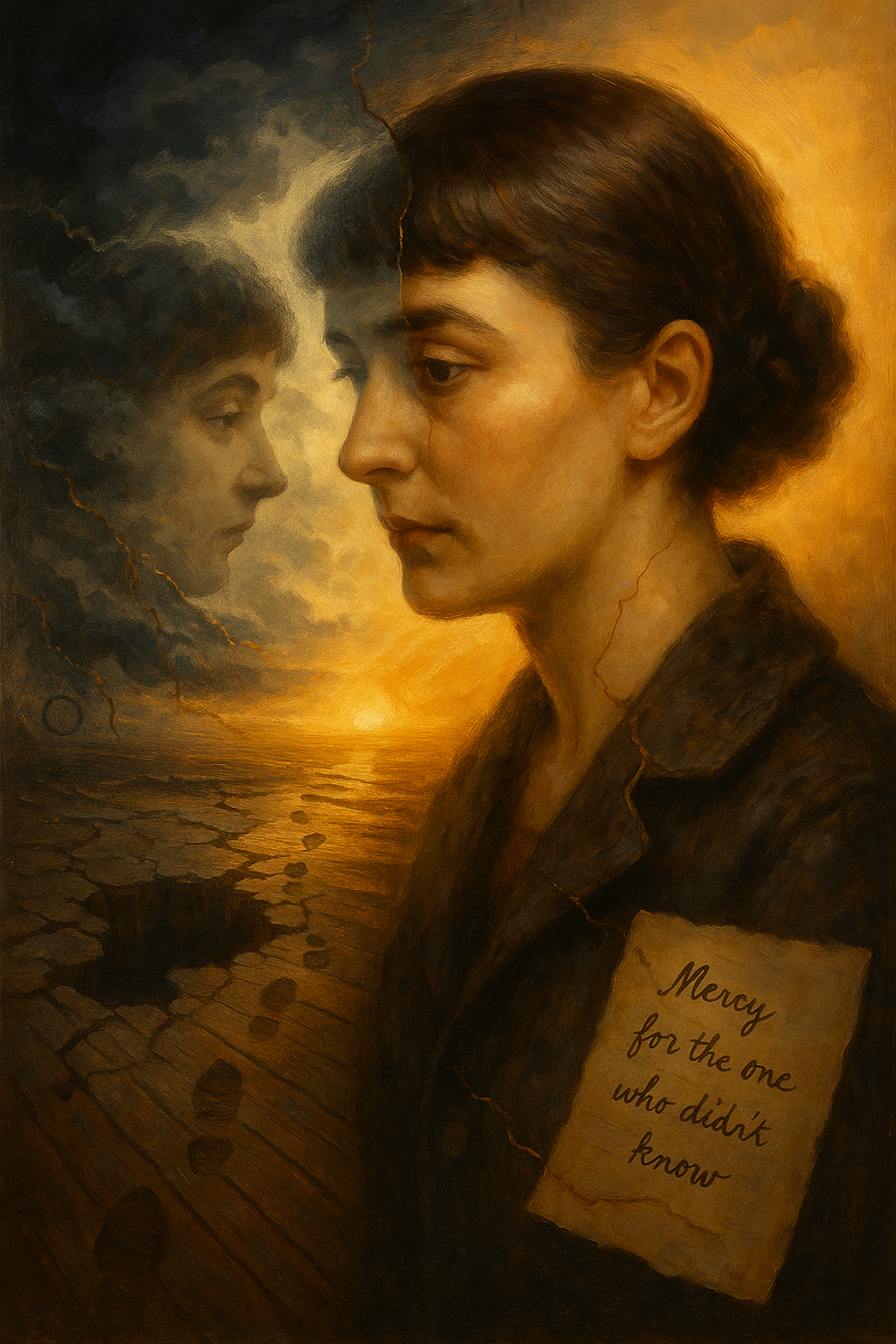
I am allowed to look back with mercy.

That former version of me—the one who overlooked the chaos, who blamed herself for everything or nothing, who flinched from truth as if it might bite—she was doing her best. That survival mode was sacred in its own way. It kept me alive long enough to arrive here, where something new could begin.

With Al-Anon’s tools, I no longer have to deny. I don’t have to contort reality into something palatable. I have the fellowship, the slogans, the Steps—and the grace—to face life as it actually is. I can let truth be truth without fearing it will break me.

And that’s where the shift happens:
I go from coping to living.
From hiding to healing.
From regret to redemption.

Because regret is a sinkhole. It swallows energy, hope, self-worth. And I’ve learned that I cannot build a single floorboard of new life on the foundation of “I should have known.”

Now I choose to build on compassion.
I build on courage.
I build on the quiet, daily decision to forgive the one who didn’t know—and to bless the one who’s learning now.

Endigar 1008

Posted in Uncategorized with tags , , , , , , , , , , on July 17, 2025 by endigar

From Courage to Change of Aug 25:

When students first learn to play the piano, they are usually taught to use only one hand and include very few keys. Then they move on to using two hands, eventually learning to play all the keys, the high ones as well as the low. In fact, part of the pleasure of playing lies in hearing the rumble of the lowest bass notes and the light chiming of the high treble.

Today in Al-Anon I am learning to play a new instrument — myself. I am a person with the capability to experience a wide range of emotions, from love to joy to wonder. I am profoundly grateful for laughter and light spirits — and also for anger and fear, because all of these feelings are part of what makes me whole. I believe that my Higher Power wants me to be fully alive and fully aware of all my feelings: The crashing crescendo of great anger, the soft chant of serenity, the heights of wonder, and the new insights that stretch my heart and mind just as my fingers stretch to reach all the keys in a challenging chord. I am learning to play richer sounds than I ever thought possible.

Today’s Reminder

Today I will appreciate the full range of feelings available to me. They make my experience of life full indeed.

“I have sometimes been wildly, despairingly, acutely miserable… but through it all I still know quite certainly that just to be alive is a grand thing.” ~ Agatha Christie

END OF QUOTE—————————————

Before recovery, I divided emotions like sheep and goats—some were holy, others unclean. I crowned happiness, joy, and syrupy love as the angels of mental health. But anger? Sadness? They were exiled, branded with shame, and locked in the dungeon with the spiritually deficient.

To feel too much was madness.
To feel too little was sainthood.
And I aimed for sainthood—numb and smiling.

I thought if I could just tiptoe through the tulips of unshakable good vibes, if I could radiate peace like a lobotomized monk in Birkenstocks, then surely I would become the recovery success story of someone’s keynote speech. A trophy soul.

But in my quest to be enlightened, I was performing serenity while silencing truth.
And when I did feel anger—or sorrow, or discomfort—I judged it as a relapse in character.

I also believed that depth and seriousness wore only black. I scoffed at joy. I tucked away laughter like it was childish, uncouth, or inappropriate at the altar of spiritual progress. Joy was silly. Grief was noble. I knew which side I wanted to be on.

But recovery—patient, gentle, uncompromising—handed me a new score to play.

There are no negative emotions.
There are no positive ones either.
There are only messengers. Sacred couriers of inner truth.

Anger isn’t an enemy—it’s a signal that something vital is being crossed.
Sadness isn’t shameful—it’s a threshold into deeper reflection.
Happiness isn’t shallow—it’s a moment of connection I’m allowed to feel without guilt.

Recovery taught me to stop playing warden over my feelings and start becoming a steward. These emotions aren’t here to take over—they’re here to guide.

Yes, if I hand them the keys, they’ll drive me off a cliff.
But if I treat them as guests—offer them tea, listen without judgment, and learn their language—they reveal the hidden terrain of my soul.

In recovery, I’m no longer trying to feel only the “good” stuff. I’m trying to feel everything honestly—so I don’t have to be ruled by anything in secret.

Today, I let my emotions be servants, not tyrants.
And in doing so, I discover the quiet revolution of becoming fully human.