From Courage to Change of Aug 19:
Learning about alcoholism has helped me to find serenity after years of struggling. I see now that alcoholics have a disease: They are ill, not bad. By attending Al-Anon meetings on a regular basis, reading Al-Anon Conference Approved Literature (CAL), and sitting in on open AA meetings, I have gained some insight into what is and is not reasonable to expect when dealing with an alcoholic.
I’ve learned that I have the ability to adjust my expectations so that I no longer set myself up for constant disappointment. For instance, I have stopped expecting a drinking alcoholic to keep every promise. This makes my life more manageable.
The knowledge I gain in Al-Anon has dispersed many of my fears and made room for a newfound compassion. I see that I am not the only one with good ideas, valid criticisms, and noble motives.
Today’s Reminder
Learning about the disease of alcoholism can help me become more realistic about a loved one’s illness – and thus to make better choices for myself.
“I have learned techniques for dealing with the alcoholic, so that I can develop a relationship with the person behind the disease.” ~ Al-Anon Faces Alcoholism
END OF QUOTE—————————————
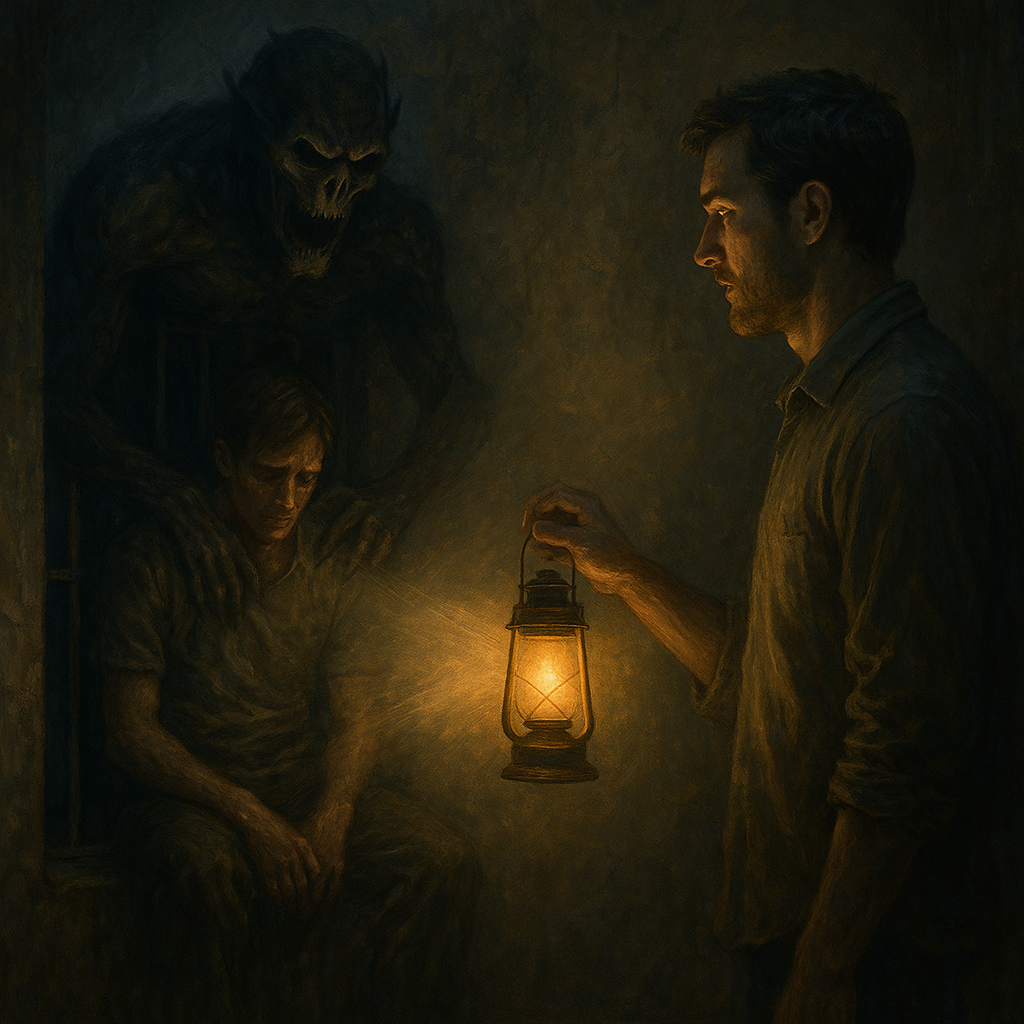
I carry what some call the “double winner” distinction in Al-Anon—though I’ve often felt it more as a double wound. I qualify both as an alcoholic in recovery and as someone shaped, bent, and bruised by the alcoholism and chemical dependency of those I love. I sit in both circles. I know the shame of causing harm, and I know the ache of being harmed by someone who promised they wouldn’t do it again.
But this dual perspective gives me something rare: insight into the disease from both the inside and the outside.
In Al-Anon, I’ve brought with me a metaphor that helps me stay sane: I imagine alcoholism as a hostage-taking creature—one that hijacks the person I love and turns them against both of us. This creature wears the face of my loved one but operates from a place of distortion and destruction. It doesn’t love them. It only uses them. And it works overtime to extract ransom payments from my soul—payments in the form of self-abandonment, false hope, or emotional enmeshment.
By personifying the disease, I create psychological distance—a survival tactic. I know it’s not literally a separate being, but treating it that way allows me to separate my loved one’s soul from the obsession that holds them hostage. It reminds me that I’m not negotiating with the person I love—I’m negotiating with the addiction that speaks through them.
And I refuse to pay that ransom with my life anymore.
I do not romanticize the disease. I have no tolerance for it. I do not enable it. And I’ve learned not to make offerings to it with my sanity. Most importantly, I’ve realized that surrendering to my own despair is just another tactic the disease uses to win. I resist that by staying connected—to my Higher Power, to my program, to my true Self.
One of the most liberating skills I’ve acquired in recovery is the adjustment of expectations. That doesn’t mean I’ve stopped caring—it means I’ve stopped setting myself up for heartbreak. I no longer expect a drinking alcoholic or active addict to keep promises. That’s not cynicism. It’s clarity. And that clarity makes my life immeasurably more manageable.
When I educate myself about the disease, I don’t do it to excuse anyone’s behavior—I do it to make better choices for myself. I no longer hand over the steering wheel of my emotions to someone else’s chaos. I chart my course with realism, compassion, and a commitment to self-preservation without self-centeredness.
I came to Al-Anon to learn how to live. And now I walk with both wisdom and wounds, holding the tension between them like a sacred paradox. My healing is not just for me. It ripples. It steadies. It restores.
 Daily Reprieve
You must be logged in to post a comment.