Archive for April, 2019

Endigar 811

Posted in Uncategorized with tags , , , , , , , on April 24, 2019 by endigar

From Courage to Change of March 19;

I came to Al-Anon with a compulsion to focus on other people. I had a clear idea of how everyone should behave in every situation and felt very self-righteous when they didn’t follow my rules of conduct. When I realized that my own life was being neglected because all my attention was elsewhere, I had to make some major changes.

Today, I will have to be vigilant about minding my own business. I know that when my thoughts begin with “He should” or “She shouldn’t” I am probably in trouble. I don’t have the answers for other people. I don’t make the rules for appropriate behavior, good business conduct, driver courtesy, or common sense. I don’t know what is best for others because I don’t know the lessons their Higher Power is offering them, I only know that if I’m caught up in what they should or should not do, I have lost my humility. I have also ceased to pay attention to myself. Nine times out of ten, I am focusing on someone else to avoid looking at something in my own life.

Today’s Reminder

I grow in my ability to relate to others when I allow them to be exactly as they are. The greatest gift I can give to myself is my own attention.

“Clean your finger before you point at my spots.” ~ Benjamin Franklin

END OF QUOTE—————————————
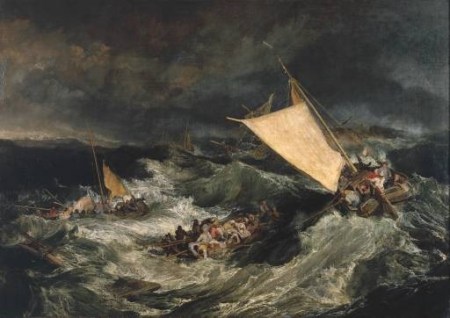
Because of my co-dependent indoctrination in my family of origin, my religious experiences were perverted into an “us and them” mentality. My family was haunted by guilt-laden trip wires and justified abdication of seeking professional help when it was needed. I attempted to create a family government when I was a teenager based on the US Constitution, to get my father to sit at the head of the table and he would not, to regulate TV watching which caused my mother to strike out at my intrusion into her parenting, and so on. When I used religion to distance from my uncontrollable family issues, I found more interpersonal dynamics that needed controlling if I was going to feel safe. I labeled other humans as either a threat or an exploitable asset. I can look back and see that now. I could not have seen it then. I was too busy drowning in the currents of my unrealistic social expectations.

I suppose it took the marital rape of having my children kidnapped by a wife with untreated PTSD to find my own powerlessness. She was sick and I manipulated a semblance of health while using the devil as a scapegoat for marital issues that we should have addressed professionally. I had a creative way of abdicating responsibility to seek help. I hurt. She hurt. It went nova and the family suffered.

That is my mess. So what is the message? As they say in recovery, “focus on the message and not the mess.”

I, the individual me, needs my attention. And the Universe, this matrix built to foster free will, may send a chaos storm my way when I have thoroughly enslaved myself to internal misery. I can make that chaos storm unnecessary through fearless moral inventories, involvement with others who support the manifestation of the Self over the self, and a recognition that there is something, someone out there that cares about me and my mortal fellows. When I find moments of sanity in the rooms and recognize the need for professional help, I will not abdicate that responsibility.  I naturally give to others what I am able to give to myself. If I am not helpful to me, I can only offer manipulation to others. When I make myself a priority, I naturally value others. That is the message I needed to hear. If it is helpful to you, don’t waste too much time in fear. Make the chaos storms unnecessary.

Endigar 810

Posted in Uncategorized with tags , , , , , , , on April 21, 2019 by endigar

From Courage to Change of March 18;

Our Eighth Tradition suggest that our Twelfth Step work should remain forever nonprofessional. This means that as Al-Anon members, our own experience, strength and hope is all we need to help one another recover from the devastating impact of alcoholism. If our program were run by professionals, I would not have been free to carry the Al-Anon message to so many others.

This Tradition encourages me to help those who really want help. I’ve spent so much time and energy trying to help those who didn’t want it, that the opportunity to make a welcome contribution to someone else’s wellbeing is precious to me. Today, because of my experience with alcoholism, I am better able to understand and empathize with other people. I’m grateful that something positive has come from the more difficult times in my life.

I am learning to give and receive without guilt. I need not feel a debt to those members who have helped me, except to pass along to others what has served me so well. And as I give, I receive.

Today’s Reminder

I find that sharing my experience, strength, and hope with others, as an equal, is one of Al-Anon’s greatest gifts.

“The only ones among you who will be really happy are those who will have sought and found how to serve.” ~ Albert Schweizer

END OF QUOTE—————————————

I find myself stuck when I consider service to others in the programs of AA and Al-Anon. I am not stuck in an intellectual mire but in a pounding-heart paralysis that comes from being qualified to help. My degree is from the school of getting knocked down seven times and getting back up eight. I have lived out the consequences of a grandfather who died from alcoholism and a mother whose trust issues would never allow her to seek help in recovering from that trauma. Untreated alcohol corruption in her heart spread to all of her children. Then I triggered the dormant alcoholic disease within me after my own trauma from marital betrayal. I survived a relapse rodeo and rebuilt my life through the power of this program. So why am I not overflowing with enough gratitude to give back what has truly saved my life?

I fear being qualified to help will lock me into a pathological responsibility of martyrdom.

Here are some of the ideas in recovery that give me hope of being useful without suffering the futility of co-dependent crucifixion:

  1.  I am not the God of whoever I help. Their help will come from their Higher Power. Results belong to deity; work belongs to mortals.
  2.  This program is for those who both need and desire it. Those who need it but deny that reality gain no benefit in the outstretched hand of the Twelve Step program. They will suck the opportunity of my attention away from those who desire recovery and I am thus justified in developing filters to let go of those who have not embraced the powerlessness and unmanageability of their lives. The filters or boundaries I build protect my recovery and help me remain available to those who are ready to do whatever it takes to live again.
  3.  For someone caught in the consequences of addiction, a window of months or even days is a divine seed of hope. If I help someone let go of their pathology long enough to step out of the matrix and see the insanity of what has become normal for them, that is a gift. If they go back out or return to their co-dependent pathology they will not be able to unknow that flash of truth. The consequences they accrue coupled with that memory may bring them back to try again. My expectation should not be locked into helping someone gain a life of recovery with no setbacks. That is an egocentric fantasy common for those of us who struggle with co-dependence.
  4. The goal of helping others is to help myself. This is the positive selfishness of the 12 Step program and is not to be confused with the selfishness that isolates me from help. On page 62 of the book Alcoholics Anonymous it states, “Above everything, we alcoholics must be rid of this selfishness.” Notice that it does not say we must be rid of all selfishness, but of THIS selfishness. We must be rid of the kind of selfishness described in the preceding pages that involve domination, manipulation, and unrealistic expectations of control. This is the isolating selfishness that active addicts and their negative supporters must relinquish. The positive selfishness of wanting to survive and thrive is what got me to walk into the rooms and to keep coming back. It is what will motivate me to give away what I have gained. It is the surest way of retaining my sobriety.
  5.  Learning, growing, and transformation are uncomfortable processes. Stagnation feels comfortable. Happiness is an eruption of invited change. Serenity is not emulating a corpse. It is the trust that develops in the process, the people, and the Higher Power as a result of doing something that is tested in the fires of service.

I suspect that this will be enough to get me started. I hope that these thoughts might be helpful to you, as well.

Endigar 809

Posted in Uncategorized with tags , , , , , , , on April 1, 2019 by endigar

From Courage to Change of March 17;

No problem lasts forever. No matter how permanently fixed in the center of our lives it may seem, whatever we experience in this ever-changing life is sure to pass. Even pain.

Difficult situations often bring out qualities in us that otherwise might not have risen to the surface, such as courage, faith, and our need for one another. All of our experiences can help us to grow.

But we may need patience. Some wounds cannot be healed quickly. They must be given time. In the meantime, we can appreciate the new capabilities we are developing, such as the capacity to mourn and the willingness to accept. Let us share our losses and triumphs with each other, for that is how we gather courage.

Today’s Reminder

Remembering that this too shall pass can make it easier to get through a difficult day. I will be very gentle with myself during this time. Some extra loving care and attention to myself can make everything a little easier.

“. . . I am equal to what life presents.’ when I use the Twelve Steps and Twelve Traditions, the slogans, literature, sponsorship, conventions, and most importantly, meetings.” ~ . . . In All Our Affairs

END OF QUOTE—————————————


Even This Shall Pass Away

Once in Persia reigned a king,
Who upon his signet ring
Graved a maxim true and wise,
Which, if held before his eyes,
Gave him counsel at a glance
Fit for every change and chance.
Solemn words, and these are they;
“Even this shall pass away.”

Trains of camels through the sand
Brought him gems from Samarcand;
Fleets of galleys through the seas
Brought him pearls to match with these;
But he counted not his gain
Treasures of the mine or main;
“What is wealth?” the king would say;
“Even this shall pass away.”

‘Mid the revels of his court,
At the zenith of his sport,
When the palms of all his guests
Burned with clapping at his jests,
He, amid his figs and wine,
Cried, “O loving friends of mine;
Pleasures come, but do not stay;
‘Even this shall pass away.’”

Lady, fairest ever seen,
Was the bride he crowned the queen.
Pillowed on his marriage bed,
Softly to his soul he said:
“Though no bridegroom ever pressed
Fairer bosom to his breast,
Mortal flesh must come to clay –
Even this shall pass away.”

Fighting on a furious field,
Once a javelin pierced his shield;
Soldiers, with a loud lament,
Bore him bleeding to his tent.
Groaning from his tortured side,
“Pain is hard to bear,” he cried;
“But with patience, day by day,
Even this shall pass away.”

Towering in the public square,
Twenty cubits in the air,
Rose his statue, carved in stone.
Then the king, disguised, unknown,
Stood before his sculptured name,
Musing meekly: “What is fame?
Fame is but a slow decay;
Even this shall pass away.”

Struck with palsy, sore and old,
Waiting at the Gates of Gold,
Said he with his dying breath,
“Life is done, but what is Death?”
Then, in answer to the king,
Fell a sunbeam on his ring,
Showing by a heavenly ray,
“Even this shall pass away.”

–Theodore Tilton

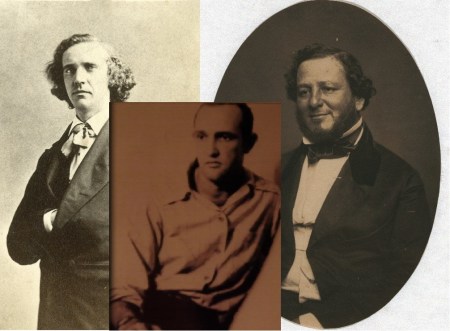
The man on the left is a photo of Theodore Tilton and the man on the right is Judah Benjamin. Mr. Tilton was an abolitionist who was betrayed by his wife and the man he was assisting, Henry Ward Beecher. When his suit against Mr. Beecher for adultery failed, he left for Paris. Mr. Benjamin was a slaving-owning Confederate official who was also the first Jew to be elected to the US Senate. He fled to the UK and became a successful lawyer after the Civil War. Tilton and Benjamin played chess until Benjamin died in 1884.

The man in the center is my late Father in his younger days, who would often quote the maxim from Tilton’s poem. “But with patience, day by day, even this shall pass away.” He died on the 8th of August, 2017, after living with me for the last decade of his life. We both outlived our marriages, he through death and me through divorce. He taught me to play chess when I was a child. One thing I remembered from my study of the game was that as you suffer loss, you can gain an advantageous position. It required the patience to look at the entire board before moving. I remember him saying, “are you sure you want to make that move?” The development of my mind and the strength of my heart is an echo of my Father’s perseverance in the face of very difficult times. I miss him.

His love and support helped provide a protective umbrella as I struggled forward with recovery, the completion of my degree, and retirement from the military. The Twelve Steps and Traditions put me back in the game of life on life’s terms and introduced me to a Higher Power that had my Father’s voice asking me to look at the whole board and to accept the changes that come my way.