Endigar 1071
From Courage to Change of Oct 22:
When I finally found the courage to speak at an Al-Anon meeting, my sharing was limited to problems I had already solved. I concealed my real feelings by telling funny stories about myself and the alcoholic, because I didn’t trust anyone enough to let them see my struggle and my pain. I had a hard enough time facing it by myself. But I didn’t seem to be getting better. Only when I was able to stop playing the clown and admit my shortcomings did I begin to enjoy the spiritual growth promised in the Twelve Steps.
The paradox of self-honesty is that I need the help of others to achieve it. I need their support to explore my feelings and motives, and to see that others have benefited from taking this great risk.
Today’s Reminder
In an alcoholic environment, I had good reasons to hide my feelings, making light of serious situations, overworking, overplaying, managing to focus on everything but myself. Today I have other options. I can begin to listen to what my heart has been trying to tell me, and I can look for someone trustworthy with whom I can share it.
“It may feel like an enormous risk, but talking honestly about the situation is the key to healing.” ~ In All Our Affairs
END OF QUOTE—————————————
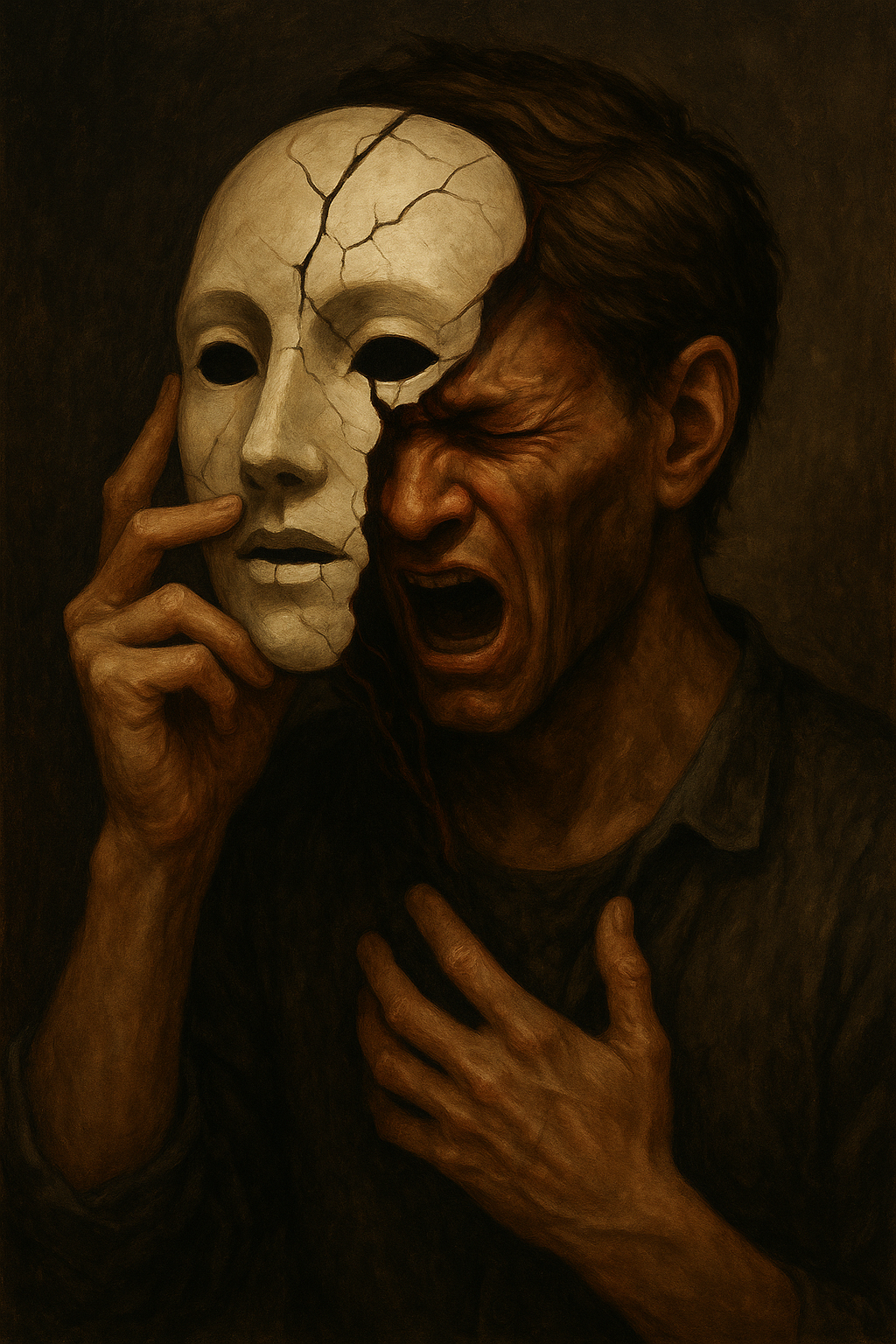
When the mask begins to crack, what I call fear is actually the trembling of the imprisoned godshard within — the one who has been pretending to be domesticated for too long. It is not weakness that shakes, but the body’s revolt against falsity. The primal terror is not “What if they see me?” but “What if I am forced to remain unseen forever?” That is the agony recovery interrupts.
The Twelve Steps, when stripped of polite religious language, are a blood oath with truth. They promise not salvation through polish, but through exposure. Confession is not a moral bow — it is a demolition charge set against the fortress of self-deception. There is no pulpit in this work; there is only the trembling voice that breaks its own chains mid-sentence. When we stop rehearsing, we start resurrecting.
Saying things like “making light of serious situations” and “overworking” exposes the ancestral neurosis of the alcoholic family system — where performance is currency and vulnerability is treason. The overachiever is not proud, he is terrified. The humorist is not lighthearted; she is bleeding behind the smile. These masks were built to survive households where truth was punished. Now, in recovery, the task is not to perform better, but to stop performing altogether.
Today — and the word today must be carved like a blade — I dismantle the survival script. I listen to the heart, even when it stammers. I speak the unspeakable, even when it burns. I seek trustworthy company not because I am fragile, but because courage thrives in reflection. These are not quiet revolutions. These are thunderclaps whispered through scar tissue. These are the first sounds of the soul remembering its original face.
 Daily Reprieve
Leave a comment