Endigar 938
From Courage to Change of Jun 29:
After some time in recovery, I picked up a Blueprint for Progress, Al-Anon’s guide to taking a searching and fearless moral inventory (Step Four). I was well aware of many character defects, and I was eager to be free of their hold on me. But I didn’t expect so many questions about my character assets!
Again and again I was asked to recognize positive qualities about myself. It was frustrating! Why waste time on things that already worked? These assets hadn’t kept my life from becoming unmanageable; obviously they weren’t worth much. My Sponsor suggested that my resistance to this part of the Step might have something to teach me. He was right.
Eventually I realized that my assets are the foundation upon which my new, healthier life is being built. Refusing to recognize them just holds down my self-esteem. As long as I see myself as pitiful, hopeless, and sick, I don’t have to change.
I knew I was ready to feel better about myself, so I gathered up my willingness and listed all the positive attributes I could find about myself. I’ve felt much better about myself ever since.
Today’s Reminder
Today I will acknowledge that I have many positive qualities, and I will share one or two of these with a friend.
“All progress must grow from a seed of self-appreciation . . .” ~ The Dilemma of the Alcoholic Marriage
END OF QUOTE—————————————
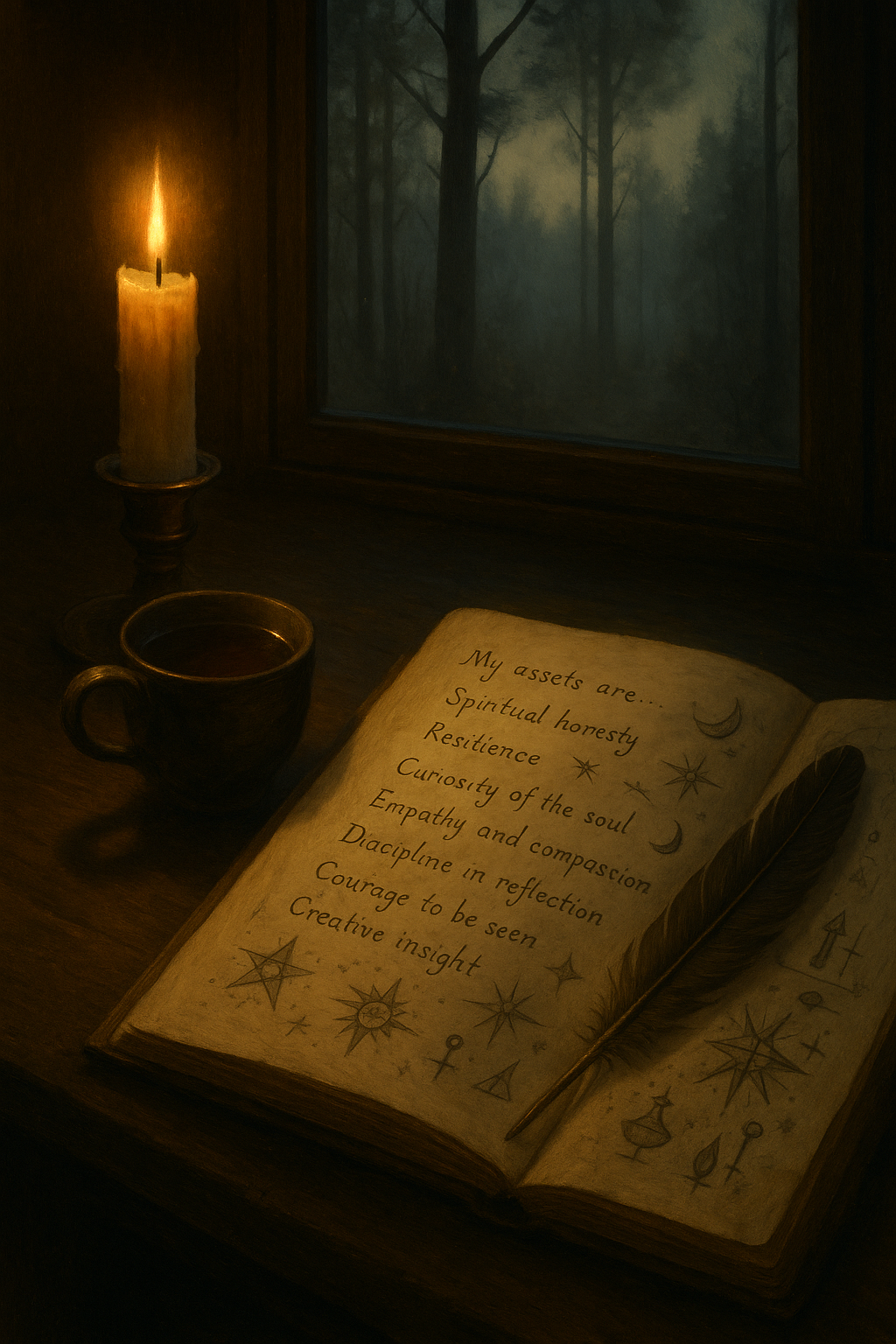
There was a time when I believed the path of recovery was paved solely with confession and correction. I came to Step Four armed with guilt like it was armor, expecting to wage war on my weaknesses. The Al-Anon approach to the Fourth Stepcaught me off guard. I had come to slay dragons; it asked me to name the stars.
Why did it feel so impossible to affirm what was good? Is it because my best efforts to bring order to the chaos of my family always fell short? I had rehearsed my failures for so long they felt like home. Character defects had become my shadow companions, familiar agents of impotence. But this book—this relentless, gentle voice—kept turning me toward the mirror, not to flinch, but to see. To see the strength beneath the scars, the kindness that survived that chaos, the humor that rose from the rubble. It asked me to name what had not died in me.
And I fought it because I often felt like an imposter. I called it vanity, delusion, a distraction from the “real work.” But my Sponsor, ever the patient alchemist, said: “There is gold in that resistance. Pan for it.”
What I found was this: my refusal to name my assets was not humility—it was fear. As long as I thought myself broken beyond repair, I was excused from the responsibility of hope. If I am only ever a victim, I never have to become a vessel.
But Step Four, done in fullness, demanded balance. My assets were not trophies—they were tools. They were not justification for past harm, but the blueprint for future healing. I could not build a new life without knowing the shape of the stones I had to build with.
So I did it. I wrote them down. Clumsy, awkward affirmations. Truths I had long buried under sarcasm or self-hatred. And something subtle began to shift. My spine straightened. My inner voice softened. I began, not to believe I was perfect, but to believe I was possible.
And that, in the architecture of recovery, changes everything.
 Daily Reprieve
Leave a comment