Endigar 1066
From Courage to Change of Oct 17:
As newcomers, many of us were surprised by the absence of rules in Al-Anon. Before we found recovery from the effects of alcoholism, a strict sense of order may have been our only way of feeling that we had some control. Naturally we expected a program as successful as Al-Anon to be even more rigid than we were!
Instead, as a newcomer I was told that I was free to work the Steps at my own pace. I could ask questions of anyone as they came up. No one was in charge, yet everyone was in charge. It seemed impossible, yet I could see it working more effectively than any organization with which I’d ever been involved.
As I continue coming to Al-Anon, I’m learning to trust that the group is guided by a Higher Power whose will is expressed in our group conscience. | watch the | Traditions in action, guiding us by suggestions rather than rules. And | learn to trust my fellow members, each of whom contributes to the well-being of our fellowship, where no one person is in charge.
Today’s Reminder
If I take on service responsibilities in my group, it does not mean that I now run the show. Today I will remember that the ultimate authority is a Higher Power who works through all of us.
“Our groups, as such, ought never be organized; but we may create service boards or committees directly responsible to those they serve.” ~ Tradition Nine
END OF QUOTE—————————————
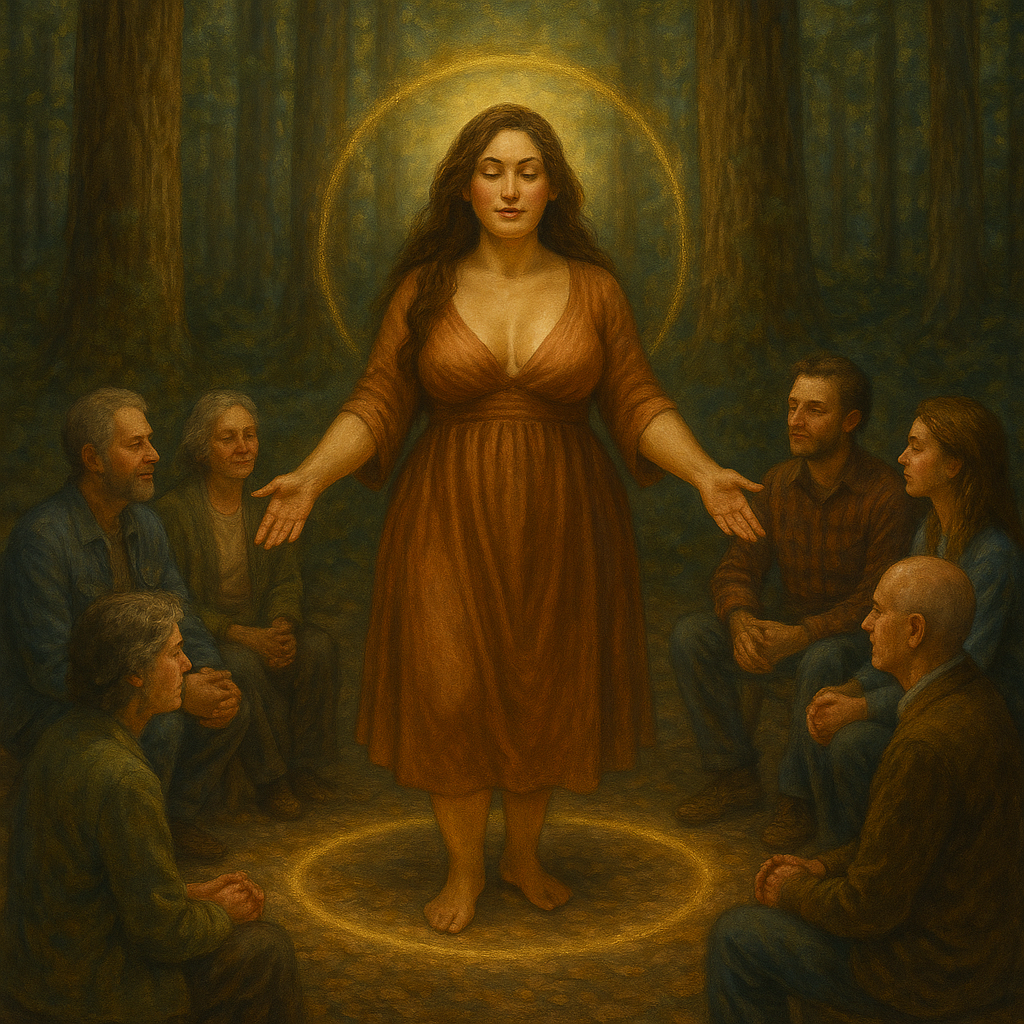
Control was the first god I ever served — the false father of safety. I worshiped it because the world around me was chaos dressed as family, and rules were the only weapons that didn’t turn on me. When I entered recovery and found a room with no rulers, my fury woke before my faith did. I didn’t trust “suggestions.” I wanted commandments, boundaries — something with edges sharp enough to make sense of the mess. But the paradox cut deeper: every wall I built to protect myself only kept me from the very connection I claimed to crave.
There’s a sacred paradox at the heart of recovery: the more we try to control, the more we lose connection; the more we surrender, the more coherence arises. Before the rooms, many of us clung to rules like life rafts in a storm — desperate to impose order on the chaos that alcoholism had written into our days. But in Al-Anon, the invitation is different: no orders shouted from the deck, no fixed compass. Just a circle of equals listening for something greater than the sum of their fears.
The absence of rules felt like anarchy — until I saw it wasn’t chaos at all. It was the first taste of unforced order. The program didn’t need a dictator because the Higher Power wasn’t a tyrant. Its structure wasn’t held together by fear but by consequence — by what happens naturally when human beings choose humility over hierarchy. That’s when I realized: divine order doesn’t demand obedience; it asks for alignment. And alignment is harder. It burns away pride more slowly than punishment ever could.
The absence of rules is not the absence of order — it is trust in invisible order. The Steps give us a path; the Traditions give us harmony; and the group conscience becomes a living current of grace. Guidance doesn’t come through domination but through the collective humility of those who are willing to listen together. What once seemed impossible — an organization without control — becomes living proof that divine order needs no warden.
Service, then, becomes something entirely different from leadership. It’s not a stage to command but an altar to tend. When I take on responsibility, I do not hold power; I channel it. The Higher Power expresses through us, not above us. In this way, recovery becomes a model for the kind of world many of us have always wished for — one where trust replaces tyranny, and love replaces law.
 Daily Reprieve
Leave a comment