Endigar 1060
From Courage to Change of Oct 11:
When I was a beginner in Al-Anon, it was suggested that I learn about the disease of alcoholism, and I became a voracious reader on the subject. As I read, I began to analyze everything: Was Al-Anon a philosophy or a philosophical system? What would be the logical outcome of believing in a Power greater than myself? And just when was the alcoholic going to have a spiritual awakening?
These questions and others like them kept my mind busy but did not help me to get better. Fortunately, I continued to go to Al-Anon meetings and I read, reread, and rehearsed the Twelve Steps and Twelve Traditions. Gradually I began to catch on. When I stopped trying to analyze and explain everything and started living the principles, actually using them in my everyday situations, the Al-Anon program suddenly made sense — and I started to change.
Today’s Reminder
Does analyzing my situation provide any useful insights, or is it an attempt to control the uncontrollable? Am I taking inventory or avoiding work that needs to be done by keeping my mind occupied? I have heard that knowledge is power. But sometimes my thirst for knowledge can be an attempt to exercise power where I am powerless. Instead, I can take the First Step.
“Life can only be understood backwards, but it must be lived forwards.” ~ Soren Kierkegaard
END OF QUOTE—————————————
NOTE: Søren Aabye Kierkegaard (1813–1855) was a Danish philosopher, theologian, poet, and social critic — often called the father of existentialism. His writing bridged the worlds of theology, philosophy, psychology, and literature, and it continues to shape how modern thinkers approach faith, meaning, and the individual’s relationship to existence itself.
Here’s a clear, layered summary of who he was and why he mattered:
1. The Individual vs. the Crowd
Kierkegaard believed that truth is subjective — not in the sense that “anything goes,” but that truth becomes real only when it is lived and experienced personally.
He rejected the idea that religion or ethics could be reduced to universal systems or dogmas.
“The crowd is untruth,” he wrote, meaning that genuine faith and authenticity cannot be found in conformity or public opinion.
He saw the individual before God as the ultimate moral and spiritual condition — a solitary struggle to live authentically rather than hide in social approval.
2. His War with Christendom
Kierkegaard was a lifelong Christian — but a radical critic of the institutional Church.
He accused the Danish state church of turning Christianity into comfortable, hollow routine — a “religion of Sundays,” stripped of the terror, passion, and paradox of genuine faith.
For him, true Christianity wasn’t about belief in doctrines, but about becoming a follower of Christ — a decision that demands anguish, risk, and personal sacrifice.
He called this leap the “leap of faith.”
“Faith begins precisely where thinking leaves off.”
3. Key Themes in His Thought
| Theme | Explanation |
|---|---|
| Existential anxiety (Angst) | The dizzying freedom humans feel when confronted with infinite possibilities — the “vertigo of freedom.” |
| Despair | The sickness of the soul that arises when a person refuses to become who they truly are in relation to God. |
| Stages on Life’s Way | Three levels of existence: the aesthetic (pleasure and beauty), the ethical (duty and morality), and the religious (faith and paradox). |
| The Leap of Faith | Rationality can never fully grasp divine truth; faith requires a subjective, passionate commitment that defies reason. |
| Paradox of Faith | Exemplified by Abraham in Fear and Trembling, who was willing to sacrifice Isaac — a contradiction between ethics and obedience to God. |
4. Major Works
- Either/Or (1843) — contrasts aesthetic vs. ethical life; sets up his existential framework.
- Fear and Trembling (1843) — explores faith, paradox, and the story of Abraham and Isaac.
- The Concept of Anxiety (1844) — a proto-psychological analysis of freedom and sin.
- The Sickness Unto Death (1849) — a study of despair and the human self before God.
- Attack upon Christendom (1854–55) — his final polemic against the Danish church’s corruption of Christianity.
5. His Life
- Born in Copenhagen, son of a devout, melancholic father whose sense of guilt deeply marked Søren’s outlook.
- Engaged to Regine Olsen, but broke off the engagement — an event that haunted him and symbolized the tension between human love and divine calling in much of his writing.
- Lived largely in isolation, publishing under multiple pseudonyms to express conflicting philosophical voices.
- Died at 42, largely unrecognized, after collapsing in the street. His influence exploded only decades later.
6. Legacy and Influence
Kierkegaard’s ideas laid the groundwork for existentialism, influencing:
- Friedrich Nietzsche (though Nietzsche reversed many of his religious conclusions)
- Jean-Paul Sartre and Simone de Beauvoir (atheistic existentialists)
- Martin Heidegger, Karl Jaspers, and Gabriel Marcel
- Paul Tillich, Karl Barth, and Dietrich Bonhoeffer (modern Christian theology)
He also anticipated depth psychology — his discussions of despair and anxiety prefigure Freud and Jung.
Essence of His Philosophy
“The most painful state of being is remembering the future, particularly one you can never have.”
— Søren Kierkegaard
He wanted each human being to wake up from the anesthesia of conformity — to face the terror and beauty of freedom, to live authentically before God, and to embrace subjective truth as a lived experience, not an abstract theory.
END OF NOTE—————————————
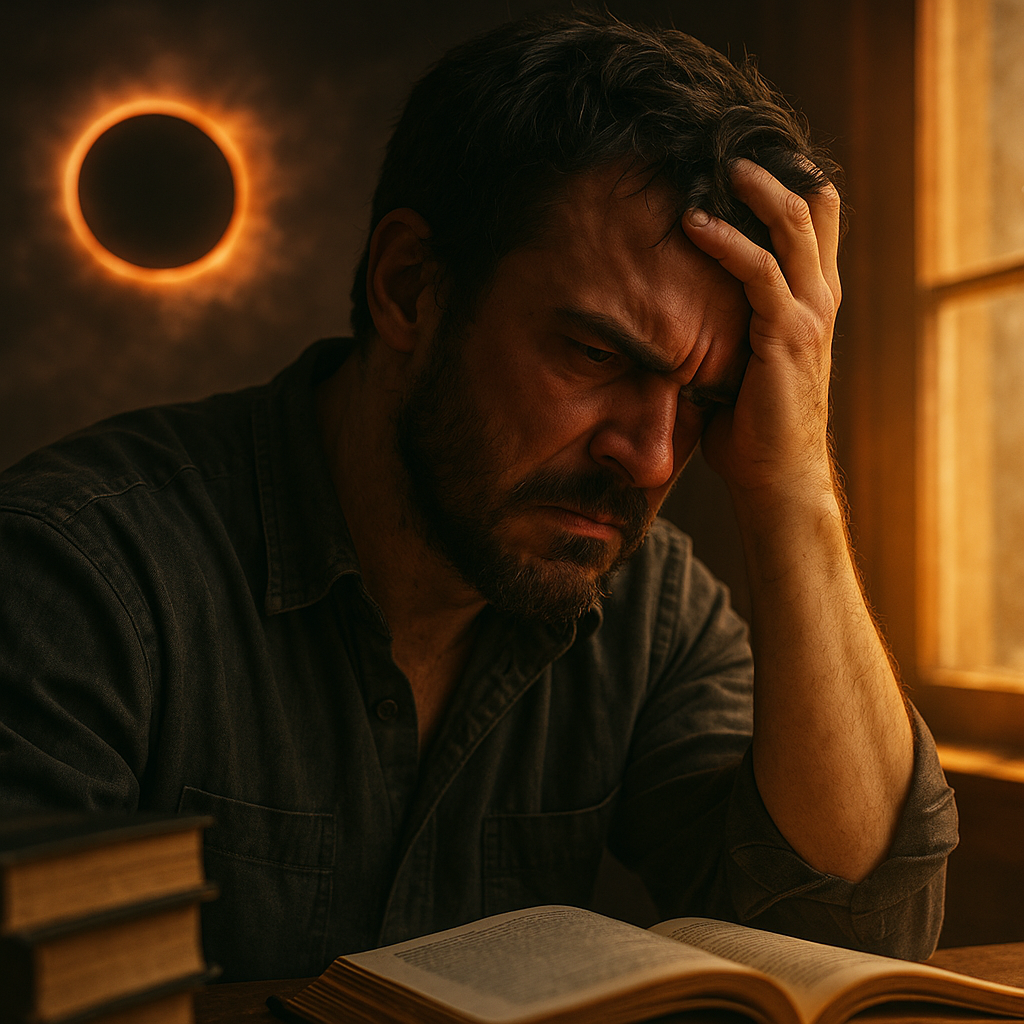
When the newcomer first encounters the Twelve Steps, it’s natural to seek comprehension through intellect. We read, question, and dissect the language, hoping to pin it down like a specimen under glass. Yet this can quickly become a subtle form of control — the mind’s last stronghold against surrender. We want to understand everything before trusting anything. Analysis can masquerade as progress, but often it’s simply anxiety in disguise — the frightened self trying to stay in charge.
Knowledge feels like power, especially to those of us who have lived in chaos. To know is to feel safe — or so we believe. But in the spiritual economy of recovery, that kind of safety is counterfeit. “Knowledge” can become a way to manage our powerlessness rather than to face it. We study instead of surrender; we define instead of experience. The First Step asks us to do something far more humbling: to lay down the sword of intellect and admit that our minds cannot save us.
The transformation begins when understanding yields to embodiment. Reading about humility is not the same as practicing it in conflict. Contemplating forgiveness differs from making amends. The program only “makes sense” when it is lived — when knowledge becomes muscle, when ideas take on flesh in the small, daily acts of kindness, restraint, and honesty.
Knowledge is power, but sometimes the thirst for knowledge is a bid for control. True power in recovery is not in mastery of ideas but in the willingness to be mastered by principle — to allow truth to guide, not to dominate it.
When we let go of our need to understand everything, serenity seeps in through the cracks left by surrender.
 Daily Reprieve
Leave a comment